


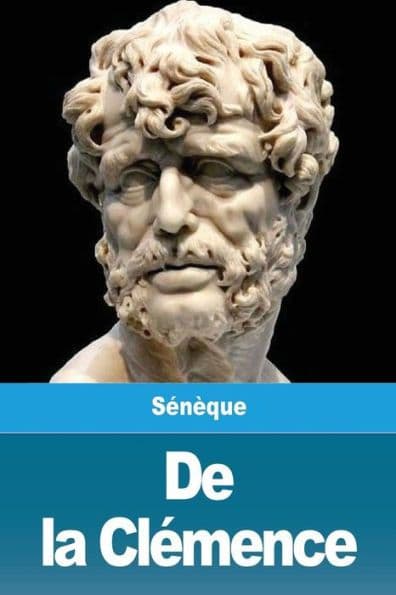
On Clemency (De Clementia)

Addressed to the young emperor Nero, this treatise argues that clemency is the virtue that makes autocratic power legitimate and secure. Seneca distinguishes clemency from pity, which he treats as a weakness of judgment, and from simple leniency, defining it as restraint in exercising the right to punish. His mechanism is a mirror: the ruler is invited to see himself as the mild, self-governing figure the text describes, and to measure his conduct against that image. Philosophical definition and political counsel are fused, so the work reads both as Stoic ethics applied to monarchy and as an attempt to shape the character of a ruler who held absolute authority.
Key Insights
✦How does Seneca separate clemency from pity?
The distinction is the philosophical core of the treatise. Following Stoic doctrine, Seneca treats pity as an emotional response that clouds judgment, a fault found in weak or ill-governed minds. Clemency, by contrast, is a rational disposition: the ruler sets punishment aside or moderates it because reason shows that restraint is fitting, not because suffering has moved him. This lets Seneca recommend mildness to an emperor without conceding that a Stoic sage would be swayed by feeling. Critics have noted that the line is sharper in theory than in practice, since the examples Seneca uses often look like ordinary compassion. The distinction nonetheless shows Stoic psychology being adapted to a political vocabulary.
✦Why is the treatise addressed to Nero, and how should we read that?
Seneca was Nero's tutor and, after Nero's accession, one of his chief advisers, so the work is both an essay and a form of counsel. It belongs to a tradition of advice literature for rulers, and it uses praise as a teaching tool: by describing Nero as already merciful, Seneca encourages him to become so. Scholars such as Miriam Griffin have discussed how this fits Seneca's wider attempt to act as a philosopher within politics. The tension is whether the praise is sincere guidance, a calculated strategy to restrain an unpredictable young ruler, or a mixture. Reading it well means keeping all three possibilities in view.
✦How has the argument held up given what Nero later did?
The later record casts a long shadow. Nero's reign ended in terror and, in AD 65, Seneca himself was ordered to die. Ancient historians such as Tacitus and Suetonius portray a ruler who abandoned the restraint Seneca urged, and this has led many readers to treat the treatise as a failed experiment or as tragic irony. Others caution against reading it purely backward. The work was written near the start of the reign, when hopes for a mild regime were still plausible, and its value as political theory does not depend on Nero's conduct. It remains a document of what a Stoic adviser thought could be achieved by moral persuasion.
✦Is the text complete as it survives?
No. De Clementia survives only in part. It was planned in three books, but the manuscript tradition preserves the first book and a portion of the second, and the rest is lost. The treatise therefore ends without a full account of the topics Seneca promised, including a developed treatment of the nature of clemency itself and of its opposite. Editors and translators handle the gap differently, so readers should consult the introduction to whichever edition they use. The incompleteness also shapes interpretation, since arguments one might expect in the missing sections cannot be confirmed and must be inferred from the opening programme and from Seneca's other writings.
✦How does it connect to Seneca's other moral writing?
It sits close to Seneca's treatment of anger in On Anger, where he analyses the passions as errors of judgment and recommends self-command. Clemency can be read as the political counterpart of that project: the ruler who has mastered anger is the ruler capable of mercy. The comparison also shows a shift in audience, from a general reader seeking self-improvement to a single man whose decisions affect an empire. In the treatise the usual Stoic emphasis on inner freedom is applied to public office, which gives the work a different tone from the Letters to Lucilius. Reading them together clarifies how consistent Seneca's moral psychology remained across contexts.
✦What is a common misreading of On Clemency?
A frequent misreading treats it as simple flattery of a tyrant-in-waiting, or conversely as a pure statement of Stoic political principle untouched by circumstance. Both are one-sided. The text does flatter, but the flattery is a method of moral instruction in a setting where open criticism of an emperor was dangerous. It also does present a coherent view: that legitimate rule rests on the ruler's self-restraint and the goodwill of subjects, not on fear alone. A second misreading assumes clemency means indulgence. Seneca insists the ruler still punishes when needed and that mercy without discernment is a vice, so the virtue is a disciplined judgment about when severity is warranted.
Wealthy Psyche is an intellectual archive. We do not host, distribute, or sell book copies — physical or digital. We provide structured knowledge to help you think better, faster.