



On the Universe (Zeno of Citium, fragments)
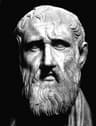
Zeno of Citium's On the Universe (Peri tou holou) is a lost work known only through fragments and reports in later authors. Because no text survives, its significance lies in what the testimonia suggest about the physics of early Stoicism: a corporeal, rationally ordered cosmos pervaded by a divine active principle (logos, often identified with god, fate, and providence) that shapes passive matter. Ancient reports also link Zeno to a cosmic cycle ending in conflagration and renewal. These ideas are assembled from doxographers and hostile critics, so the reconstructed doctrine is an inference from scattered reports, not a recovered argument.
Key Insights
✦What is On the Universe, and does any of it survive?
It is one of several titles attributed to Zeno in ancient lists, but no complete text survives. What exists are scattered quotations and reports preserved by later writers, so the title names a lost work for which scholars gather fragments and testimonia. Because the attribution of particular passages is often uncertain, I cannot confidently say how much any surviving line represents Zeno's own wording. Readers should consult the editor's criteria in any collection before treating a passage as a genuine fragment.
✦What do the sources suggest about Zeno's cosmology?
Reports from doxographers such as Diogenes Laertius and from authors like Cicero associate Zeno with a corporeal universe governed by a divine rational principle, an active force working on passive matter. The cosmos is described as a single, living, ordered whole, and later Stoic accounts of fate and providence build on this. Scholars caution that these descriptions often come from later, systematized presentations, so which elements Zeno himself held, as against Chrysippus, is debated.
✦How does it relate to Plato and earlier thought?
Stoic physics reacts to Platonic and Aristotelian cosmology, rejecting incorporeal Forms as causes in favor of a thoroughly material, though rationally structured, world. Reports also connect Zeno to Heraclitean ideas of fire and logos. Plato's Timaeus offers a divine craftsman and a rationally ordered cosmos, a possible point of comparison, but the direction and extent of influence on this lost work are not established, so such links should be treated as interpretive.
✦Did Zeno teach the cycle of conflagration and renewal?
Later sources attribute to the early Stoics a periodic destruction of the cosmos by fire followed by rebirth. Whether Zeno himself taught it, or whether it was developed or modified by successors, is disputed in the scholarship. Some ancient reports suggest later Stoics such as Panaetius doubted the doctrine, which implies the school's position was not uniform. Readers should therefore avoid presenting it as securely Zenonian.
✦How is the evidence misread?
A common error treats the full Stoic physics found in later sources as Zeno's own work. In fact Chrysippus systematized and expanded the school, and many reports come from critics or from later summaries. Another error treats the title as a surviving book that can be quoted at length. Careful readers distinguish firmly attested statements from inferences and mark where sources disagree.
✦Which collections and translations should readers consult?
The classic collection of early Stoic fragments is Hans von Arnim's Stoicorum Veterum Fragmenta, in Greek and Latin. In English, A. A. Long and D. N. Sedley's The Hellenistic Philosophers provides translated texts with commentary, and Brad Inwood and Lloyd Gerson's Hellenistic Philosophy offers selections. Because the existence and contents of a separate fragments edition titled On the Universe is not something I can verify, readers should check library records for the exact edition.
Wealthy Psyche is an intellectual archive. We do not host, distribute, or sell book copies — physical or digital. We provide structured knowledge to help you think better, faster.