



Third Course of Lectures on General Linguistics (1910-1911)
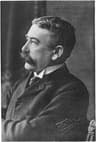
This is the record of Saussure's last Geneva lecture series on general linguistics, preserved in student notebooks rather than in anything he wrote himself. It was the principal source used by the editors of the posthumous Course, yet it presents the material in a different order and with different emphases. Its most distinctive feature is a sustained treatment of language as a system of values, in which linguistic identity is fixed by relations of difference and by what Saussure calls the synchronic state. Reading the lectures beside the Course shows how much the famous doctrine of sign, value, and system owes to editorial arrangement.
Key Insights
✦Why is this not a book Saussure wrote, and what does that mean for how it should be cited?
Saussure never prepared these lectures for publication. What survives is the set of notebooks kept by students who attended, and the English edition rests on the notes of one of them, Emile Constantin, with other notebooks consulted in the French critical editions. Every sentence is therefore a student's rendering of what Saussure said aloud, subject to omissions, compressions, and misunderstandings. Scholars should cite it as a record of his teaching, not as his authored text, and should be cautious about building fine terminological arguments on a single student's wording.
✦How does this lecture course relate to the Course in General Linguistics?
Charles Bally and Albert Sechehaye drew on all three lecture series when assembling the 1916 Course, and the third series supplied much of its material. The editors rearranged the order of topics, merged passages from different years, and smoothed inconsistencies. The lectures show a looser, more exploratory exposition in which several of the Course's neat divisions appear in less settled form. Comparing the two makes visible the editors' synthesis, and it is the main reason specialists consult the lectures rather than relying only on the published book.
✦How faithful is the English translation, and who produced it?
Roy Harris translated the English edition, which presents Constantin's notes in a form readable by those without French. Translating student notes raises problems beyond ordinary translation, since the notebooks are terse, sometimes ungrammatical, and record terminology that Saussure himself used inconsistently. Harris had also translated the Course in General Linguistics into English, and his choices of rendering for terms such as value and sign are part of how English-language readers have understood Saussure. Readers working on technical vocabulary should compare the English with the French sources and with other translators' choices.
✦What does the lecture course say about value, and why does that matter?
A central theme is that a linguistic unit has value only through its relations to other units in the system, and not through any positive content or any thing it designates. Saussure illustrates this with comparisons such as chess pieces and with analogies between languages in which the division of conceptual space differs. The point matters because it underlies the structuralist idea that meaning is relational. The lectures give this argument in a more discursive and example-driven form than the Course, which helps readers see the reasoning behind a doctrine often summarized as a slogan.
✦How has scholarship on the student notebooks changed the picture of Saussure?
Rudolf Engler's critical edition of the Course, which set the notebooks in parallel columns against the published text, was a turning point in showing how much editorial shaping lay behind the book. Later work on the Geneva manuscripts continued this reassessment. The result is a Saussure who appears more provisional, and in some respects more radical, than the founder figure of structuralist tradition. The lectures are one of the primary sources for that revision, alongside the recovered personal manuscripts.
✦What is a common mistake readers make when using these lectures?
A frequent mistake is to treat the lecture notes as the authentic Saussure and the Course as a distortion, or the reverse. Both are mediated: the Course by its editors, the lectures by students who may have misunderstood or abbreviated what they heard. Neither gives unmediated access to his considered view, which the fragmentary manuscripts only partly supply. The more careful approach is to read the sources together, note where they diverge, and treat claims about Saussure's own position as provisional.
Wealthy Psyche is an intellectual archive. We do not host, distribute, or sell book copies — physical or digital. We provide structured knowledge to help you think better, faster.