



Writings in General Linguistics
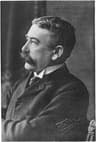
Assembled from manuscripts discovered at the Saussure family home in Geneva in the late 1990s, this volume lets readers test the familiar Course in General Linguistics against Saussure's own notes. Its distinctive contribution is a more radical, relentlessly negative account of the sign: there are no positive terms, only differences, and linguistic identity is produced by the system rather than preceding it. The notes also show Saussure struggling with how to define the units of language at all, a worry the posthumous Course smooths over. The book is best read as a corrective to the textbook Saussure, revealing a more exploratory and philosophically unsettled thinker.
Key Insights
✦Why do the recovered manuscripts matter for understanding Saussure?
Saussure published little on general linguistics during his lifetime, and his reputation rests on the Course compiled after his death from students' lecture notes. The manuscripts, found in the orangery of the family house in Geneva, give direct access to his own formulations. They show a thinker preoccupied with whether linguistic units can be defined at all, more skeptical and less systematic than the Course suggests. This does not erase the Course's influence, but it changes how scholars weigh its confident statements. The volume lets readers separate what Saussure wrote from what his students and editors reconstructed.
✦Who edited the original French materials, and how does the English edition relate to them?
The French materials were edited by Simon Bouquet and Rudolf Engler and issued as Écrits de linguistique générale. The English edition was translated by Carol Sanders and Matthew Pires, with Sanders also contributing to the editorial apparatus. As a translation of an edited selection of fragmentary notes, it involves several layers of mediation: choices about which manuscripts to include, how to order them, and how to render unfinished prose. Readers relying on it for fine terminological points about the sign or value should consult the French and the critical commentary where possible.
✦How does the book change the standard picture of the Course in General Linguistics?
The Course, edited by Charles Bally and Albert Sechehaye, presents a relatively orderly doctrine: the arbitrary sign, the synchronic and diachronic distinction, and langue versus parole. The manuscripts complicate this by showing Saussure revising, doubting, and sometimes abandoning formulations. Scholars such as Rudolf Engler had earlier compared the Course with student notebooks, and this volume extends that philological scrutiny. The result is less a rejection of the Course than a demonstration that its tidy structure partly reflects its editors' synthesis. Readers can use the notes to judge which Course claims are Saussure's own.
✦What does Saussure mean when he treats language as a system of differences?
He argues that linguistic elements have no positive identity of their own. A sound or word is what it is only by contrast with the other elements in the system, so value arises from relations rather than from intrinsic properties or from the things named. This undercuts the view that language is a nomenclature attaching labels to pre-existing concepts. The notes press the point with particular intensity, exploring how even the units we take for granted, such as the word, are produced by the analysis the linguist imposes. This relational view underlies later structuralist and poststructuralist thought.
✦How has the book influenced debates about structuralism and its legacy?
Structuralist movements in anthropology, literary theory, and semiotics drew heavily on the Course, so any revision of Saussure affects the standing of that inheritance. The manuscripts show a more provisional thinker than the founder figure the movements assumed, which has prompted reassessments of what the structuralists actually inherited. Some scholars argue the notes anticipate concerns later associated with poststructuralism, such as instability in the units of meaning, though others caution against reading later debates back into early manuscripts. The volume is therefore a resource for historians of ideas as well as linguists.
✦What is a common oversimplification of Saussure that this volume corrects?
A frequent oversimplification treats Saussure as the author of a fixed, complete theory built on a set of neat binaries. The manuscripts show instead that he found the foundations of linguistics problematic, and that his binaries were attempts to manage difficulties rather than settle them. The same applies to the arbitrary sign, which the notes treat with greater nuance than textbook summaries. Reading the volume corrects the image of Saussure as a confident founder and presents him as a reflective theorist uneasy about the basic concepts of his own discipline.
Wealthy Psyche is an intellectual archive. We do not host, distribute, or sell book copies — physical or digital. We provide structured knowledge to help you think better, faster.