

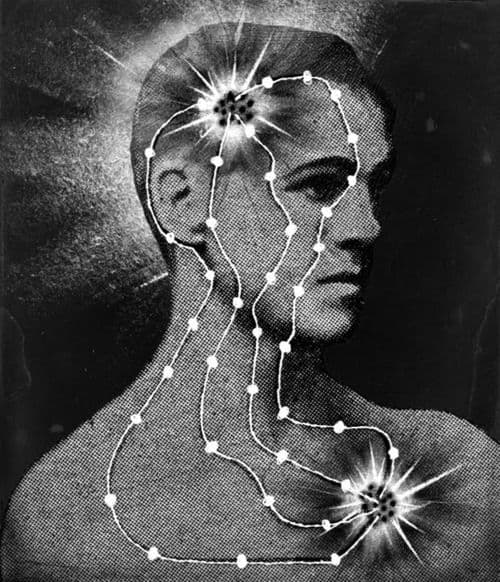
There is a faculty within you that has never been wounded. It has never been rejected, never failed, never aged, never died. It has no opinion about your career, your relationships, your body, or your past. It does not crave. It does not fear. It does not compare. And you have probably never been taught to recognize it.
This faculty is witness consciousness—sakshi in Advaita Vedanta. It is the pure, objectless awareness that perceives thoughts, emotions, and sensations without becoming them. The mind thinks. The witness notices the thinking. The body feels. The witness notices the feeling. The ego claims "I am hurt, I am successful, I am worthless." The witness notices the claiming.
Most of your suffering does not come from events. It comes from the fusion of awareness with the content of experience. You do not merely have a painful thought. You become the painful thought. You do not merely feel anxiety. You believe you are the anxiety. Witness consciousness is the uncoupling of awareness from identification. And that uncoupling is the most powerful psychological tool you will ever encounter.
The Cost of Not Witnessing: Total Identification
When you lack witness consciousness, every thought becomes a command. Every emotion becomes an identity. Every urge becomes an obligation. You live not as awareness having an experience but as a puppet jerked by the strings of conditioned mental patterns. The cost is not merely discomfort. It is the complete loss of psychological freedom.
How Identification Creates Suffering
Consider a simple example. A thought arises: "I am not good enough." Without witness consciousness, you do not observe this thought. You are this thought. You feel the contraction in your chest. You generate memories that confirm the thought. You anticipate future scenarios where the thought proves true. You have become the thought. Hours later, the thought subsides, and you wonder why you felt so terrible. But you never saw the thought as a thought. You lived inside it.
The same dynamic applies to desire. A craving arises for social validation. Without witness consciousness, you do not notice the craving as a passing energy pattern. You become the craving. You check your phone. You post. You refresh. You interpret a lack of likes as a verdict on your worth. The craving owns you because you have never stepped back to see that the craving is not you.
Condition | Without Witness | With Witness |
|---|---|---|
Painful thought arises | Become the thought | Observe the thought |
Intense emotion appears | Act out from emotion | Feel without fusion |
Craving emerges | Compulsive action | Choiceful response |
Success arrives | Inflated ego | Gratitude without pride |
Failure occurs | Identity collapse | Learning without annihilation |
The Neuroscience of the Witness: The Observing Self
Modern neuroscience has begun to map what Advaita Vedanta described millennia ago. The brain's default mode network (DMN) generates the narrative self—the story of "me" that runs continuously. This network is highly active when you are lost in thought, ruminating, or planning. It is less active during focused tasks. And it is significantly quieter during states of mindful awareness.
The Parietal Lobe and the Sense of Self
Research on meditation has shown that experienced practitioners can reduce activity in the posterior cingulate cortex—a hub of the DMN—while maintaining awareness. They are not unconscious. They are conscious without the usual self-referential overlay. The witness is not a mystical concept. It is a trainable neurological capacity. The brain can learn to decouple awareness from the narrative self.
But the witness is not merely the absence of DMN activity. It is the presence of a different mode of consciousness—one that is metacognitive, observing, and non-reactive. This mode is associated with the right dorsolateral prefrontal cortex and the insula. These regions allow you to perceive internal states without being overwhelmed by them. The witness is not somewhere else. It is a latent capacity in your own nervous system, waiting to be recognized.
The Witness in Everyday Experience: You Already Know It
You have already tasted witness consciousness. You may not have named it. When you were deeply absorbed in a task and a thought passed through—but you did not follow it. When you felt anger rising but chose not to speak. When you watched a film and knew, even as you cried, that the story was not real. That capacity to feel and know simultaneously that you are feeling is the witness.
The Gap Between Impulse and Action
Victor Frankl famously wrote: "Between stimulus and response there is a space. In that space is our power to choose our response. In our response lies our growth and our freedom." That space is the witness. Not the choice itself. The awareness that makes choice possible. Without the witness, stimulus leads directly to response. You are a machine. With the witness, you have a pause. A breath. A recognition: "This is happening. What do I do now?"
Most people live without that space. They react. They post. They buy. They argue. They eat. They scroll. And later, they wonder why their lives feel like a series of reactions rather than a coherent existence. The witness is not the answer to every problem. But without it, there is no answering at all. There is only reacting.
Experience | Without Witness | With Witness |
|---|---|---|
Insult from a colleague | Immediate defensive reaction | Pause, then response |
Urge to check phone | Automatic reach for device | Notice urge, choose deliberately |
Jealousy in relationship | Accusation or withdrawal | Feel jealousy, inquire into its source |
Anxiety before a presentation | Rumination, catastrophizing | Observe anxiety, act anyway |
Success or recognition | Inflated identity, fear of loss | Enjoyment, then equanimity |
Why the Witness Is Not Dissociation
A common concern: does witness consciousness mean becoming detached from life? Numb? Disconnected? This concern arises from confusing witness with dissociation. Dissociation is a defensive splitting off from experience. It says "this is not happening to me." The witness says "this is happening, and I am aware of it happening." Dissociation contracts. The witness expands. Dissociation avoids pain. The witness holds pain without being destroyed by it.
The Difference Between Escaping and Observing
When you dissociate, you leave your body. You go somewhere else. The world feels distant, unreal, dreamlike. When you witness, you are more present, not less. You feel the anger fully—but you also feel the space around the anger. You are not trying to escape. You are simply not being swallowed. The witness is the difference between drowning in the ocean and floating on its surface. Both are wet. Both involve the water. One kills you. One saves you.
Therapists working with trauma often teach grounding and observation skills precisely to help clients move from dissociation to witness. Dissociation says "I am not here." Witness says "I am here, and I am aware of what is arising." The witness is the path back from numbness to feeling without being overwhelmed.
How the Witness Dissolves the Ego Without Fighting It
The ego cannot be killed by willpower. Any attempt to kill the ego is the ego trying to kill itself—a battle it will always win by rebranding. But the witness does not fight the ego. It simply observes it. And in that observation, the ego begins to lose its solidity.
The Softening of Identification
When you watch a thought without claiming it as "my thought," the thought loses its charge. When you watch an emotion without saying "I am angry," the emotion becomes a weather pattern rather than an identity. The witness does not attack the ego. It illuminates it. And under illumination, the ego is seen for what it is: a collection of conditioned patterns, not a self. This is not destruction. It is recognition. And recognition is far more effective than war.
Carl Jung understood this. He said that one does not become enlightened by imagining figures of light but by making the darkness conscious. The witness is the instrument of that making-conscious. You do not banish the shadow. You watch the shadow. And in watching, the shadow loses its power to run the show unconsciously.
The Witness and the Cycle of Desire
Desire operates on identification. You see an object—a promotion, a partner, a possession. The mind projects fulfillment onto the object. You believe the thought "I will be happy when I have that." Without witness, you become that belief. You chase. You achieve or fail. You feel temporary relief or disappointment. Then you repeat.
Breaking the Loop Before It Starts
The witness does not eliminate desire. It changes your relationship to desire. When desire arises, the witness notices: "A desire is appearing." That noticing creates a micro-gap. In that gap, you can inquire: is this desire arising from genuine alignment or from conditioned lack? Do I need to act on this, or can I let it pass? The desire may still lead to action. But it is no longer automatic. You are no longer a slave to every craving that arises.
This is not repression. Repression would push the desire down. The witness allows the desire to arise, be seen, and either be acted upon wisely or released. Repression creates shadow. The witness creates freedom.
Desire Phase | Egoic Response | Witness Response |
|---|---|---|
Craving arises | Immediate identification, planning | Observation: "Craving present" |
Object obtained | Brief high, then new craving | Enjoyment without clinging |
Object not obtained | Frustration, self-criticism | Equanimity, open to alternatives |
Between desires | Restlessness, seeking | Rest in awareness itself |
Witnessing the Witness: The Final Subtlety
There is a common error in teaching witness consciousness. People begin to identify with the witness. They say "I am the witness." And now the witness has become another ego—a slightly more refined one, but an ego nonetheless. This is not freedom. This is the ego in spiritual drag.
The Collapse of the Subject-Object Split
Advaita Vedanta's final teaching is that the witness is not a thing. It is not a subject observing objects. That duality—witness and witnessed—is still duality. The final recognition is that there is only awareness. Not awareness of something. Not a witness witnessing. Just awareness. The witness is a pointer, not a destination. You use the witness to see that there was never a separate self. Then the witness itself dissolves into pure consciousness.
You do not need to achieve this now. The witness is a powerful stage. But do not mistake the stage for the final home. The witness is a tool. Use it to see that the one who was trying to witness was also a thought. And then rest.
Witness in the Age of Distraction: The Attention Economy's Antidote
You are surrounded by systems designed to capture identification. Every notification, every algorithm, every advertisement is engineered to pull you into fusion. Click this. Feel that. Want this. Compare that. The attention economy runs on the collapse of witness consciousness. When you are identified with every passing impulse, you are predictable. You are profitable.
Reclaiming the Internal Pause
The witness is the antidote not because it rejects technology but because it restores choice. When you feel the urge to check your phone, the witness notices the urge. In that noticing, you have a moment to decide: do I check now, or do I finish this conversation, this meal, this breath? The witness does not make you a Luddite. It makes you a human being instead of a response machine.
You can check your phone. You can post. You can engage. But you do so from awareness, not from compulsion. That is the difference between using a tool and being used by it. The witness is the difference between freedom and addiction.
Digital Behavior | Without Witness | With Witness |
|---|---|---|
Notification arrives | Immediate pickup, dopamine hit | Notice urge, choose timing |
Scrolling social media | Automatic, time-blind | Intention, time-awareness |
Comparing to others | Envy, inadequacy | Observe comparison, return to self |
Posting for validation | Anxiety about response | Share from genuine impulse |
Doomscrolling news | Emotional contagion, helplessness | Observe, limit exposure |
The Witness and Emotional Intelligence
Emotional intelligence is not the absence of emotion. It is the capacity to perceive emotion accurately, use it to guide thinking, and regulate it without suppression. The witness is the foundation of all three. You cannot perceive an emotion accurately if you are fused with it. You cannot use emotion to guide thinking if you are drowning in it. You cannot regulate emotion if you are not aware of it.
Metacognition as the Core of Maturity
Developmental psychology recognizes metacognition—thinking about thinking—as a hallmark of mature cognitive functioning. The witness is metacognition applied to the whole of experience. It is feeling about feeling, sensing about sensing, knowing that you know. Children lack this capacity. Adults have it to varying degrees. And like any capacity, it can be cultivated.
The person with a strong witness consciousness does not suppress anger. They feel anger fully—and also feel the space around the anger. They can act from anger if appropriate, or they can let the anger pass without action. They are not reactive children in adult bodies. They are genuine adults: capable of feeling everything, enslaved by nothing.
The Witness in High-Stakes Performance
Athletes, surgeons, and performers describe a state of "flow"—complete absorption in action without self-consciousness. Flow is not the witness. Flow is the absence of self-monitoring. The witness is different. It is the capacity to step back and observe even in non-flow states. But the witness is also the training ground for flow.
Non-Attached Awareness Under Pressure
Consider a startup founder pitching to investors. Without witness, the pitch is contaminated by anxiety about the outcome. The founder is not fully present. With witness, the founder notices the anxiety, accepts it, and speaks from clarity anyway. The anxiety may still be there. But it is no longer in the driver's seat. Performance improves not because anxiety disappears but because it is seen and held.
The same applies to public speaking, competitive sports, artistic performance, and difficult conversations. The witness does not eliminate pressure. It eliminates the suffering that pressure causes when you are fused with it. The pressure becomes useful energy rather than paralyzing fear.
Performance Context | Egoic Identification | Witness Presence |
|---|---|---|
Public speaking | Fear of judgment, self-monitoring | Observe fear, speak from clarity |
Athletic competition | Choking, outcome fixation | Focus on execution, release outcome |
Creative work | Perfectionism, self-criticism | Observe perfectionism, create anyway |
Difficult conversation | Defensiveness, reactivity | Listen from witness, respond from choice |
How to Cultivate the Witness Without Spiritual Bypass
The witness is not an escape from your problems. It is a way of relating to them without being destroyed. But spiritual bypass—using spiritual ideas to avoid psychological work—is a real risk. The witness can be used to say "I am not angry, I am just observing anger." This is not witnessing. This is denial dressed in spiritual language.
The Difference Between Observing and Avoiding
True witnessing requires feeling the anger. You cannot witness an emotion you are suppressing. The witness is not above the emotion, looking down with superiority. The witness is right there in the emotion, aware of its texture, its heat, its story—but not identical to it. If you feel nothing, you are not witnessing. You are dissociating.
Cultivating the witness means developing the capacity to tolerate intense experience without fleeing into either reactivity (acting out) or numbness (shutting down). It is the middle path. It requires courage. It requires practice. And it requires honesty about whether you are truly witnessing or just avoiding.
The Witness and Death: The Ultimate Test
There is one experience that no amount of success, pleasure, or achievement can protect you from. Death. Not just physical death, but the death of loved ones, of youth, of identity, of every external anchor. The witness is not a guarantee against grief. Grief is human. But the witness is the difference between grief that opens the heart and grief that collapses the self.
The Unborn Awareness
Advaita Vedanta teaches that what you truly are—awareness itself—was never born and cannot die. The body will cease. The mind will cease. But the awareness that witnessed the body and mind? You cannot find its beginning or its end. This is not a belief to adopt. It is an investigation to perform. When you sit in silence and trace the "I" back to its source, you find not a thing but a no-thing. Awareness without an owner.
This recognition does not remove the fear of death entirely. The body-mind will still recoil. But the existential terror—the sense that "I" will be annihilated—softens. Because the "I" that feared annihilation is seen as a thought. And thoughts cannot die. They simply stop arising. The witness sees the thought "I am dying" and knows: the one that dies is an appearance. The one that watches is not appearing. It is the screen, not the movie.
Confrontation | Without Witness | With Witness |
|---|---|---|
Loss of a loved one | Identity shattering, prolonged dysregulation | Deep grief, eventual opening |
Personal failure | Shame, self-worth collapse | Learning, adaptation |
Aging and physical decline | Denial, desperation, bitterness | Graceful acceptance, adaptation |
Own mortality | Terror, avoidance, unfinished business | Clarity about priorities, peace |
The Quiet Revolution of Simply Noticing
You do not need to become a monk. You do not need to renounce your ambitions, your relationships, your possessions. You do not need to meditate for hours. You need only one thing: the willingness to notice. To pause, even for a second, and observe what is happening without immediately becoming it.
That pause is the witness. That noticing is freedom. Not freedom from experience—experience will continue—but freedom within experience. The freedom to feel anger without cruelty. To feel desire without compulsion. To feel fear without paralysis. To feel joy without desperately trying to prolong it.
This is not a technique to master. It is a recognition to return to. You will forget. Constantly. The mind will pull you back into identification. That is not failure. That is the habit of conditioning. The practice is not never forgetting. The practice is remembering. And then remembering again. And then again.
You Are Not What You Observe
The single most powerful insight of witness consciousness is this: you are not what you observe. If you can observe your thoughts, you are not your thoughts. If you can observe your emotions, you are not your emotions. If you can observe your ego, you are not your ego. The observer is prior. The observer is more fundamental. The observer is what you have been looking for in every achievement, every relationship, every possession—without knowing it.
You are not the witness as an object. You are the capacity for witnessing itself. Not a thing. The openness in which all things appear. And that openness has never been hurt. It has never been rejected. It has never failed. It has never died. It is what you are before you learned to be someone.
You can still be someone. You can still build, love, strive, and fail. But you will no longer be trapped in the someone. The witness is the trapdoor. And it has always been open.