


Alfred Thayer Mahan
Alfred Thayer Mahan is the foundational theorist of sea power as the primary determinant of national greatness and global influence. In his seminal 1890 work, *The Influence of Sea Power upon History, 1660–1783*, he argued that control of maritime trade and naval supremacy were the decisive factors in the rise of great powers. Drawing on British naval history, he asserted that a powerful navy, a merchant marine, and overseas colonies were essential for national prosperity and security. A U.S. Navy officer, historian, and strategist, Mahan's ideas profoundly shaped the naval policies of the United States, Great Britain, Germany, and Japan, contributing to the global naval arms race preceding World War I. His geopolitical vision, elaborated in works like *The Problem of Asia* (1900), framed the 20th-century struggle as one between maritime and continental powers.



✦What is Mahan's sea power theory and its central argument?
Mahan's sea power theory posits that a nation's greatness and historical influence are determined by its command of the seas. In his 1890 book *The Influence of Sea Power upon History*, he argued that naval supremacy, a powerful merchant marine, and overseas colonies are essential for national prosperity and security[reference:0][reference:1]. He identified six conditions that foster sea power: geographical position, physical conformation, extent of territory, population size, national character, and the character of government[reference:2]. Mahan concluded that the nation that controls the sea-lanes controls global commerce and, ultimately, world power.
✦What is *The Influence of Sea Power upon History* and why is it important?
Published in 1890, this is Mahan's most influential work and is considered the single most important book on naval strategy[reference:3]. Based on his lectures at the U.S. Naval War College, it analyzes the role of sea power in the rise of the British Empire between 1660 and 1783[reference:4][reference:5]. The book argued that naval strength is the decisive factor in historical supremacy[reference:6]. It was immediately influential abroad[reference:7], leading to naval buildups in Great Britain, Germany, and Japan, and helped justify the expansion of American imperialism[reference:8][reference:9].
✦How did Mahan's ideas influence the real-world actions of great powers?
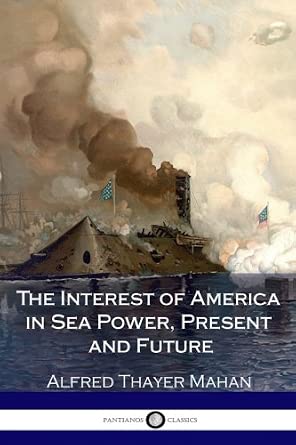
Mahan's theories had a profound and direct impact on global geopolitics. His books were avidly read by political and military leaders in Great Britain and Germany, where they greatly influenced the naval buildup that led to the World War I arms race[reference:10]. In the United States, his work inspired a generation of expansionists, including Theodore Roosevelt[reference:11]. His ideas justified the development of a powerful U.S. Navy and the acquisition of overseas territories and bases[reference:12]. His 1897 book, *The Interest of America in Sea Power*, was a direct call for the U.S. to embrace its maritime responsibilities[reference:13].
✦How does Mahan's sea power theory differ from Mackinder's Heartland theory?
Mahan and Halford Mackinder represent the two poles of classical geopolitics: sea power versus land power[reference:14]. Mahan, writing in 1890, saw the oceans as the 'great medium of communication' and argued that naval supremacy was the key to global power[reference:15]. Mackinder, writing in 1904, countered that the rise of railways would make the Eurasian 'Heartland' the pivot of world history[reference:16]. Their theories are often framed in a dualistic tension, with Mahan focusing on maritime mobility and Mackinder on continental reach, fundamentally shaping the field of geopolitics[reference:17].
✦What was Mahan's professional background and what major works did he author?
Mahan was a career U.S. Navy officer who served nearly 40 years on active duty, including service in the Civil War[reference:18]. He graduated from the U.S. Naval Academy in 1859[reference:19]. His academic career was centered at the Naval War College in Newport, Rhode Island, where he was invited to lecture in 1884 and later served as its president[reference:20][reference:21]. Besides his magnum opus, his other major works include *The Influence of Sea Power upon the French Revolution and Empire* (1892), *The Interest of America in Sea Power* (1897), and *The Problem of Asia* (1900)[reference:22][reference:23].
✦What is a common misconception about Mahan's work?
A common misconception is that Mahan was solely a narrow naval historian or tactician. In fact, he was a broad geopolitical theorist whose global worldview remains relevant[reference:24]. His later works, such as *The Problem of Asia* (1900), were geopolitical forecasts that framed the 20th century as a struggle between Eurasian land powers and insular sea powers[reference:25]. He understood that geography provides opportunities and constraints that greatly impact a nation's security interests, making him a foundational figure in geopolitics, not just naval strategy[reference:26].
✦How is Mahan's work still relevant to 21st-century geopolitics?
Mahan's concepts still resonate with naval strategists and geopolitical thinkers[reference:27]. Contemporary debates about the strategic importance of the Indo-Pacific, the rise of China's navy, and the control of key maritime chokepoints like the Strait of Hormuz are framed in Mahanian terms[reference:28][reference:29]. Nations like India are being urged to adopt a 'Mahanian vision' to secure their maritime interests[reference:30]. His fundamental insight that control of the world's sea-lanes is a primary source of power and wealth continues to inform modern strategic thinking.