


Halford John Mackinder
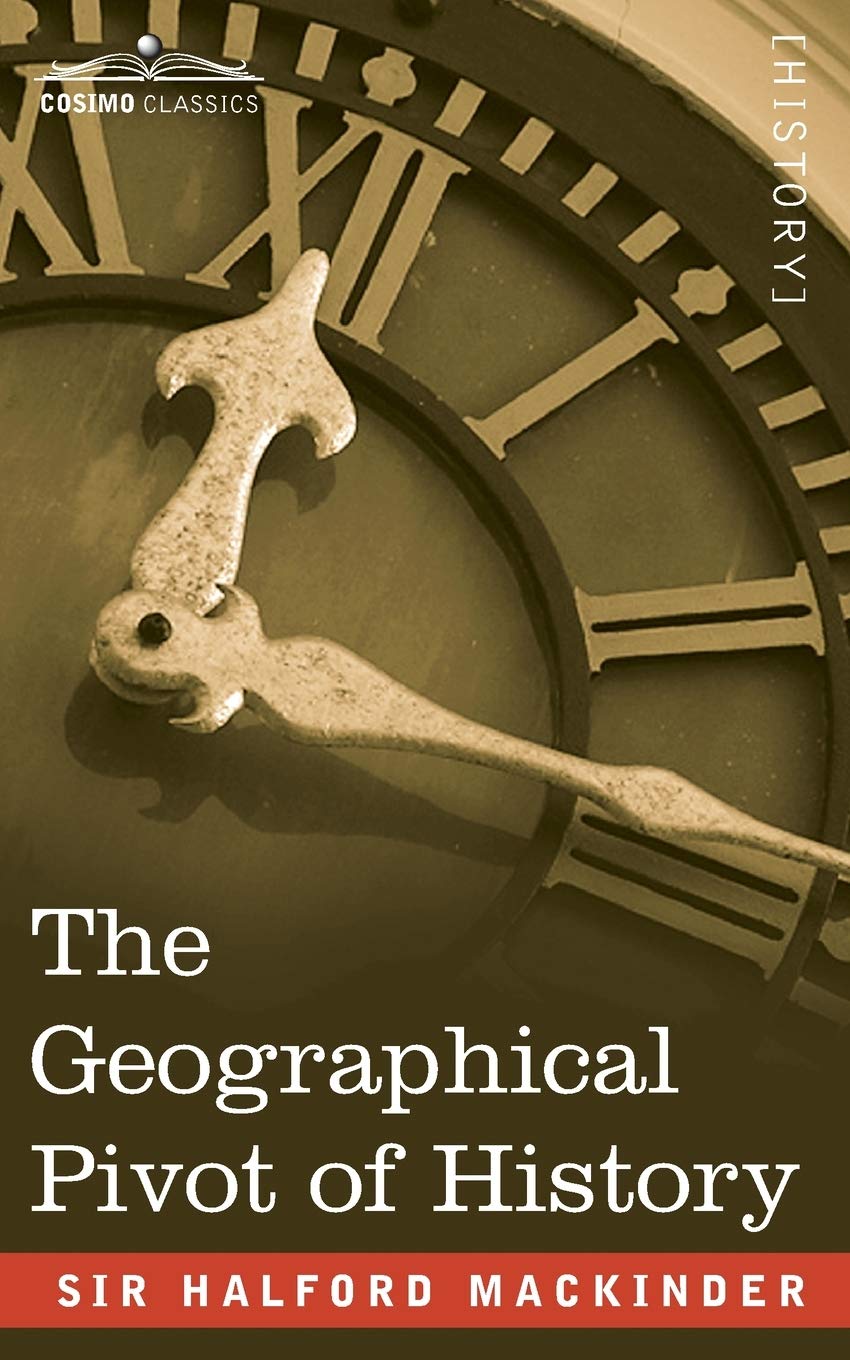
Halford Mackinder is the foundational theorist of geopolitics, most famous for his Heartland Theory. In his 1904 paper, *The Geographical Pivot of History*, he argued that the 'pivot area' of Central Asia and Eastern Europe—the Heartland—was the key to world domination[reference:0][reference:1]. He famously summarized this in his 1919 book, *Democratic Ideals and Reality*, with the dictum: 'Who rules Eastern Europe commands the Heartland; who rules the Heartland commands the World-Island; who rules the World-Island commands the World'[reference:2]. A British geographer, academic, and politician, he was the first Director of the London School of Economics and a Member of Parliament[reference:3][reference:4]. His work was intended to guide British imperial strategy in a world that had become a 'closed system'[reference:5].



✦What is Mackinder's Heartland Theory and its famous dictum?
Mackinder's Heartland Theory, first proposed in his 1904 paper *The Geographical Pivot of History*, identified the vast, landlocked interior of Eurasia—comprising Central Asia and Eastern Europe—as the strategic 'Heartland' or 'pivot area' of the world[reference:6][reference:7]. He argued that this region, rich in resources and protected by its geography, was the key to global power. In his 1919 book *Democratic Ideals and Reality*, he famously summarized this with the dictum: 'Who rules Eastern Europe commands the Heartland; who rules the Heartland commands the World-Island; who rules the World-Island commands the World'[reference:8].
✦When and where did Mackinder first present his Heartland Theory?
Mackinder first presented his Heartland Theory in a landmark paper titled 'The Geographical Pivot of History'[reference:9][reference:10]. He read this paper to the Royal Geographical Society in London on January 25, 1904[reference:11]. The paper was subsequently published in the *Geographical Journal* in April of that same year[reference:12][reference:13]. This event is widely considered the foundational moment for the academic discipline of geopolitics[reference:14].
✦How did Mackinder's theory differ from the geopolitical thinking of his time?
Mackinder's theory was revolutionary because it challenged the prevailing maritime-centric view of global power, which was dominant in British strategic thinking. He argued that the era of maritime exploration and expansion was closing and that the world had become a 'closed system'[reference:15][reference:16]. In this new era, land-based power centered on the vast Eurasian 'Heartland' would become more significant than sea-based power[reference:17]. His theory was a direct response to the technological changes, like the expansion of railways, that were making the Heartland more accessible and strategically important[reference:18].
✦What was Mackinder's professional background outside of geopolitics?
Halford Mackinder pursued a highly varied and influential career. He was a pioneering academic geographer, becoming the first reader in geography at Oxford University in 1887[reference:19]. He served as the first Director of the London School of Economics from 1903 to 1908[reference:20][reference:21]. He also had a significant political career, serving as the Conservative Member of Parliament for the Camlachie division of Glasgow from 1910 to 1922[reference:22][reference:23]. Additionally, he was a notable explorer, leading an expedition to East Africa in 1899 that made the first ascent of Mount Kenya[reference:24].
✦What is a common misconception about Mackinder's work?
A common misconception is that Mackinder was a crude geographic determinist who believed geography alone dictates the fate of nations. In reality, Mackinder was not a strict determinist[reference:25]. He saw geography as a critical framework that shaped the possibilities and constraints for statecraft and grand strategy[reference:26]. His work was explicitly a tool for policymakers, particularly for the British Empire, to understand the changing global landscape and adapt their strategy accordingly[reference:27]. He believed that while geography set the stage, human agency and political decisions were what ultimately determined the outcome.
✦How did Mackinder's ideas influence German geopolitics in the interwar period?
Mackinder's Heartland Theory was highly influential, but its most notable and controversial application was in Germany. German geopolitical thinkers, particularly Karl Haushofer and the school of *Geopolitik*, embraced and adapted Mackinder's ideas[reference:28]. They interpreted the Heartland as a strategic goal for German expansion and used his framework to justify a continental empire in Eastern Europe and Russia. This interpretation of Mackinder's work significantly influenced Nazi strategic thinking about *Lebensraum* (living space), linking his academic theory to a political ideology that led to catastrophic consequences, a use of his ideas that Mackinder himself did not intend.
✦What was the central thesis of Mackinder's 1919 book, *Democratic Ideals and Reality*?
Published while the Paris Peace Conference was in session, *Democratic Ideals and Reality* was a direct intervention in the post-WWI peace negotiations[reference:29]. In the book, Mackinder expanded on his 1904 Heartland Theory and warned that the victorious Allies should not be fooled by high-minded democratic ideals[reference:30]. He argued that the geopolitical realities of power remained paramount. To secure lasting peace, he contended that the Allies must prevent any single power from dominating the Heartland of Eastern Europe and Central Asia, as such a power would inevitably pose a threat to the rest of the world[reference:31].