


John W. Kingdon
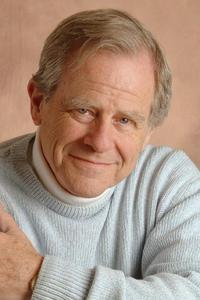
John Kingdon developed the Multiple Streams Framework (MSF), one of the most influential theories of agenda-setting and policy change. In his 1984 book *Agendas, Alternatives, and Public Policies*, he proposed that policy change occurs when three independent streams—problems, policies, and politics—converge during a 'policy window' opened by a focusing event. Drawing on the 'garbage can model' of organizational choice, Kingdon showed that policy entrepreneurs seize these windows to couple solutions to problems, dramatically reshaping how scholars understand why some issues rise to prominence while others languish. A professor emeritus at the University of Michigan, he remains a central figure in public policy studies.


✦What are the three streams in Kingdon's Multiple Streams Framework?
The problem stream consists of conditions that policymakers perceive as problems requiring attention, often highlighted by crises or indicators. The policy stream is the 'primeval soup' of ideas and proposals developed by policy communities—experts, analysts, and bureaucrats who float solutions. The politics stream includes national mood, election results, and partisan or ideological shifts. These streams flow independently. Major policy change occurs only when a policy window opens and an entrepreneur couples the streams.
✦What is a 'policy entrepreneur' in Kingdon's theory?
A policy entrepreneur is an individual or group willing to invest resources—time, energy, reputation—to promote a preferred policy solution. They are central to the MSF because they are the actors who wait for a policy window to open and then 'couple' the streams, attaching their preferred solution to a recognized problem in a politically opportune moment. Successful entrepreneurs possess expertise, persistence, political connections, and the ability to frame issues persuasively.
✦How did Kingdon's MSF draw on the 'garbage can model' of organizational choice?
Kingdon adapted the garbage can model developed by Cohen, March, and Olsen, which describes decision-making in organizations as the confluence of problems, solutions, participants, and choice opportunities that are all 'mixed together in a garbage can.' Kingdon saw U.S. policy-making as similarly fluid and anarchic: problems and solutions are not neatly matched; they float independently, and coupling happens opportunistically. This was a radical departure from rational-comprehensive models.
✦What is Kingdon's most influential book?
His most influential work is *Agendas, Alternatives, and Public Policies*, first published in 1984, with updated editions in 1995, 2003, and 2011. It is based on interviews with 247 individuals in and around Congress and the executive branch over four years. The book won the American Political Science Association's Aaron Wildavsky Award for an enduring contribution to policy studies and remains one of the most cited works in political science and public administration.
✦How does Kingdon's MSF differ from Sabatier's Advocacy Coalition Framework?
Both explain policy change over time, but they focus on different mechanisms. Sabatier's ACF emphasizes long-term, belief-driven coalitions and policy learning over decades. Kingdon's MSF is more concerned with agenda-setting and why issues receive attention at particular moments, focusing on short-term windows of opportunity and entrepreneurial action. Where the ACF sees policy subsystems as relatively stable, the MSF emphasizes fluid, chaotic, and unpredictable windows where three streams converge.
✦What is a 'policy window' and what opens it?
A policy window is an opportunity for policy entrepreneurs to push their preferred solutions. Kingdon identified two types: problem windows, opened by a compelling event like a crisis or disaster; and politics windows, opened by changes in the political landscape such as an election, a shift in public opinion, or a new administration. Windows open unpredictably and close quickly, requiring entrepreneurs to act decisively. The classic example is the 9/11 attacks opening a window for aviation security reforms.
✦What is a common misconception about Kingdon's work?
Many assume Kingdon's framework is purely descriptive and atheoretical. In fact, it is a rigorous causal theory with testable propositions. Critics sometimes charge that it is too focused on the U.S. federal system. Kingdon acknowledged this limitation but argued the framework can be adapted to other contexts. He also clarified that he was describing how agenda-setting works, not prescribing how it should work—he was a descriptive, not normative, theorist.
✦How has Kingdon's MSF been applied in practice?
The MSF has been applied to health policy, environmental regulation, education reform, criminal justice, and international relations. It is widely used by policy practitioners to understand how to advance their proposals. For example, health advocates study the MSF to plan how to push reform when a crisis opens a window. Kingdon himself was a fellow at the Brookings Institution and advised the Department of Health and Human Services. His work is central to training public policy students and practitioners in how to navigate the political process.