


Theodore J. Lowi
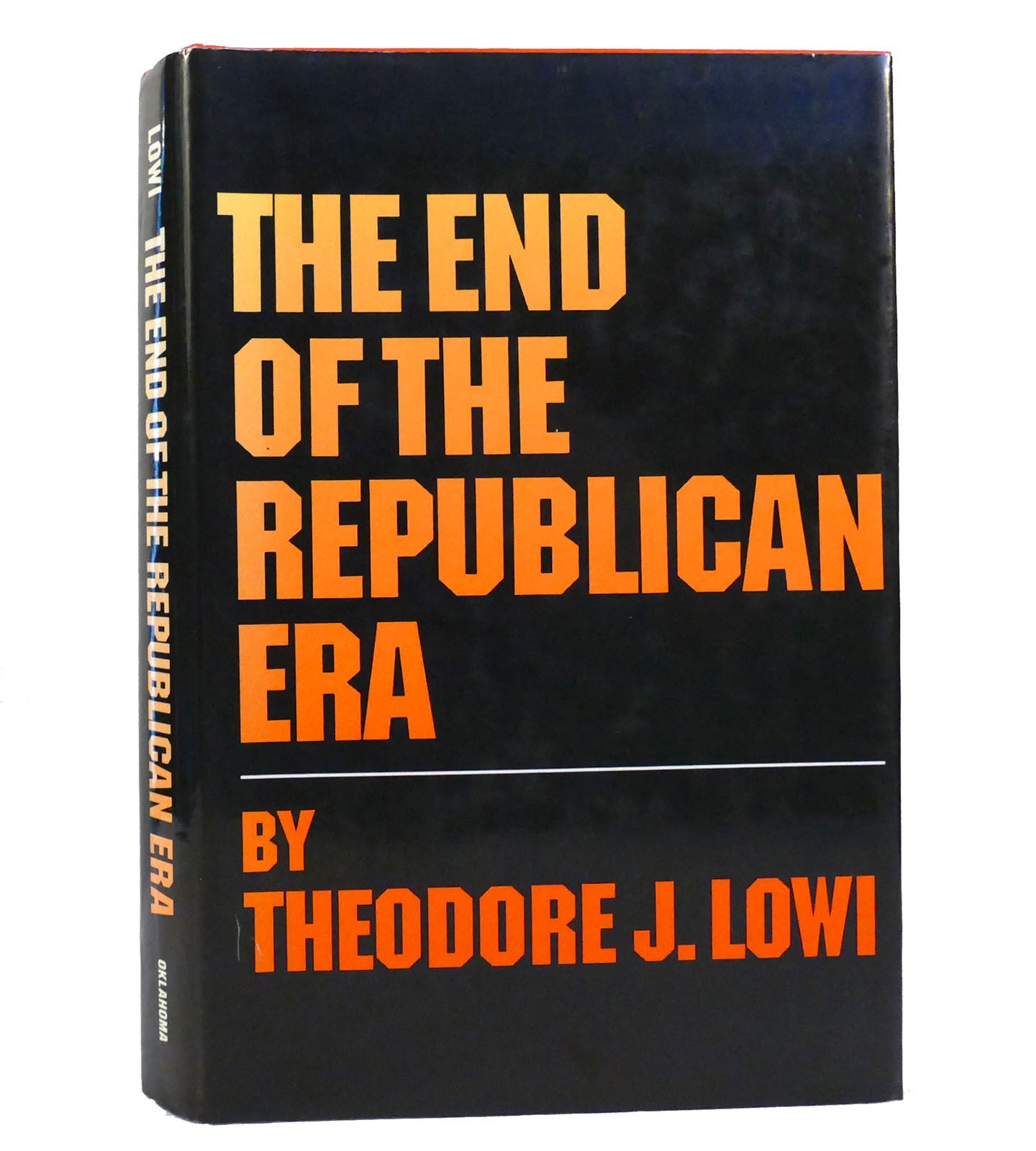
Theodore Lowi fundamentally altered the study of public policy by arguing that 'policies determine politics'—that the content of policy shapes the political conflict surrounding it. His 1964 typology of distributive, regulatory, redistributive, and constituent policies established that each type generates a distinct political arena. In his landmark 1969 book *The End of Liberalism*, he diagnosed the rise of 'interest-group liberalism,' where government delegates authority to organized interests, replacing the rule of law with bargaining. Lowi proposed 'juridical democracy' as a remedy, with courts enforcing clear statutory limits on administrative discretion. A Cornell professor for nearly five decades and president of the American Political Science Association (1990–91), he was named the most influential political scientist in a 1978 APSA poll.



✦What is Lowi's policy typology and why does it matter?
Lowi's typology classifies public policies into four types: distributive (disaggregated benefits, e.g., subsidies), regulatory (rules that pick winners and losers, e.g., antitrust), redistributive (shifting resources between broad classes, e.g., welfare), and constituent (changing governmental structure, e.g., reapportionment). The core insight—'policies determine politics'—means that each type generates a characteristic pattern of conflict, participation, and institutional venue. This framework moved policy analysis beyond description toward causal explanation.
✦What is 'interest-group liberalism' and why did Lowi criticize it?
Lowi coined 'interest-group liberalism' to describe the public philosophy that emerged from the New Deal, in which government delegates vast discretionary authority to administrative agencies that then bargain with organized interest groups. He argued this replaces the rule of law with negotiated outcomes, paralyzes government, and undermines democratic accountability. Instead of elected representatives making clear choices, policy is shaped by closed negotiations among insiders—a 'regime of policy without law' that Lowi saw as a crisis of public authority.
✦What is 'juridical democracy' and how does it differ from interest-group liberalism?
Juridical democracy is Lowi's proposed alternative to interest-group liberalism. It would restore the rule of law by requiring Congress to write clear, precise statutes that leave minimal discretion to administrators. Courts would then enforce these statutory limits, ensuring that policy reflects legislative intent rather than bureaucratic bargaining. Lowi believed this would re-politicize issues in a healthy way, forcing explicit trade-offs and accountable choices rather than hiding them in administrative discretion.
✦How does Lowi's approach differ from the pluralist tradition?
Pluralists like Robert Dahl saw interest-group competition as the essence of democracy—a healthy system where groups check each other. Lowi rejected this as naïve. He argued that pluralism had become a justification for delegating power to organized interests, which systematically excludes the unorganized and produces policy paralysis. Where pluralists celebrated bargaining, Lowi saw it as a corruption of democratic governance. His critique anticipated later concerns about 'agency capture' and the revolving door between regulators and regulated industries.
✦What is *The End of Liberalism* and what is its central argument?
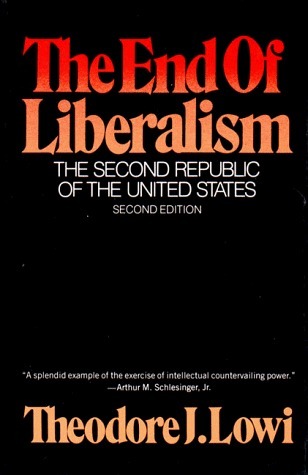
Published in 1969 and revised in 1979, *The End of Liberalism* is Lowi's most influential book. It argues that classical liberalism and capitalism have been replaced by interest-group liberalism as the dominant public philosophy. The engine of this transformation was delegation: Congress granted broad discretionary authority to administrative agencies, which then became captive to the interests they were meant to regulate. The result is a government 'unlimited in scope but formless in action'—one that can neither plan nor achieve justice. Lowi calls for a 'juridical democracy' to restore the rule of law.
✦What is the 'Law of Succession' that Lowi coined?
Lowi acerbically coined the 'Law of Succession,' which holds that each new president enhances the reputation of his predecessors. As presidents accumulate power and promise more than they can deliver, they inevitably fail to meet public expectations. This failure makes earlier presidents—who also overpromised and underdelivered—look better by comparison. The result is a cycle of inflated expectations, inevitable disappointment, and retrospective nostalgia, which Lowi explored in his work on the 'personal presidency' and the plebiscitary nature of the modern executive.
✦What honors did Lowi receive in his career?
In a 1978 poll of APSA members, Lowi was named the most influential political scientist in the United States[reference:0][reference:1]. He served as president of the American Political Science Association (1990–91) and of the International Political Science Association (1997–2000)[reference:2]. He was a Guggenheim Fellow (1967–68) and a National Endowment for the Humanities Fellow (1977–78)[reference:3]. In 2008, APSA awarded him the prestigious James Madison Award[reference:4]. In 2016, APSA and IPSA established the APSA-IPSA Theodore J. Lowi First Book Award in his honor[reference:5].
✦What is a common misconception about Lowi's work?
Many assume Lowi was a conservative critic of government growth. In fact, he was a liberal who believed government *should* act decisively—but through clear law, not administrative discretion. His critique was not of government intervention but of its *form*: delegation without accountability. He wanted a stronger, more effective state, not a weaker one. His proposed juridical democracy was meant to enable government to plan and achieve justice, not to roll back the welfare state. This is why Elizabeth Sanders called him a potential 'powerful philosopher' for the Democratic Party[reference:6].