


Harold D. Lasswell
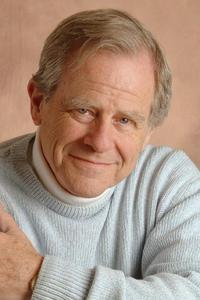
Harold Lasswell is the principal architect of the policy sciences, a field he conceived to integrate knowledge across disciplines for solving societal problems[reference:0][reference:1]. His 1951 co-edited volume *The Policy Sciences* is widely regarded as marking the discipline's birth[reference:2]. Lasswell defined politics as 'who gets what, when, how'[reference:3] and advanced the 'stages heuristic'—a seven-stage model of the decision process that became the foundational framework for policy analysis[reference:4][reference:5]. A professor at Yale Law School and president of the American Political Science Association, he also made foundational contributions to communication theory with his '5W' model and to political psychology[reference:6][reference:7][reference:8].
.webp?alt=media&token=aa600449-0e85-416c-b9c7-603a60ef26de)
.webp?alt=media&token=d6cd0ac6-4609-4c91-a9be-2b13f7041406)


✦What is Lasswell's 'stages heuristic' model of the policy process?
Lasswell was one of the first scholars to systematically outline the policy-making process[reference:9]. In his 1956 book *The Decision Process*, he proposed a seven-stage model: intelligence (information gathering), recommendation, prescription, invocation, application, appraisal, and termination[reference:10][reference:11]. This 'stages heuristic' or 'textbook approach' became the dominant paradigm for teaching and analyzing public policy[reference:12].
✦What does Lasswell mean by 'who gets what, when, how'?
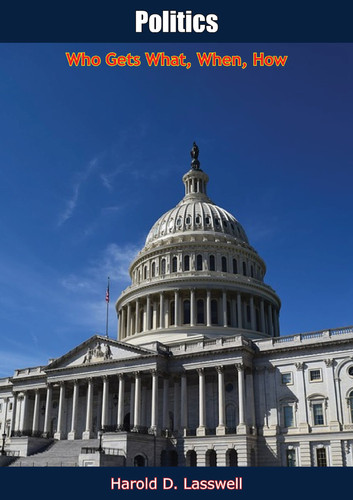
This is Lasswell's classic definition of politics, introduced in his 1936 book of the same name[reference:13][reference:14]. It reframes political science away from abstract institutions toward the concrete distribution of values—who benefits, what they receive, under what circumstances, and through what means. This formulation emphasizes power as the ability to participate in decisions and shaped the behavioral revolution in political science[reference:15].
✦How does Lasswell's policy science differ from earlier approaches to studying government?
Earlier political science focused on describing formal institutions like legislatures and constitutions. Lasswell argued for a 'policy sciences of democracy' that would be explicitly normative (committed to human dignity), problem-oriented, contextual, and multi-disciplinary[reference:16][reference:17][reference:18]. He believed social scientists should be actively engaged in solving society's most difficult problems, not merely observing from the sidelines[reference:19][reference:20].
✦What is Lasswell's '5W' model of communication?
In his 1948 essay 'The Structure and Function of Communication in Society,' Lasswell posed the question: 'Who says what to whom with what effect?'[reference:21][reference:22]. This '5W' formula—Who, Says What, In Which Channel, To Whom, With What Effect—became the foundational framework for communication research[reference:23][reference:24]. It established the five main areas of study in the field: control analysis, content analysis, media analysis, audience analysis, and effects analysis[reference:25].
✦What is a common misconception about Lasswell's work?
Many know Lasswell primarily as a communication theorist and assume that was his central contribution. In fact, he considered the creation of the policy sciences his greatest achievement[reference:26][reference:27]. He authored over thirty books and 250 articles across political science, psychology, law, and international relations, and his work on political psychology—particularly *Psychopathology and Politics* (1930)—was equally groundbreaking[reference:28][reference:29]. The '5W' model, while influential, represents only a fraction of his intellectual legacy.
✦What is the 'garrison state' thesis?
In his 1941 essay 'The Garrison State,' Lasswell warned that the rise of permanent military mobilization could transform democratic societies into militarized states where military specialists dominate political life. He argued that the logic of total war and technological change would concentrate power in the hands of military elites, potentially subverting democratic governance[reference:30]. This thesis anticipated later scholarship on the military-industrial complex and remains relevant to debates about national security and civil liberties.
✦How did Lasswell apply psychology to the study of politics?
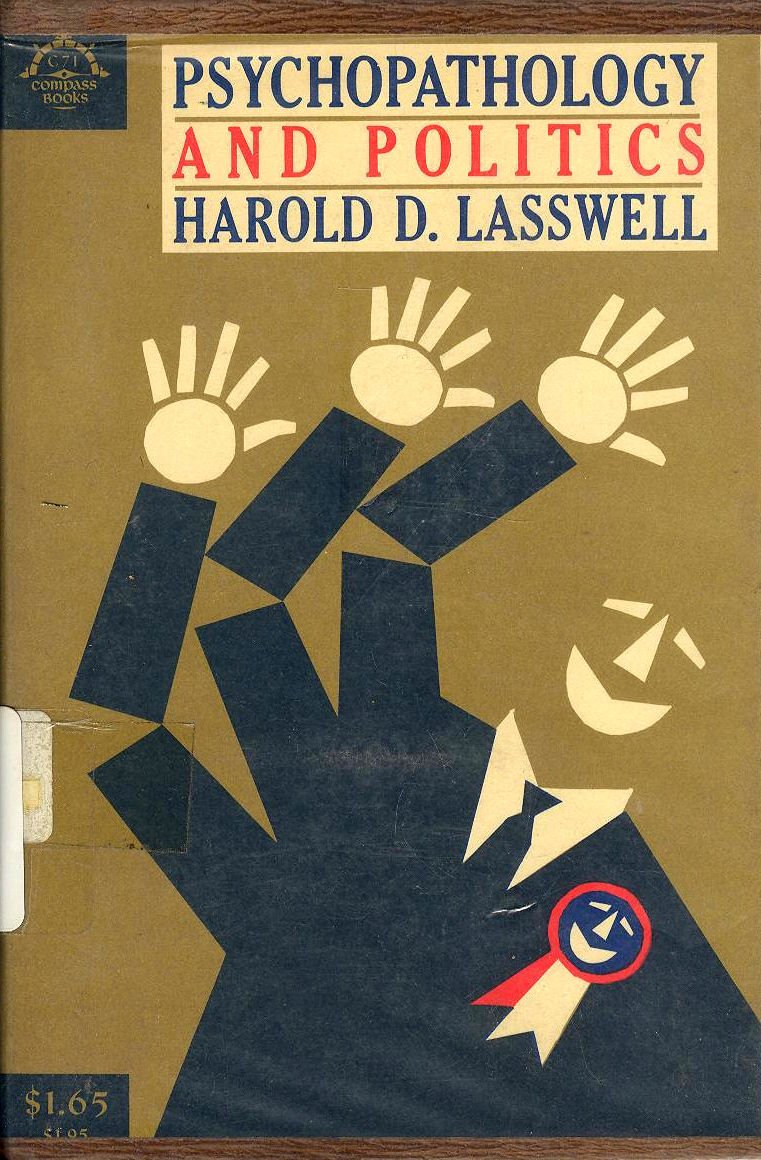
Lasswell was a pioneer of political psychology, applying concepts from clinical psychology—particularly psychoanalysis—to understand political leaders and mass behavior[reference:31][reference:32]. In *Psychopathology and Politics* (1930), he argued that political motives often mask private conflicts, and that the desire for power can be a sublimation of personal insecurities[reference:33][reference:34]. This approach opened new avenues for understanding why individuals seek power and how personality shapes political outcomes.