


Woodrow Wilson
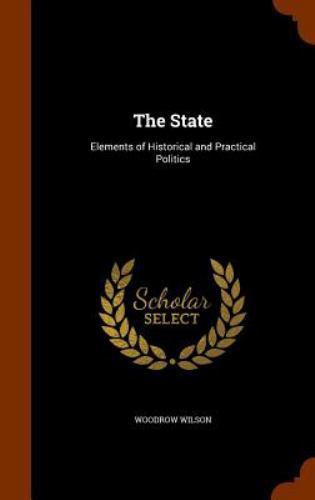
Woodrow Wilson is widely regarded as the father of public administration in the United States, primarily for his seminal 1887 essay, *The Study of Administration*[reference:0][reference:1]. In this work, he articulated the politics-administration dichotomy, arguing that while politics deals with policy-making, administration should be a separate, scientific field focused on the efficient and businesslike execution of those policies[reference:2][reference:3]. Wilson contended that administration lies outside the proper sphere of politics and should be studied as a distinct discipline[reference:4][reference:5]. A scholar and the 28th U.S. President, his ideas laid the cornerstone for modern public administration as a field of study[reference:6].





✦What is the politics-administration dichotomy?
The politics-administration dichotomy is the foundational concept Wilson introduced in his 1887 essay *The Study of Administration*[reference:7][reference:8]. It posits a clear distinction between the political realm, which is responsible for setting policy, and the administrative realm, which is responsible for implementing that policy[reference:9][reference:10]. Wilson argued that administration should be treated as a science, free from political interference and focused on efficiency and businesslike practices[reference:11]. This dichotomy aimed to create a professional, nonpartisan civil service that could execute the will of the people's representatives effectively[reference:12][reference:13].
✦Why is *The Study of Administration* (1887) considered a foundational text?
Published in the *Political Science Quarterly* in June 1887[reference:14][reference:15], Wilson's essay is considered the foundational text of American public administration[reference:16][reference:17]. Before Wilson, public administration was seen as a subfield of political science[reference:18]. Wilson argued it deserved its own study, establishing it as a distinct academic discipline[reference:19]. The essay not only introduced the politics-administration dichotomy but also advocated for the adoption of businesslike methods in government and the professionalization of the civil service[reference:20][reference:21], setting the agenda for the field for generations.
✦How did Wilson's ideas influence the development of public administration as a field?
Wilson's work provided the intellectual justification for separating administration from politics, which led to the creation of professional, merit-based civil service systems[reference:22]. By framing administration as a science, he paved the way for it to be studied systematically in universities, leading to the development of public administration programs[reference:23]. His call for efficiency and a businesslike approach influenced the progressive-era reforms and the subsequent rise of the administrative state[reference:24]. For decades, the dichotomy he proposed served as the central organizing principle for how scholars and practitioners thought about the role of bureaucracy in government[reference:25].
✦What is a common misconception about Wilson's politics-administration dichotomy?
A common misconception is that Wilson believed politics and administration could be completely and permanently separated. While he advocated for a clear distinction to enhance efficiency and shield administration from partisan spoils[reference:26][reference:27], he also recognized that administration operates within a political context and is ultimately accountable to political leaders[reference:28]. The dichotomy was more of a conceptual tool for analysis and reform than a literal description of reality. Critics later argued that it oversimplifies the complex relationship where administrators inevitably make policy, a debate that has shaped the field ever since[reference:29].
✦How does Wilson's work on public administration connect to his broader political philosophy?
Wilson's administrative theory was part of his broader progressive political philosophy, which sought to reform American government to meet the challenges of modernity[reference:30]. He was critical of the separation of powers and believed it created inefficiency[reference:31][reference:32]. By advocating for a powerful, expert administration that could implement policy efficiently, Wilson aimed to strengthen the state's capacity to serve the public good[reference:33]. His work as a scholar, university president, and U.S. President consistently reflected this vision of a government that could act decisively and effectively for the people[reference:34].
✦Was Wilson the only founder of public administration?
While Wilson is often called the 'Father of Public Administration' in the United States[reference:35][reference:36], he is not the only founder. The field is also heavily influenced by the work of European thinkers like Max Weber, who developed the theory of bureaucracy, and Frederick Winslow Taylor, who pioneered scientific management[reference:37]. Wilson's unique contribution was his early and influential argument for making administration a distinct field of study in the American context, separate from political science[reference:38].