


Frederick Winslow Taylor
Frederick Winslow Taylor is the founder of Scientific Management, a theory that sought to revolutionize industrial efficiency by applying engineering principles to the organization of work. In his 1911 book *The Principles of Scientific Management*, Taylor argued that management should be based on precise, scientifically determined methods rather than rule of thumb. His system involved time-and-motion studies, the standardization of tools and tasks, and the separation of planning from execution. A mechanical engineer by training, Taylor implemented his methods at Midvale Steel and Bethlehem Steel. His work laid the groundwork for modern operations management, industrial engineering, and the broader field of public administration, where his ideas influenced the push for efficiency and professionalism in government.

Shop Management

The Principles of Scientific Management
.jpg?alt=media&token=34355d06-7477-46de-aff9-d8e9605ad400)
A Piece-Rate System: Being a Step Toward Partial Solution of the Labor Problem
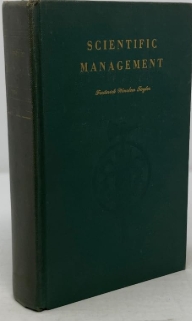
Testimony Before the Special House Committee
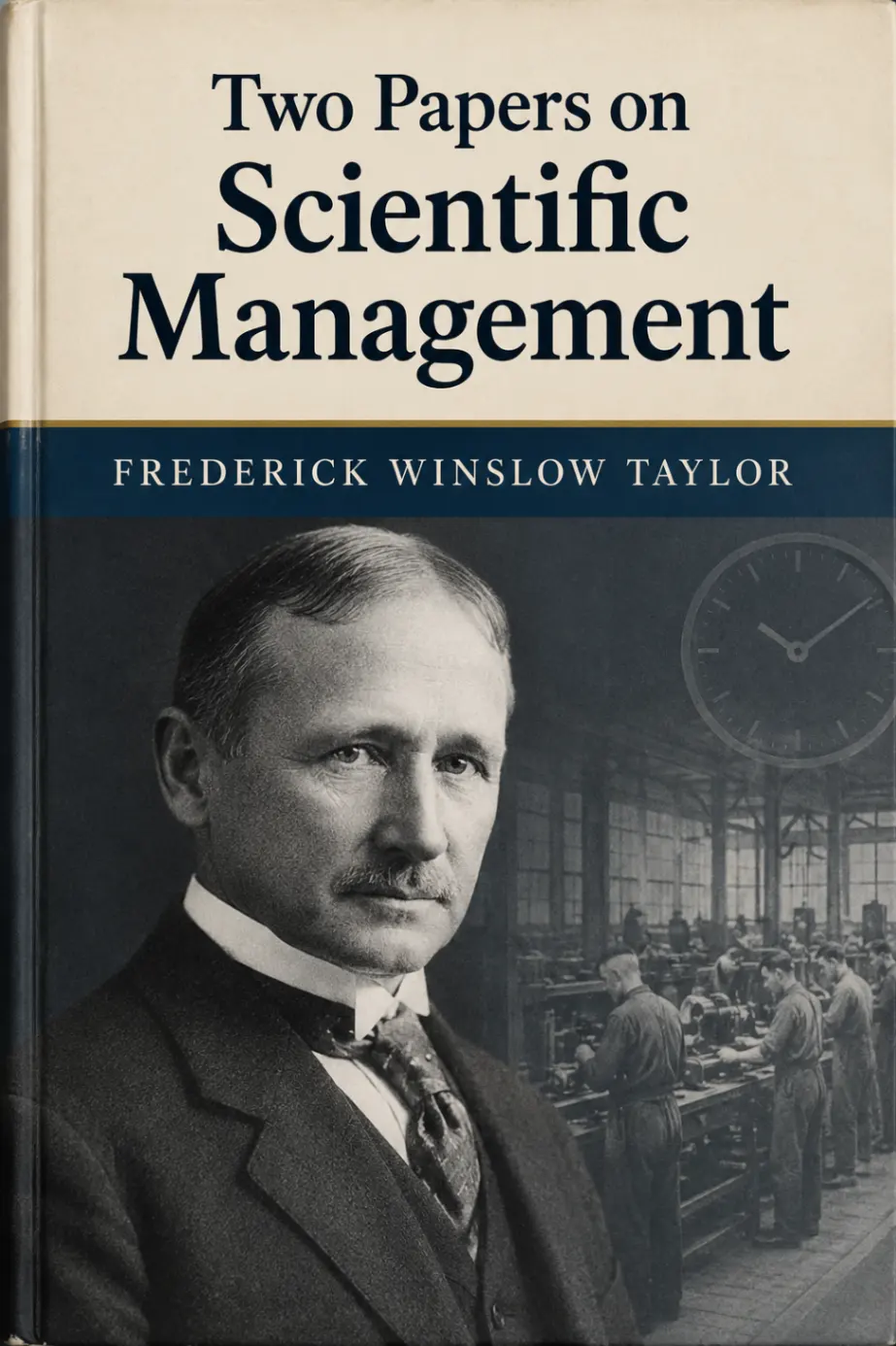
Two Papers on Scientific Management: A Piece-Rate System and Shop Management
Scientific Management: Comprising Shop Management, The Principles of Scientific Management, and Testimony Before the Special House Committee
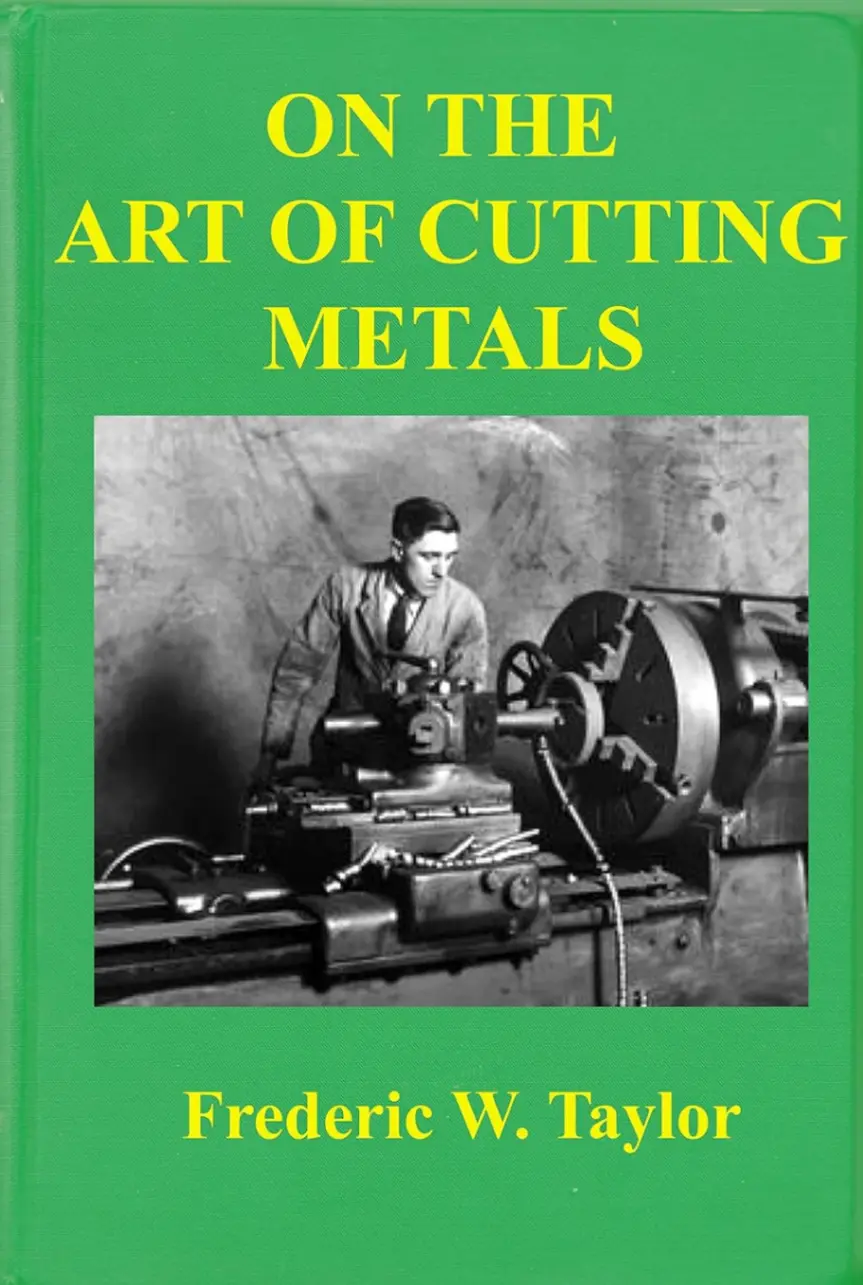
On the Art of Cutting Metals



✦What is Scientific Management?
Scientific Management is Taylor's system for improving industrial efficiency through the scientific study of work processes. It involves breaking down each task into its smallest components, timing each motion with a stopwatch, and determining the 'one best way' to perform the job. Taylor advocated for the standardization of tools and methods, the selection and training of workers, and the separation of planning (done by management) from execution (done by workers). He believed this approach would maximize productivity and prosperity for both employers and employees.
✦What is *The Principles of Scientific Management* and why is it important?
Published in 1911, *The Principles of Scientific Management* is Taylor's most influential work. It outlines the four principles of scientific management: developing a science for each element of work, scientifically selecting and training workers, cooperating with workers to ensure work is done according to the science, and dividing work and responsibility between management and workers. The book became an international bestseller and was translated into many languages, spreading Taylor's ideas far beyond the United States.
✦How does Taylor's Scientific Management differ from earlier approaches to management?
Before Taylor, management was largely based on tradition, rule of thumb, and the informal knowledge of skilled workers. Taylor replaced this with a systematic, data-driven approach. He believed that managers, not workers, should determine the best way to do a job through scientific study. This represented a fundamental shift in the distribution of power and knowledge in the workplace, moving control from the shop floor to the management office.
✦What is a common misconception about Taylor's work?
A common misconception is that Taylor was solely concerned with speed and treated workers as machines. While his methods were indeed focused on efficiency, Taylor himself argued that his system would benefit workers through higher wages and reduced physical strain. He believed in the 'mental revolution'—a complete change in the attitudes of both management and labor toward their mutual responsibilities. However, in practice, his methods were often implemented crudely, leading to worker exploitation and resistance, which Taylor himself criticized.
✦How did Taylor's ideas influence public administration?
Taylor's principles of efficiency, standardization, and scientific analysis were adopted by the emerging field of public administration in the early 20th century. Reformers sought to apply businesslike methods to government to reduce waste and corruption. The 'gospel of efficiency' that Dwight Waldo later critiqued had its roots in Taylorism. His influence can be seen in the budget reforms, civil service reforms, and organizational streamlining efforts of the Progressive Era.
✦What was Taylor's background and where did he implement his ideas?
Taylor was born in 1856 in Philadelphia to a wealthy Quaker family. He studied engineering at the Stevens Institute of Technology but left without a degree to work as an apprentice machinist. He rose through the ranks at Midvale Steel, where he began his experiments with time-and-motion studies. He later implemented his system at Bethlehem Steel, where he worked with the pig iron handlers. His consulting work took him to factories across the United States and Europe.
✦What is Taylor's legacy in modern management?
Taylor's legacy is immense. He is considered the father of scientific management, and his ideas are foundational to industrial engineering, operations research, and quality control. His emphasis on measurement, standardization, and systematic analysis remains central to modern management practices. While his methods have been criticized for being dehumanizing, his core insight—that work can be studied and improved scientifically—is now taken for granted in most organizations.
✦How did Taylor's work relate to the Progressive movement?
Taylor's ideas were part of the broader Progressive movement, which sought to apply science, efficiency, and expertise to solve social problems. Progressives believed that government could be reformed through the application of businesslike methods, and Taylorism provided a ready-made toolkit. His influence can be seen in the work of municipal reformers, budget experts, and civil service commissioners who sought to make government more efficient, professional, and less corrupt.