


Max Weber
Max Weber is the foundational theorist of bureaucracy and the concept of rational-legal authority, which together form the intellectual bedrock of modern public administration. In his magnum opus, *Economy and Society* (posthumously published 1922), he developed the ideal-type of bureaucracy as the most efficient and rational form of organization, characterized by fixed jurisdictional areas, a hierarchical structure, and rule-based decision-making. Weber argued that modern governance had shifted from traditional and charismatic forms of authority to a rational-legal system based on codified rules and formal procedures. A professor at the universities of Freiburg, Heidelberg, and Munich, his work remains essential to understanding organizational structure and administrative power.




✦What is Weber's ideal-type of bureaucracy?
Weber's ideal-type of bureaucracy is a rational and efficient form of organization based on legal-rational authority. He described it as having six key characteristics: fixed official jurisdictions, a hierarchical chain of command, management based on written rules, specialized training for officials, full-time salaried professionals, and administrative acts recorded in writing. For Weber, this was the 'purely rational' form of administration, superior in precision, speed, and continuity to any other form of organization.
✦What are the three types of authority that Weber identified?
Weber identified three ideal-types of legitimate authority: traditional authority, based on belief in the sanctity of tradition (e.g., monarchies); charismatic authority, based on the exceptional personal qualities of a leader (e.g., prophets, revolutionary leaders); and rational-legal authority, based on the belief in the legality of enacted rules and the right of those in power to issue commands. Weber argued that modern states are characterized by rational-legal authority and its administrative apparatus, bureaucracy.
✦How does Weber's concept of bureaucracy relate to his broader sociological theory?
Weber's analysis of bureaucracy is central to his theory of rationalization. He argued that modernity is characterized by the increasing rationalization of all aspects of social life, from religion to law to administration. Bureaucracy is the organizational expression of this trend, replacing traditional, affective, and charismatic forms of governance with rule-based, impersonal, and efficient structures. While he recognized its efficiency, Weber also famously worried about the 'iron cage' of rationality, where bureaucracy could become an impersonal, dehumanizing force.
✦What is the difference between Weber's bureaucratic theory and Taylor's scientific management?
While both are concerned with efficiency, their focus differs significantly. Frederick Winslow Taylor's scientific management focused on optimizing individual tasks and workflows at the micro-level of the worker, using time-and-motion studies. Weber's theory was macro-level, focusing on the formal structure of the entire organization, including hierarchy, rules, and the legal-rational context of authority. Weber was concerned with legitimacy and administrative power; Taylor was concerned with productivity.
✦What is a common misconception about Weber's work on bureaucracy?
A common misconception is that Weber was an enthusiastic advocate for the bureaucratic model and saw it as a perfect system. In fact, Weber was deeply ambivalent. While he acknowledged its technical superiority over other forms of administration, he also warned of its dangers, coining the phrase the 'iron cage' to describe how rational, rule-bound systems could trap individuals in an impersonal and dehumanizing environment. He saw it as a powerful and often oppressive force in modern society, not an unalloyed good.
✦What is *Economy and Society* and why is it important?
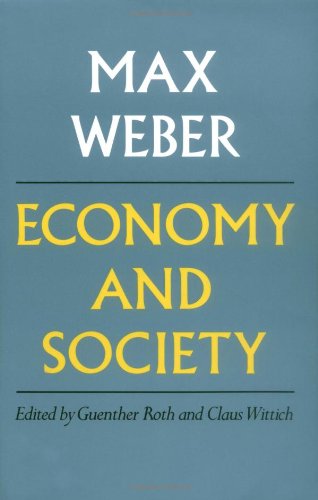
*Economy and Society* is Weber's magnum opus, published posthumously in 1922. It is a massive, comprehensive work on the relationship between economic and social structures. It contains his most detailed expositions on sociology, social action, authority, religion, law, and, critically, bureaucracy and rational-legal authority. The sections on bureaucracy within this work are foundational for the study of public administration and organizational theory.
✦How is Weber's theory of bureaucracy applied in the modern world?
Weber's theory is used as a benchmark to understand and evaluate modern organizational structures. Public administrators use his ideal-type to analyze government agencies, assess their hierarchy, rule systems, and professionalization. It forms the basis for understanding the administrative state and is a key lens for organizational reforms, as reform efforts often try to move organizations closer to, or further from, his ideal. His framework is also used to critique issues like bureaucratic dysfunction, red tape, and the lack of responsiveness.
✦Did Woodrow Wilson know Weber's work when writing about public administration?
Unlikely. Wilson's seminal essay *The Study of Administration* was published in 1887, before Weber's major sociological writings, which appeared primarily in the 1910s and 1920s. While both thinkers laid foundational stones for public administration, they were part of a transatlantic conversation about the challenges of modern governance. Wilson focused on the politics-administration dichotomy and the need for professional management, while Weber provided the comprehensive sociological and historical framework for understanding bureaucracy itself.