



Begriffsschrift, eine der arithmetischen nachgebildete Formelsprache des reinen Denkens
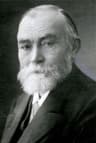
Frege's central achievement is the invention of a formal language—the Begriffsschrift, or concept-script—designed to display the logical structure of propositions with a precision that ordinary language cannot. The book introduces the distinction between function and argument, replacing the traditional subject-predicate analysis, and presents a complete system of quantification theory for the first time. Frege's larger aim is logicist: to show that arithmetic can be derived from purely logical laws. Though largely dismissed by contemporaries, the work founded modern mathematical logic.
Key Insights
✦What is the central claim of Begriffsschrift, and what does it reject?
Frege's central claim is that a specially constructed formal language—a Begriffsschrift, or concept-script—is necessary to exhibit the logical structure of thought with the rigour that arithmetic requires. The book rejects the traditional subject-predicate analysis of propositions, arguing that it cannot account for the logical relations that matter in mathematics. In its place, Frege introduces the distinction between function and argument, which allows him to analyse generality, identity, and inference in a new way. The formal system he constructs is the first complete presentation of quantification theory. Frege's ultimate aim is to show that arithmetic can be grounded in purely logical laws, a programme he would develop in his later Grundlagen der Arithmetik.
✦What specific innovation did Begriffsschrift introduce, and where is it used today?
The book introduced the function-argument analysis of propositions and, with it, the first complete system of quantification theory—the logic of 'all' and 'some' as expressed by bound variables. Frege's notation was cumbersome, but the underlying innovations are the foundation of modern symbolic logic. The distinction between function and argument allows a unified treatment of predicates, relations, and quantifiers that the older subject-predicate logic could not provide. Contemporary logic, mathematics, and computer science all rely on quantification theory in something recognisably derived from Frege's framework. As one study notes, the formal system developed in Begriffsschrift is based on the function-argument distinction and is 'the first one in the history of logic' to present second-order logic . The notation was later simplified by Peano and Russell, but the logical content is Frege's.
✦How was the book received by Frege's contemporaries, and why was it ignored?
The reception was almost uniformly negative. Of the six contemporary reviews, only one was positive; the others dismissed the work as making no advance on Boole or even as a step backwards . Ernst Schröder, a leading logician of the day, argued that Frege's aims had already been achieved by Hermann Grassmann. In France, Paul Tannery complained that the notations were excessively complex and the explanations insufficient. In England, John Venn judged Frege's scheme 'cumbrous and inconvenient' and inferior to Boole's . The reviews reveal a failure to grasp what Frege had accomplished: the function-argument analysis was seen as an unnecessary complication rather than a foundational advance. Frege was not discouraged, but the book's influence was negligible until Russell and Peano began to study his work in the 1890s and 1900s.
✦What is the relationship between Begriffsschrift and Frege's later Grundlagen der Arithmetik?
Begriffsschrift is the technical foundation on which the logicist programme of the Grundlagen (1884) rests. In the preface to Begriffsschrift, Frege states his intention to investigate the concepts of number and magnitude, and he indicates that this will be the object of further publications . The Grundlagen, published five years later, is the philosophical and informal presentation of the logicist thesis that arithmetic is derivable from logic; the full formal derivation was to follow in the Grundgesetze der Arithmetik (1893–1903). Begriffsschrift thus provides the logical language and the function-argument analysis that make the later project conceivable, even though the mature system of the Grundgesetze differs in important respects, including the abandonment of the triple-bar sign for identity in favour of the ordinary equals sign .
✦Was Begriffsschrift a complete and consistent logical system as published?
The system was incomplete in certain technical respects, though not inconsistent in the way that van Heijenoort suggested. Van Heijenoort argued that Frege's rule of substitution, which allows a functional letter to occur within the scope of a quantifier, blurs the distinction between function and argument and brings the system to the brink of paradox . Bynum, however, notes that Frege never performs the problematic substitutions and that the derivations in Begriffsschrift steer clear of contradiction. What is missing is an explicit recognition of the different types of function and argument—first-level and second-level—that would become central to the logic of Grundgesetze . Frege had not yet devised the notational machinery to state his thought precisely, but the system as presented is not inconsistent. The confusion arises from reading later distinctions back into the earlier text.
✦What is a common misreading of Begriffsschrift's function-argument distinction?
A common misreading treats the function-argument distinction as a semantic or ontological distinction between functions and objects, as it appears in Frege's later work. In Begriffsschrift, however, the distinction is presented as applying to expressions, not to entities. As Badesa and Bertran-San Millán argue, the formal system is based on a distinction that 'applies only to expressions and not to entities' . The semantic interpretation that identifies the distinction with the ontological structure of function and object belongs to the later Grundgesetze, not to the 1879 text. Reading the earlier work through the lens of the later one obscures the specific character of Frege's early project and the flexibility of the formal system he devised.
Wealthy Psyche is an intellectual archive. We do not host, distribute, or sell book copies — physical or digital. We provide structured knowledge to help you think better, faster.