



Function and Concept
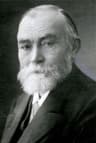
Frege's central argument is that the mathematical notion of a function—an expression with an empty place, requiring completion by an argument—provides the key to analysing logical form. Concepts are a special kind of function: unsaturated entities whose values are always truth-values. This framework replaces the traditional subject-predicate analysis, sharpens the distinction between concepts and objects, and introduces the course-of-values as a generalisation of the extension of a concept. The lecture is the pivotal text in which Frege's logical innovations are presented for the first time in their mature form.
Key Insights
✦What is the central claim of Function and Concept, and what does it reject?
Frege argues that the mathematical notion of a function—an expression with one or more empty places that yields a value when completed by an argument—provides the correct model for analysing logical form. Concepts are a special kind of function whose values are always truth-values: a concept maps an object to the True or the False. The lecture rejects the traditional subject-predicate analysis of propositions, which treats a sentence as composed of a substance and its attributes. In its place, Frege offers the function-argument distinction, which allows a unified treatment of predicates, relations, and quantifiers, and which sharpens the absolute distinction between saturated objects and unsaturated concepts. The lecture is the first public presentation of these mature logical ideas.
✦What is the distinction between first-level and second-level concepts?
A first-level concept is a one-place function that takes an object as argument and yields a truth-value. For example, the concept 'is a horse' takes an object—say, Bucephalus—and yields the True if that object is a horse. A second-level concept takes a first-level concept or relation as its argument and yields a truth-value. For example, the concept of existence, on Frege's analysis, is a second-level concept: it says of a first-level concept that it has at least one instance. Frege introduces this hierarchy to avoid the confusion that arises when one tries to treat concepts as objects, and it is essential to his resolution of the concept horse paradox in the following year's essay On Concept and Object.
✦What is the 'course-of-values' introduced in this lecture, and why does it matter?
The course-of-values of a function is a generalisation of the notion of the extension of a concept. Where the extension of a concept is the collection of objects that fall under it, the course-of-values is the more general object associated with any function, recording the value the function yields for each argument. Frege introduces this notion in Function and Concept as a way of treating functions as objects that can be named and quantified over. The course-of-values becomes central to The Basic Laws of Arithmetic, where it is governed by Basic Law V—the axiom that later turned out to be inconsistent due to Russell's paradox. The lecture is thus the first appearance of the machinery that would both enable and ultimately undermine Frege's logicist project.
✦How was the lecture delivered and published, and what is the standard English translation?
Frege delivered the lecture, 'Funktion und Begriff,' on 9 January 1891 to the Jenaische Gesellschaft für Medizin und Naturwissenschaft in Jena, and it was published the same year by Hermann Pohle . The first English translation appeared in 1952 in Geach and Black's Translations from the Philosophical Writings of Gottlob Frege, published by Blackwell . A revised translation by Peter Geach appears in Michael Beaney's The Frege Reader (Blackwell, 1997), and this is now the standard scholarly version . The lecture is relatively short and accessible by Frege's standards, making it a common entry point for readers approaching his mature logic for the first time.
✦How does the lecture relate to Frege's essays On Sense and Reference and On Concept and Object?
The three essays—Function and Concept (1891), On Sense and Reference (1892), and On Concept and Object (1892)—form a tightly connected trilogy that presents Frege's mature logical and semantic views . Function and Concept provides the underlying logical framework: the function-argument analysis and the concept-object distinction. On Sense and Reference builds on this framework to introduce the sense-reference distinction, which explains how co-referring terms can differ in cognitive value. On Concept and Object replies to Benno Kerry's objection that the concept-object distinction is inconsistent, using the resources developed in the earlier lecture. Together, the three essays are the canonical statement of Frege's philosophy of logic and language.
✦What is a common misreading of the lecture's function-argument distinction?
A common misreading treats the function-argument distinction as a psychological or grammatical distinction—as if a function were a mental operation and an argument a perceived object. Frege's distinction is logical and ontological: functions are unsaturated entities that require completion, while objects are saturated and self-subsistent. The distinction is not about how we think or how sentences are grammatically structured, but about the structure of thoughts and the entities they involve. This is why Frege insists that a concept is not a property of a mind but an objective, timeless entity. Reading the lecture as a contribution to psychology of language, rather than to logic, misses its point and obscures the grounds for Frege's critique of psychologism.
Wealthy Psyche is an intellectual archive. We do not host, distribute, or sell book copies — physical or digital. We provide structured knowledge to help you think better, faster.