



Elements of Psychophysics
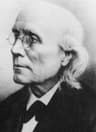
Fechner argues that the relation between mind and body can be expressed as an exact mathematical law, and that psychology therefore qualifies as a quantitative science. The book's mechanism is the derivation of the logarithmic law of sensation from Weber's law plus the assumption that all just-noticeable differences are subjectively equal. By measuring the smallest detectable change in a stimulus and treating each such increment as a constant unit of sensation, Fechner built an equation linking physical intensity to psychological magnitude. The result founded psychophysics as a discipline and gave experimental psychology its first rigorous quantitative method.
Key Insights
✦What is the central claim of Elements of Psychophysics, and what does it reject?
Fechner argues that the functional dependence between body and mind can be expressed as an exact mathematical law, and that psychology can therefore be a quantitative science. He rejects the assumption that psychological phenomena are too subjective for measurement. The book's central derivation builds on Weber's law—that the just-noticeable difference in stimulus intensity is a constant fraction of the original stimulus—and adds the assumption that all just-noticeable differences are subjectively equal . From these premises Fechner derived his logarithmic law: sensation intensity increases as the logarithm of stimulus intensity. The book also rejects purely philosophical approaches to the mind-body problem, insisting that the relation must be measured experimentally.
✦What specific law did the book introduce, and how does it relate to Weber's law?
The book introduced Fechner's law, also called the Weber-Fechner law: S = k log I, where S is sensation magnitude and I is stimulus intensity. Weber's law, formulated by Ernst Heinrich Weber, states that the smallest detectable change in a stimulus is proportional to the stimulus's original magnitude . Fechner, who had been Weber's student, built his logarithmic law from Weber's empirical finding plus the additional assumption that each just-noticeable difference corresponds to an equal increment of sensation . Fechner named Weber's law in honor of his mentor. The combined law became foundational to psychophysics and remains one of the most cited quantitative relationships in psychology, though later research suggested power functions often fit the data better.
✦How was the book received by contemporaries, and what criticisms were raised?
Reception was intense and contentious. Fechner himself predicted that his psychophysical edifice would stand because critics would never agree on how to tear it down, and the prediction proved accurate . Critics attacked both the empirical validity of Weber's law across all sense modalities and Fechner's assumption that just-noticeable differences are subjectively equal. A review of the 1966 English translation observed that the text remains 'nearly unreadable' in English as in the original German, and that its primary interest is historical rather than contemporary . The reviewer argued the Elemente is not a 'great' work like Newton's Principia but a 'seminal' one: untidy, alternately metaphysical and empirical, yet containing the principle and procedures that remain central to psychology.
✦What is the translation history of the book, and why was it not translated into English until 1966?
Despite its foundational status, Elemente der Psychophysik was not translated into English until 1966, over a century after publication. The translation by Helmut E. Adler, edited by Davis H. Howes and Edwin G. Boring, was published by Holt, Rinehart and Winston . A contemporary review explained the delay: Fechner's German prose was syntactically contorted, and the ideas that mattered to later psychologists—Weber's law, the logarithmic formula—had already been disseminated by Wundt, G. E. Müller, and Titchener without requiring access to the full text . The 1966 edition translated only Volume I; the translator's preface stated that Volume II remained 'an undertaking for the future,' and the binding did not indicate that only half the work was included .
✦What role did Edwin Boring play in the English edition, and how does that connect to his own historiography?
Boring co-edited the 1966 English translation and wrote its introduction . This role is consistent with Boring's career as psychology's premier historian and his presentist historiography. Boring had written A History of Experimental Psychology (1929), which treated Fechner as a pivotal figure in the discipline's founding, and he later wrote Sensation and Perception in the History of Experimental Psychology (1942). Editing and introducing Fechner's text was thus an extension of Boring's broader project of shaping psychology's self-understanding through selective engagement with its past. His involvement lent authority to the translation and framed Fechner for English-speaking readers as the founder of quantitative psychology, a characterization consistent with the near-consensus view that the Elemente was the first major demonstration that psychological phenomena could be studied experimentally and quantitatively .
✦Does the book's argument hold up given subsequent research?
The core insight—that there is a measurable, lawful relation between physical stimulation and psychological response—has endured, but the specific logarithmic law has been qualified. Stevens's power law later provided a better fit for many sensory continua, and modern researchers accept that a logarithmic function is one of a family of possible relations rather than the universal law Fechner proposed . The assumption that all just-noticeable differences are subjectively equal has also been questioned. However, Fechner's broader contribution—the principle that there are determinate, measurable relations between physical stimuli and sensory events, and the statistical procedures for defining those relations—remains central to psychophysics and to psychology more generally . The book is thus historically foundational even where its specific formulations have been revised.
✦How does Elements of Psychophysics relate to Fechner's other, more metaphysical works?
The relationship is one of continuity beneath apparent contradiction. Fechner published Das Büchlein vom Leben nach dem Tode in 1836 under the pseudonym Dr. Mises, arguing for a panpsychist view in which mind is pervasive in nature and death is a transition to higher consciousness. Elements of Psychophysics (1860) appears purely scientific by comparison, but Fechner's own view of the mind-body relation was not dualistic parallelism but an identity hypothesis: the equation between mind and body in terms of Weber's law seemed to him virtually a demonstration of their identity . The psychophysical project was thus not a departure from his metaphysics but an attempt to demonstrate it rigorously. The later book gave the metaphysical conviction empirical and mathematical form.
Wealthy Psyche is an intellectual archive. We do not host, distribute, or sell book copies — physical or digital. We provide structured knowledge to help you think better, faster.