



Nanna oder über das Seelenleben der Pflanzen
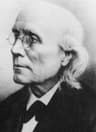
Fechner argues that plants possess souls, and that the absence of a nervous system does not disprove their sentience. The book's mechanism is analogical and deconstructive: it first dismantles the anthropocentric biases that place plants below animals—the assumption that nerves are the only medium for feeling, that immobility implies insentience—then builds a case that plants experience the world through their own distinct, decentralized organization. Writing after years of isolation from an eye disorder, Fechner presents plant life as a complementary form of inner experience, not a lesser one, making this an early and influential statement of panpsychism.
Key Insights
✦What is the central claim of Nanna, and what does it reject?
Fechner argues that plants possess souls—that they are sentient, experiencing beings—and that the absence of a nervous system is no evidence against this. The book rejects the anthropocentric hierarchy that places plants below animals and assumes that feeling requires the same physiological machinery in every form of life . Fechner deconstructs three prevalent biases: the philosophical tradition that treats plants as subordinate, the assumption that nerves are the only medium for sensation, and the misconception that plants' immobility implies a lack of inner life . His positive case rests on analogy and functional equivalence: plants perform complex vital processes without a brain, so why should feeling be uniquely dependent on one?
✦How does Fechner argue against the necessity of a nervous system for sentience?
Fechner employs a musical metaphor: a piano or violin produces melody through strings, but this does not preclude flutes or organ pipes from producing music through entirely different mechanisms. The absence of 'strings' (nerves) does not imply the absence of 'sound' (sensation) . He then poses a teleological question: if plants can accomplish nutrition, respiration, and reproduction without a centralized brain, why should the faculty of feeling be uniquely dependent on neurons? Modern research has vindicated part of this intuition by revealing that plants use neurotransmitter-like molecules and electrical signaling for long-distance communication, though whether this constitutes sentience remains debated . Fechner's argument is not that plants have animal-like feelings, but that feeling may be realized in a decentralized, modular architecture entirely unlike our own.
✦What role did Fechner's personal crisis play in the writing of Nanna?
Nanna was written after Fechner emerged from the darkest period of his life (1839–1844). Overwork and experiments on his own eyes had left him so sensitive to light that he spent years cloistered in darkness, wearing opaque masks, and he came close to madness and starvation . A French scholarly account describes his emergence into a flowering garden as a mystical event that completed his 'transubstantiation from physicist to nature-philosopher,' and Fechner describes this experience in Nanna's final chapter . The book is thus not a detached treatise but a product of convalescence: its insistence that plants have their own inner light reflects Fechner's recovery of light and life after years of darkness. The 'daylight view' of nature that he opposed to the 'night view' of mechanistic science was forged in this period.
✦How was Nanna received in the nineteenth century, and what editions appeared?
Nanna was Fechner's most popular work during his lifetime and went through multiple editions. The first appeared in 1848 from Leopold Voss in Leipzig . A second edition followed in 1899, a third in 1903, and a fourth in 1908 with an introduction by Kurd Laßwitz . A 1921 Insel-Verlag edition, edited by Max Fischer, abridged the text heavily—removing what Fischer called outdated botanical material and 'importune accessories'—to make Fechner accessible to a broader postwar readership . The book also found readers abroad: an Italian translation by Giuseppe Rensi appeared in 1938 and was reissued by Adelphi in 2008 . A French translation was published in 2024 , and a Spanish translation in 2025 .
✦Is there an English translation of Nanna, and does the lack of one matter?
No complete English translation of Nanna has been identified in library catalogs or major repositories . This absence matters for reception: Fechner's argument for plant sentience is known in the Anglophone world primarily through secondary accounts and brief mentions, not through direct engagement with the full text. Readers who do not read German or one of the available translations (Italian, French, Spanish) must rely on summaries. The book's historical significance as an early panpsychist treatise and as a precursor to contemporary debates about plant cognition is thus acknowledged more often than its actual argument is examined. The 2024 French and 2025 Spanish translations suggest renewed interest, but English-language scholarship remains dependent on intermediaries.
✦How does Nanna relate to Fechner's later work in psychophysics?
The relationship is one of continuity beneath apparent divergence. Nanna (1848) argues metaphysically that mind is pervasive in nature and that plants have souls. Elements of Psychophysics (1860) appears purely scientific, deriving the logarithmic law of sensation. But Fechner's own view was not dualistic: he saw the psychophysical equation as virtually a demonstration of the identity of mind and body . A scholarly analysis notes that Nanna already contains the germ of this identity thesis, approaching 'the principle that every mental process corresponds to a physical process' . The later psychophysics gave this metaphysical conviction empirical and mathematical form. Nanna is thus not a youthful aberration but the first serious statement of the panpsychist worldview that Fechner spent the rest of his career trying to demonstrate scientifically.
Wealthy Psyche is an intellectual archive. We do not host, distribute, or sell book copies — physical or digital. We provide structured knowledge to help you think better, faster.