



Zur experimentalen Aesthetik
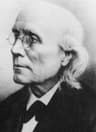
Fechner argues that aesthetics must be grounded in measurable preference rather than philosophical speculation, and this 1871 monograph is the methodological foundation for that program. Its distinctive contribution is the experimental study of the golden section: Fechner presented rectangles varying in proportion to observers and tabulated their choices, finding a preference peak near the ratio of approximately 1:1.618. He also extended the method to a public experiment on the Holbein Madonna, collecting over a hundred lay judgments. The work established experimental aesthetics as a discipline, though its specific golden-section findings have been contested by later replication attempts.
Key Insights
✦What is the central claim of Zur experimentalen Aesthetik, and what does it reject?
Fechner argues that aesthetic preference can and should be studied experimentally, by presenting controlled stimuli to many observers and tabulating their choices, rather than by deducing principles from a philosophical definition of beauty. The work is the methodological foundation for what he later called 'aesthetics from below' . It rejects the speculative, deductive aesthetics dominant in German philosophy, which treated lay judgments as inferior to expert pronouncements. Fechner's experiments on the golden section—asking subjects to choose among rectangles of different proportions—demonstrated that a statistical approach could yield generalizable findings about aesthetic liking, even if the specific findings were later contested.
✦What did Fechner's golden-section experiments actually involve, and what did he find?
Fechner presented observers with rectangles of varying proportions, from a square to elongated shapes, and asked them to indicate which they found most pleasing. He found that preference peaked near the golden section ratio of approximately 1:1.618, with a sharp decline at the extremes . He also tested division ratios (dividing a line rather than comparing dimensions) and found the golden section was not preferred for that task, a nuance often lost in later summaries . His report was not methodologically precise enough for exact replication, a limitation later researchers noted . The experiments were groundbreaking in method even where their conclusions proved fragile.
✦How does this work relate to Fechner's later Vorschule der Aesthetik?
Zur experimentalen Aesthetik (1871) is the methodological precursor to Vorschule der Aesthetik (1876). In the later work, Fechner explicitly referenced the 1871 monograph as the place where the idea of an experimental aesthetics was first presented, with a continuation still to come . The Vorschule expanded the program into two volumes, combining the experimental method with applied analyses of art. A scholarly account of Fechner's aesthetics describes the 1871 work as standing in the shadow of the Elemente der Psychophysik but as essential to the development of his aesthetic hedonism . Readers seeking the full system should consult the Vorschule; this monograph is the seed.
✦What was the Holbein Madonna experiment, and why is it significant?
In 1871, Fechner conducted a public experiment at the Dresden Holbein exhibition, asking visitors to judge which of two versions of the Madonna was the original. Over 11,000 people visited, but only 113 recorded opinions, and many of those had to be rejected because respondents did not follow instructions or were art experts with prior knowledge . By modern standards the experiment failed. However, scholars Nadal and Vartanian argue its significance lies in three firsts: Fechner valued the public's reception of art over expert judgment; he showed that lay appreciation was worthy of scientific study; and he was the first to collect data from over 100 people, use statistical techniques to determine aesthetic value for a whole sample, and study variables like sex and expertise in a public space . The failure was methodologically generative.
✦Has the golden-section hypothesis held up since Fechner?
Largely no. A 1997 replication attempt by Holger Höge, published in the journal Empirical Studies of the Arts, concluded that 'the golden section hypothesis is a myth' . Höge noted that Fechner's report was too imprecise for exact replication and that across three experiments with varying methods, the golden section was not the preferred proportion. He suggested Fechner's reported preference peak may have been an artifact or the effect of unknown factors. Earlier replications throughout the twentieth century had produced widely differing results . The methodological innovation—controlled stimuli, tabulated preferences, statistical analysis—endured and founded experimental aesthetics; the specific claim about the golden section did not.
✦What is the publication history of this work, and does the edition matter?
Zur experimentalen Aesthetik was published in 1871 by S. Hirzel in Leipzig as part of the Abhandlungen der Königlich Sächsischen Gesellschaft der Wissenschaften, Mathematisch-physische Classe, volume 9, pages 553–635 . It is a monograph-length article in a learned society's proceedings rather than a standalone book. No complete English translation has been identified. A later Cambridge University Press reprint of Fechner's Vorschule (1897 second edition) references the 1871 work, but the original remains accessible primarily through German-language sources and library archives. Scholars should cite the original 1871 publication with its journal and page numbers.
✦How was the work received by Fechner's philosophical contemporaries?
It encountered resistance. A study by Christian Allesch notes that Fechner's demand for an 'aesthetics from below' met 'bitter resistance' among his philosophical colleagues . The resistance had ideological dimensions: the fiction of 'objective' beauty had long defended a hierarchical social order in which professorial judgments trumped lay ones. Allesch argues that accepting empirically collected lay judgments as equal to—or replacing—the well-reasoned judgments of philosophy professors threatened the hierarchical self-understanding of the educated bourgeoisie . Fechner's insistence on empirical method was thus not merely a technical preference but a challenge to who had authority to pronounce on beauty. The resistance was as much about status as about epistemology.
Wealthy Psyche is an intellectual archive. We do not host, distribute, or sell book copies — physical or digital. We provide structured knowledge to help you think better, faster.