



Kollektivmasslehre
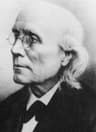
Fechner's posthumous work argues that mass phenomena—from lottery numbers to botanical measurements—follow generalizable frequency laws that the classical Gaussian error curve cannot capture. His mechanism is a two-step generalization: for moderately skewed data, he composes two normal distributions with different spreads around a common mode; for extreme skewness, he applies this two-sided normal to the logarithm of the variable. Published ten years after his death and edited by G. F. Lipps, the book is a foundational but often overlooked attempt to extend psychophysical rigor to the statistical study of collective objects.
Key Insights
✦What is the central claim of Kollektivmasslehre, and what does it reject?
Fechner argues that collective objects—aggregates of randomly varying specimens of the same kind—obey general frequency laws, and that the classical Gaussian law of errors is insufficient because most distributions outside physics are asymmetric. He rejects the assumption that the symmetric normal curve is a universal 'scientific dogma' . His program, stated explicitly in the book, is to find a general law relating the numbers and sizes of specimens in a collective . The solution is a two-step generalization: a 'two-sided normal' composed of two normal distributions with different standard deviations sharing a common mode, and, for extreme skewness, applying this distribution to the logarithm of the variable .
✦What specific statistical innovation is Kollektivmasslehre credited with introducing?
The book is the origin of the two-piece normal distribution, also called the split normal or Fechner distribution. In Chapter 5, Fechner presents the two-sided normal as a generalization of the Gaussian law for moderately skew data, and later chapters develop the logarithmic form for greater skewness . The distribution is composed of two half-normal curves with different variances joined at a common mode. A 2014 review in Statistical Science notes that the distribution was overlooked for decades after Karl Pearson dismissed Fechner's priority, leading to several independent rediscoveries in more recent years . The book thus contains an innovation whose significance was recognized only retrospectively.
✦How does the book's posthumous publication and editing affect its reliability?
The book was incomplete at Fechner's death in 1887 and was edited by Gottlob Friedrich Lipps, who received the manuscript in 1895 and published it in 1897 . Lipps states in his preface that material he worked on is placed in square brackets, and it is unclear how much unfinished material Fechner left or to what extent Lipps had to guess at his intentions . The overall structure appears to have been set by Fechner, since later chapters have early paragraphs by him before bracketed sections begin. Lipps, a more mathematically inclined scholar, likely supplied the more analytical treatments. Readers should treat bracketed passages as editorial mediation rather than Fechner's own finished text.
✦What kinds of empirical data does Fechner use, and what does this reveal about his method?
Fechner draws on an extraordinarily wide range of empirical distributions: lotteries, astronomy, anthropology, botany, meteorology, and even the dimensions of paintings . This eclecticism reflects his conviction that the laws of collective objects are general, cutting across domains. He fits his two-sided normal to moderately skewed distributions to demonstrate improved goodness of fit, and compares arithmetic versus logarithmic forms for more extreme skewness . The method is empirical and comparative rather than purely deductive: Fechner measures fit by the sum of absolute deviations and uses the data to justify his theoretical generalizations. The result is a work that sits between psychophysics and mathematical statistics.
✦How did contemporaries and later statisticians respond to the book?
Contemporary reception was mixed. Lipps himself indicated that Fechner's solution was insufficient, distinguishing between the direct method of finding a flexible distribution formula and the indirect method of transforming the variable . Heinrich Bruns, in his 1906 textbook, acknowledged that Fechner was the first to demonstrate that objects exist which approximately realize theoretical frequency distributions, but criticized Fechner's mathematics as 'rather primitive' and proposed series expansions instead . Karl Pearson later argued that it was 'historically incorrect to attribute' the double Gaussian curve to Fechner, contributing to its long neglect . The book's influence was thus delayed and contested rather than immediate.
✦How does Kollektivmasslehre relate to Fechner's better-known work in psychophysics?
The book extends Fechner's psychophysical program into the statistical study of mass phenomena. A Czech library description notes that Kollektivmasslehre is an attempt to merge the results of psychophysics with mathematical statistics, and that while the attempt to generalize the Gaussian curve remains valid, the broader project of grafting psychology onto natural-scientific foundations proved a dead end . Where Elemente der Psychophysik (1860) established the logarithmic relation between stimulus and sensation, Kollektivmasslehre applies a similar ambition—finding quantitative laws for psychological and biological phenomena—to the distribution of traits across collectives. It is thus a late, ambitious extension of Fechner's lifelong project rather than a departure from it.
✦Is Kollektivmasslehre accessible to modern readers, and what are the barriers?
The book is in German, was written in the nineteenth century, and Fechner's prose style is notoriously difficult. A statistical review quotes Sheynin's complaint that 'Fechner's style is troublesome,' with sentences occupying eight lines or more and sometimes up to sixteen . The mathematics is also uneven: Fechner's own treatment is described as primitive by Bruns, while Lipps's editorial additions are more technical . Modern readers without German and without background in mathematical statistics will find the book forbidding. However, the two-piece normal distribution has been discussed in English-language statistical literature, and the 2014 Statistical Science article provides an accessible entry point to the book's central innovation .
Wealthy Psyche is an intellectual archive. We do not host, distribute, or sell book copies — physical or digital. We provide structured knowledge to help you think better, faster.