


Zend-Avesta, oder über die Dinge des Himmels und des Jenseits
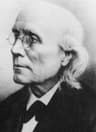
Fechner argues that the universe is not a machine but a living, ensouled whole, and that the human mind is a microcosm within a cosmic consciousness. The book's mechanism is analogical and inductive: it reasons from the structure of human experience to the nature of the earth-soul and the afterlife, treating the cosmos as a hierarchy of ensouled beings. Writing in the aftermath of his own breakdown, Fechner presents this 'daylight view' of nature as an antidote to the 'night view' of materialism, arguing that death is not annihilation but a transition within a larger spiritual order.
Key Insights
✦What is the central claim of Zend-Avesta, and what does it reject?
Fechner argues that the universe is not a dead machine but a living, ensouled whole, and that human consciousness participates in a larger cosmic consciousness. The title, borrowed from the Zoroastrian scriptures, signals his ambition to offer a 'living word' about the things of heaven and the hereafter, approached from the standpoint of natural contemplation . The book rejects the 'night view' of materialism, which treats nature as blind mechanism and death as annihilation. Fechner's 'daylight view' holds that the earth itself has a soul, that plants and animals have souls, and that human personality survives bodily death by joining a greater spiritual order .
✦How was Zend-Avesta received in Fechner's lifetime, and what does that reveal about its place in his career?
The book was largely ignored by both academic philosophy and the scientific establishment. A contemporary account notes that it 'appealed only to the little circle of readers who were like-minded with its author; it gained no recognition from academic philosophy or from the representatives of natural science, and found no great favour with the general public' . Wundt declared that the cultural moment was 'the most unfavourable imaginable' for Fechner's philosophical writings, and that even the later success of psychophysics failed to convert the scientific world to his worldview . Fechner was painfully aware of his unpopularity, writing in 1861 that he had called four times to a sleeping world . The reception confirms that Zend-Avesta was the unpopular metaphysical foundation upon which his more successful scientific work was built.
✦How does Zend-Avesta relate to Fechner's later psychophysics?
The relationship is strategic rather than incidental. A scholarly analysis notes that Fechner's exact researches were not merely suggested by philosophical questions; the most important of them were undertaken specifically to gain a firmer basis and the means to introduce his worldview into science . Psychophysics was, in part, a tactical shift: having failed to persuade through metaphysical treatises like Zend-Avesta, Fechner adopted a rigorous experimental method that the scientific world could not dismiss. Wundt judged this strategy a failure—the scientific world accepted psychophysics but ignored its author's philosophy . Lasswitz offered a more favourable verdict, suggesting that once Fechner's scientific reputation was established, his philosophical writings gradually reached a wider audience . Either way, Zend-Avesta is the destination that psychophysics was meant to serve.
✦What role did Fechner's personal crisis play in shaping the book's argument?
The book emerged from the period of Fechner's breakdown and recovery (1839–1843), when an eye disorder and sensory hypersensitivity left him cloistered in darkness for years. A philosophical analysis notes that the 'daylight view' was developed as an antidote to this personal crisis, leading Fechner to fight against materialism and attempt to articulate faith and knowledge . The contrast between darkness and light is not merely rhetorical: having emerged from years of isolation into a flowering garden, Fechner experienced what he described as a mystical renewal, and Zend-Avesta's insistence on the ensouled brightness of nature reflects that recovery. The book's final chapter reportedly describes this emergence into light .
✦What are the three volumes of Zend-Avesta about, and how is the work structured?
The first two volumes are subtitled 'Über die Dinge des Himmels' (On the Things of Heaven), and the third 'Über die Dinge des Jenseits' (On the Things of the Hereafter) . The first part treats God as spirit in relation to the material world, the depths of nature as an expression of divine spirit, the unconscious and dead in a God-ensouled nature, world creation, and whether purposeful natural creations arise from conscious creativity or unconscious natural forces . The second part develops the 'daylight view' of the heavens, and the third addresses religious, practical, and poetic perspectives on the afterlife, including Christian themes . The structure moves from metaphysics to cosmology to eschatology, enacting Fechner's conviction that these domains form a single, continuous argument.
✦Is there an English translation of Zend-Avesta, and does the lack of one matter?
No complete scholarly English translation has been identified. A 2021 e-book marketed as 'Zend-Avesta-02-English' appears to be a machine translation or partial rendering of uncertain quality, not a reliable scholarly edition . This absence matters because Zend-Avesta is the systematic statement of the worldview that Fechner spent the rest of his career defending and attempting to ground scientifically. Anglophone readers know Fechner primarily through psychophysics and through William James's enthusiasm for his immortality theory, but the full argument of Zend-Avesta remains accessible only to German readers or through secondary accounts. The Stanford Encyclopedia of Philosophy cites it in the original German, and scholarly discussion in English typically relies on paraphrase rather than direct engagement .
✦How did William James receive Fechner's argument in Zend-Avesta, and why does that matter?
William James found Fechner's theory of immortality necessary and invoked it explicitly in his own work on consciousness and psychical research. In 'The Continuity of Experience,' James wrote that he doubted whether certain phenomena could be understood without 'using the very letter of Fechner's conception of a great reservoir in which the memories of earth's inhabitants are pooled and preserved' . James argued that the preponderance of evidence made it probable that 'a general view of the world almost identical with Fechner's' was correct, even if he could not fully commit to it . This endorsement is significant because it carried Fechner's panpsychist cosmology into Anglophone philosophy and psychology through James's authority, even as the original text remained untranslated. James's radical empiricism and pluralism owe a documented debt to Fechner's Zend-Avesta.
Wealthy Psyche is an intellectual archive. We do not host, distribute, or sell book copies — physical or digital. We provide structured knowledge to help you think better, faster.