



Logical Investigations (Logische Untersuchungen)
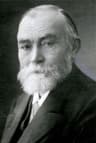
Frege's central thesis across these three late essays is that logic is the science of thoughts—objective, timeless propositions independent of the mind that grasps them—and that the logical structure of compound thoughts can be analyzed through negation and conjunction. The collection, assembled from essays published between 1918 and 1923, argues against psychologism by separating the act of thinking from the thought itself, and treats negation as a self-contained logical operation rather than a subjective mental act. It is Frege's final published statement on logic and language.
Key Insights
✦What is the central claim of Logical Investigations, and what does it reject?
The collection's central claim is that logic is the science of thoughts—objective, timeless, causally inert propositions that are grasped by minds but do not depend on them for their truth or structure. Frege rejects psychologism, the view that logical laws describe how humans actually think or that thoughts are mental contents. The essays separate the act of thinking (a psychological event) from the thought thought (a logical entity), and they analyze the logical structure of compound thoughts through negation and conjunction. The collection is not a systematic treatise but a set of interconnected investigations into the nature of thought, the meaning of negation, and the composition of complex propositions, representing Frege's final published contributions to logic.
✦What are the three essays collected in Logical Investigations, and when were they originally published?
The collection comprises three essays: 'Thought' (Der Gedanke), 'Negation' (Die Verneinung), and 'Compound Thoughts' (Gedankengefüge). 'Thought' and 'Negation' were published in 1918 in the journal Beiträge zur Philosophie des deutschen Idealismus, and 'Compound Thoughts' appeared in the same journal in 1923 . Frege intended these essays to form a single book of interconnected themes under the title Logische Untersuchungen, but the collection was not published as a volume in his lifetime. It was assembled posthumously by scholars carrying out his design, with the standard English edition appearing in 1977 . The essays are among Frege's most admired late contributions to the philosophy of logic.
✦Why did Frege insist that thoughts are objective, and what follows from this?
Frege insisted that thoughts are objective because otherwise logic would have no normative authority. If a thought were a private mental content, then logical laws would describe how this or that individual happens to think, not how one ought to think. Frege's argument is that truth is independent of being recognized as true: a thought can be true even if no one grasps it, and false even if everyone believes it. This objectivity is what distinguishes logic from psychology. It follows that the study of logic cannot proceed by empirical observation of mental processes; it must analyze the structure of thoughts themselves. This anti-psychologistic stance, developed across Frege's career, became a founding principle of analytic philosophy and influenced Husserl's critique of psychologism.
✦What is Frege's analysis of negation, and how does it differ from a psychological account?
Frege treats negation as a self-contained logical operation that attaches to a thought and produces a new thought with the opposite truth-value. Negation is not a mental act of rejecting or denying, nor is it a subjective attitude toward a proposition; it is an objective feature of the thought itself. In 'Negation,' Frege argues that the word 'not' functions as a logical constant whose contribution to sense is exhausted by its role in determining truth-conditions. This analysis contrasts with psychological accounts that treat negation as the expression of a mental state of dissent. Frege's approach is in line with his broader treatment of logical constants as objective features of thoughts rather than as tools for describing mental operations.
✦What is the textual and translation history of Logical Investigations, and which English edition is standard?
The three essays were published separately in the journal Beiträge zur Philosophie des deutschen Idealismus between 1918 and 1923 . The first English translation of the complete collection was by J. N. Findlay, published by Routledge in 1970 . The standard scholarly edition, however, is the 1977 translation edited by P. T. Geach, translated by Geach and R. H. Stoothoff, and published by Blackwell in Oxford and Yale University Press in New Haven . This edition includes a preface by Geach and has become the version through which most Anglophone philosophers encounter the essays. No major textual controversy surrounds the collection, though readers should note that the essays were not conceived as a single work and their unity is thematic rather than systematic.
✦How does Logical Investigations relate to Frege's earlier work and to Wittgenstein?
The essays extend concerns that run throughout Frege's career—the objectivity of logic, the analysis of compound propositions, and the critique of psychologism—but they are not a continuation of the logicist project of the Basic Laws. After Russell's paradox, Frege abandoned the attempt to derive arithmetic from logic, and his late essays turn instead to foundational questions in philosophical logic. Their influence on Wittgenstein is well documented: Wittgenstein met Frege several times between 1911 and 1913, and Frege recommended that he study with Russell . The Tractatus engages with Fregean themes of sense, negation, and logical structure, though Wittgenstein's conclusions diverge sharply. The essays have also been read as early contributions to ordinary language philosophy, given their attention to the workings of logical words in natural language .
✦What is a common misreading of the collection's unity and purpose?
A common misreading treats Logical Investigations as a unified book that Frege completed and published as a single work. In fact, the three essays were published separately over five years, and Frege's intention to collect them into a volume was never realized in his lifetime . The collection is thematic rather than architectonic: the essays share a concern with the nature of thoughts and the structure of compound propositions, but they do not form a deductive system or a comprehensive treatise. This matters for interpretation because the essays can be read independently and were composed in response to different occasions. Reading them as chapters of a single book can overstate their systematic coherence and obscure the occasional nature of Frege's late publications.
Wealthy Psyche is an intellectual archive. We do not host, distribute, or sell book copies — physical or digital. We provide structured knowledge to help you think better, faster.