



On Concept and Object
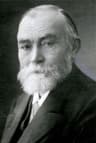
Frege's central argument is that the distinction between concept and object is not a distinction between two kinds of thing but between two logically different ways of being spoken about. Concepts are essentially predicative and 'unsaturated'; objects are complete and can be named. This asymmetry generates the famous 'concept horse' paradox: the phrase 'the concept horse' must refer to an object, so the concept horse is not a concept. Frege's essay defends the necessity of this awkward consequence against Benno Kerry's objections, arguing that it reflects a genuine feature of logical structure rather than a defect in his theory.
Key Insights
✦What is the central claim of On Concept and Object, and what does it reject?
Frege's central claim is that the distinction between concept and object is absolute and irreducible: concepts are essentially predicative, 'unsaturated' entities that require completion by an argument, while objects are complete and self-subsistent. The essay rejects the view, advanced by Benno Kerry, that the same entity can function as both concept and object depending on context. Kerry had argued that a concept like 'horse' could be treated as an object when we say 'the concept horse is a concept.' Frege's response is that this apparent counterexample actually confirms his distinction: the phrase 'the concept horse' is a proper name and therefore refers to an object, which means—paradoxically—that the concept horse is not a concept. The awkwardness is not a refutation but a consequence of the logical structure of language.
✦What is the 'concept horse' paradox, and why does Frege accept it?
The paradox arises from three Fregean premises: a proper name refers to an object; no object is a concept; and 'the concept horse' is a proper name. It follows that 'the concept horse' refers to an object, not a concept—so the concept horse is not a concept . Frege accepts this consequence because he believes the distinction is grounded in the nature of predication itself, not in arbitrary convention. To speak about a concept is necessarily to treat it as an object, because language requires that what is spoken about be named. The paradox thus marks an inescapable limitation of language: concepts can be used predicatively but cannot be named without ceasing to function as concepts. Frege's essay is an attempt to make this limitation perspicuous rather than to eliminate it.
✦What is the difference between 'saturated' and 'unsaturated' entities, and why does it matter?
The distinction between saturated and unsaturated entities is Frege's way of marking the difference between objects and concepts. An object is complete or saturated: it stands on its own and can be referred to by a proper name. A concept is incomplete or unsaturated: it is essentially predicative, requiring an argument to yield a complete proposition, just as a mathematical function requires an argument to yield a value . This matters because the unsaturatedness of concepts is what accounts for the unity of the proposition—the fact that 'the horse is an animal' says something, rather than being a mere list of names. The concept 'horse' is the unsaturated element that binds the argument 'the horse' into a predicative structure. Without this distinction, Frege argues, we could not explain how propositions have the unity they do.
✦Who was Benno Kerry, and what was his objection to Frege's distinction?
Benno Kerry was a philosopher and psychologist who published a series of articles in 1887–1888 criticizing Frege's distinction between concept and object. His central objection was that the same entity can function as both a concept and an object, depending on the context of inquiry. For example, the concept 'horse' is a concept when we use it to classify animals, but it becomes an object when we make it the subject of a proposition, as in 'the concept horse is a concept.' If this is correct, the distinction cannot be absolute, as Frege claims. Frege's essay is a direct reply to Kerry, and it concedes the linguistic fact—that 'the concept horse' refers to an object—while insisting that this does not undermine the logical distinction. Kerry is now remembered almost entirely for this exchange.
✦How did this essay's English translation history develop, and which version is standard?
The essay first appeared in English translation in the Philosophical Review in 1948, and a translation by P. T. Geach and Max Black was published in Mind in 1951 . The most widely used English version is Geach's translation in Translations from the Philosophical Writings of Gottlob Frege (Blackwell, 1952), which has been reprinted in subsequent collections . Geach's translation is the standard scholarly edition and is generally regarded as careful and idiomatic, though the essay's central term 'unsaturated' (ungesättigt) and the awkwardness of the 'concept horse' formulation have invited occasional alternative renderings. Readers working closely with the German should note that the original title, 'Über Begriff und Gegenstand,' is sometimes translated as 'On Concept and Object' and sometimes as 'On Sense and Reference'—the latter is incorrect and refers to a different essay from the same year.
✦What is a common misreading of the essay's purpose?
A common misreading treats On Concept and Object as a concession or a self-critique—as if Frege were admitting that his distinction collapses under its own weight. This misreads the essay's rhetorical strategy. Frege is not conceding defeat; he is arguing that the apparent contradiction is an illusion generated by the attempt to say what can only be shown. The essay's tone is defensive and occasionally exasperated, which may contribute to the impression that Frege is on the back foot. But his position is consistent: the concept-object distinction is a logical distinction, not a linguistic one, and the fact that language forces us to reify concepts when we speak about them is a limitation of language, not a flaw in the distinction. The essay is a defense, not an apology.
Wealthy Psyche is an intellectual archive. We do not host, distribute, or sell book copies — physical or digital. We provide structured knowledge to help you think better, faster.