



Christian Metaphysics and Physics
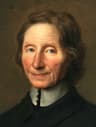
This title does not correspond to a work Malebranche published under that name; the phrase describes the project that runs through his major writings rather than a single book. Malebranche's central mechanism is the claim that God is the only true cause, so that physical events and mental states are merely 'occasions' for divine action, while human knowledge consists in seeing the ideas that reside in God's understanding. His distinctive argument is that Cartesian mechanism, pursued consistently, requires occasionalism and the vision in God, and that this synthesis of Descartes and Augustine demonstrates God's active role in every aspect of the universe.
Key Insights
✦Is there a book by Malebranche called Christian Metaphysics and Physics?
No. Malebranche did not publish a work under this title. The phrase describes the unifying aim of his philosophy—to reconcile Cartesian physics with Christian metaphysics—but it is not the title of any of his books. His major works are The Search After Truth (1674–75), Conversations chrétiennes (1677), Treatise on Nature and Grace (1680), Méditations chrétiennes et métaphysiques (1683), Treatise on Morality (1684), Dialogues on Metaphysics and on Religion (1688), and Treatise on the Love of God (1697) . Readers encountering this title should look to those works, particularly the Search and the Dialogues, for the doctrines the phrase summarizes.
✦What is occasionalism, and why is it central to Malebranche's Christian metaphysics?
Occasionalism is Malebranche's theory of causation: God is the only genuine causal agent, and all physical and mental events in nature are merely 'occasions' for God to exercise his power . When a billiard ball appears to move another, or when a volition appears to move an arm, no created thing is truly causing anything; God acts on each occasion according to general laws. This doctrine is central to Malebranche's Christian metaphysics because it makes God's activity immediate and universal in every aspect of the universe, material, cognitive, and moral . It also follows from his Cartesianism: if body and mind are distinct substances, their apparent interaction cannot be explained by created causes, and God must be the mediator.
✦What is the 'vision in God,' and how does it relate to Malebranche's physics?
The vision in God is Malebranche's doctrine that the ideas through which we know and perceive things are not produced by our own minds or by external objects, but are the ideas in God's understanding—the eternal archetypes or essences of things . This doctrine is the epistemological counterpart to occasionalism: just as God is the sole cause of bodily motion, God is the sole source of the ideas that make knowledge possible. Its relation to physics is indirect but essential. Malebranche's physics is Cartesian mechanism, which explains natural phenomena through matter and motion; the vision in God explains how the mathematician or physicist can grasp the intelligible structure of that mechanical world, since the ideas of extension and its properties reside in God .
✦How did Malebranche's synthesis of Descartes and Augustine shape his reception and controversies?
Malebranche's project was a grand synthesis of his two intellectual mentors, Augustine and Descartes . This synthesis made his work both influential and controversial. It was admired and criticized by Leibniz and Locke, and it was fiercely opposed by Antoine Arnauld, the Jansenist leader, who saw its doctrine of grace and its account of ideas as theologically dangerous . The Treatise on Nature and Grace was placed on the Index in 1690 . The controversies were not peripheral: Malebranche's system was forged in debate, and the disputes with Arnauld in particular forced him to clarify his positions on grace, freedom, and the nature of ideas.
✦What is the most common misreading of Malebranche's claim that we see all things in God?
The most persistent misreading takes 'vision in God' to mean a mystical or pantheistic union with the divine, as if Malebranche were claiming that human beings participate in God's substance. But Malebranche's doctrine is epistemological, not ontological: we see the ideas that are in God, not God's essence itself. A related error treats occasionalism as a denial of the reality of the physical world or of human agency. Malebranche does not deny that bodies exist or that humans act; he denies that created things possess genuine causal power. The paraphrase attributed to his critics—that he 'sees all things in God but does not see that he is mad'—captures the caricature, not the argument .
Wealthy Psyche is an intellectual archive. We do not host, distribute, or sell book copies — physical or digital. We provide structured knowledge to help you think better, faster.