



Principles of Nature and Grace
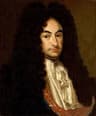
Written in 1714 for Prince Eugene of Savoy, this short treatise is Leibniz's most accessible summary of his mature philosophy, organized around the distinction between the kingdom of nature and the kingdom of grace. Its central mechanism is the claim that the same world is governed by two parallel systems: efficient causes determine bodies according to mechanical laws, while final causes order souls and minds according to a moral order that culminates in divine justice. The book's distinctive argument is that these two kingdoms are not in conflict but are perfectly harmonized by God, so that the natural world and the moral world express a single rational order.
Key Insights
✦What is the central argument of the Principles of Nature and Grace, and what does it reject?
The central argument is that reality is structured by two parallel kingdoms—the kingdom of nature, governed by efficient causes and mechanical laws, and the kingdom of grace, governed by final causes and moral justice—which God has harmonized so that they never conflict. Leibniz rejects the view that natural causation and divine governance are incompatible, and he also rejects occasionalism, the doctrine (associated with Malebranche) that created things are merely occasions for God's direct action . For Leibniz, natural causes are real and efficacious; God does not intervene at every moment. The text's dual-aspect structure is meant to show that the same world can be described mechanistically and morally without contradiction, because both descriptions express the same divine wisdom.
✦Why is this text considered 'exoteric' rather than a rigorous statement of Leibniz's ontology?
The Principles was written for Prince Eugene of Savoy, a patron rather than a professional philosopher, and it presents Leibniz's monadology in a simplified form designed to avoid misunderstanding. Brandon Look's entry on Leibniz's exoteric philosophy notes that the text is 'less rigorous' than the Monadology because it uses the term 'composite substance' for bodies, when strictly speaking composites are not substances but phenomenal aggregates of simple monads . Leibniz did this deliberately: by overemphasizing the reality of bodies, he could introduce the theory of monads without appearing to deny the reality of the physical world. The text is therefore a popular presentation, not a definitive statement of his considered position.
✦How does the Principles relate to the Monadology, and which was written first?
Both works were composed in the summer of 1714, but the Principles was completed first. Leibniz sent the Principles to Nicolas Rémond on 26 August 1714, while the Monadology was likely completed only after his return to Hanover in mid-September . The relationship between them is one of audience and register rather than doctrine. The Monadology is the more systematic and technical presentation, written for a philosophical correspondent; the Principles is the more accessible summary, written for a prince. Reading them together reveals how Leibniz adapted his presentation to his audience without abandoning his core commitments. The Principles is not a mere abbreviation; it selects and frames the material differently, emphasizing the two kingdoms and the moral order more prominently than the Monadology does.
✦What is the significance of the analogy comparing God to an architect and a monarch?
In §15 of the Principles, Leibniz compares God to an architect in relation to the kingdom of nature and to a monarch in relation to the kingdom of grace . The analogy is precise: an architect designs and builds according to mechanical principles, while a monarch governs according to moral principles of justice and reward. The same God performs both roles, but the principles governing each domain are distinct. This suggests a dualist reading of the text: the principles of creation are not identical to the principles of governance, even though they are unified in God's wisdom. The analogy thus supports the book's central claim that nature and grace are two systems, not one system described in two ways.
✦How does the Principles address the problem of evil, and what does it promise that the Theodicy develops?
The Principles addresses the problem of evil only briefly, but it establishes the framework that the Theodicy (1710) had already developed at length. The kingdom of grace is defined by principles of 'infallible punishment' and 'infallible reward,' which ensure that moral order is ultimately vindicated even when it appears violated in the natural world . The text does not attempt a full theodicy; it presents the structural claim that the two kingdoms are harmonized, so that what appears as evil from the perspective of nature may be justified from the perspective of grace. The Theodicy provides the detailed argument; the Principles provides the concise formulation of the conclusion.
✦What are the main English translations of the Principles, and what should readers know?
The Principles has been translated in several collections, most notably in G. W. Leibniz: Philosophical Essays, translated by Roger Ariew and Daniel Garber (Hackett, 1989), which includes the full text . It also appears in older collections such as the Philosophical Works of Leibnitz, translated by George Martin Duncan (1908), which includes the Principles alongside the Monadology and other opuscules . Readers should be aware that the text's title is sometimes rendered as 'Principles of Nature and Grace, Based on Reason,' and that the French original was written for a patron rather than for publication. The text's brevity and accessibility make it a useful introduction to Leibniz's mature thought, but it should not be treated as a substitute for the more rigorous Monadology.
Wealthy Psyche is an intellectual archive. We do not host, distribute, or sell book copies — physical or digital. We provide structured knowledge to help you think better, faster.