



Treatise on Nature and Grace
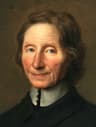
Malebranche's 1680 treatise argues that God governs both the natural order and the distribution of grace through simple, constant, and uniform "general wills," rather than through special, particular providence. This framework explains why a good God permits evil and why grace reaches some but not others: God acts by general laws that are wise and simple in themselves, even when their effects appear uneven or harsh from a human perspective. The argument directly challenged Calvinist and Jansenist claims that God wills the individual salvation of an elect few, and it provoked a bitter controversy with Antoine Arnauld.
Key Insights
✦What is the central claim of the Treatise on Nature and Grace, and what does it reject?
Malebranche argues that God governs both the physical universe and the distribution of grace through what he calls "general wills"—simple, constant, and uniform laws established for the whole of creation. God does not intervene through particular providence to ensure that every individual receives grace or that every event serves a specific local purpose. This position directly rejects the Calvinist and Jansenist contention that God wills the particular salvation of an elect few, and it also rejects any framework in which God's action must be constantly adjusted to fit human expectations of fairness or order. The treatise's theodicy turns on the claim that general laws, even when their effects seem uneven, express a wisdom superior to any arrangement of constant particular interventions.
✦How does Malebranche's account of grace differ from the Jansenist position associated with Arnauld?
The Jansenist framework, defended by Antoine Arnauld, held that God's grace is efficacious by its own intrinsic power and that God wills the salvation of particular individuals. Malebranche's Treatise insists instead that God's will is general: grace is offered according to a universal law, not through individualized decrees. Arnauld was so alarmed by the manuscript that he launched a prolonged public refutation, beginning with his 1683 attack on Malebranche's theory of ideas and culminating in the treatise's placement on the Catholic Index of Forbidden Books in 1690 . The dispute was not merely academic; it touched on the core theological stakes of post-Reformation Catholic debates about predestination and human freedom.
✦What specific concept did the Treatise introduce that influenced later political thought?
The Treatise developed the concept of the "general will" in a theological context: God's will is general because it is directed toward the order of the whole rather than toward particular persons or events. This idea was taken up in secular form by Rousseau, whose Social Contract transforms the general will into a political principle. Malebranche's version is theocentric and metaphysical, while Rousseau's is political and immanent, but the structural parallel is documented and significant . Readers interested in the genealogy of the general will should note that Malebranche's formulation emerged from debates about grace, not from debates about sovereignty.
✦How has the Treatise's argument held up given later philosophical and scientific developments?
The Treatise's central mechanism—general laws as the expression of divine wisdom—anticipated later rationalist theodicies, including Leibniz's best-of-all-possible-worlds framework. Leibniz admired Malebranche's work and may have derived key elements of his own theodicy from it . However, the specific theological stakes of the grace debates have receded, and the Treatise is now read less as a live intervention in soteriology and more as a document in the history of rationalist metaphysics and the prehistory of secular political concepts. Its account of general laws remains philosophically interesting, but its ecclesiological context is largely historical.
✦What was the editorial and translation history of the Treatise in English?
The Treatise was first translated into English in 1695, but for nearly three centuries no new English edition appeared. Patrick Riley's translation, published by Clarendon Press in 1992, was the first readily available English edition in almost 300 years . Riley, a political philosopher at the University of Wisconsin, framed the treatise partly through the lens of the general will's later political career. Readers should be aware that the 1992 edition is a scholarly mediation: Riley's introduction and notes shape how the text is approached, and the translation decisions reflect late-twentieth-century conventions for rendering seventeenth-century French philosophical prose.
✦Is the Treatise primarily a work of philosophy or of theology?
The Treatise resists clean disciplinary classification. It is a work of philosophical theology in which Malebranche deploys Cartesian rationalist method to address a theological problem: how a good and wise God can permit evil and distribute grace unevenly. The argument's premises are metaphysical (about divine simplicity and the nature of laws), but its conclusions bear directly on the Catholic theological controversies of the 1680s. This hybrid character is why the work belongs in a Rationalism subcategory even though its subject matter—grace, salvation, providence—is explicitly theological. Malebranche's rationalism consists in his insistence that God's action must conform to intelligible order, not in any secularizing impulse.
Wealthy Psyche is an intellectual archive. We do not host, distribute, or sell book copies — physical or digital. We provide structured knowledge to help you think better, faster.