



Jivanmukti Viveka
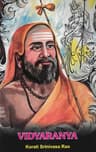
Vidyaranya's Jivanmukti Viveka is a focused treatise on the nature and attainment of liberation-in-life (jivanmukti), arguing that knowledge of the Self as Brahman is necessary but not sufficient. The text's central mechanism is a rigorous distinction between the stages of the aspirant and the realized sage: while knowledge arises from hearing and reflection, the complete eradication of latent tendencies (vasana-kshaya) and the dissolution of the mind (mano-nasa) require sustained yogic practice even after realization. Vidyaranya thus defends the possibility of living liberation while preserving the classical Advaita position that knowledge alone removes ignorance.
Book Archives
Detailed research articles, summaries and analyses from this book.
 Archive
The Mechanics of Liberation: Understanding Jivanmukti
 Archive
Consciousness and the Quantum Vacuum: A Vedantic Perspective
 Archive
Refuting The External World: Gaudapada’s Karika Analyzed
 Archive
Vichara-Sagara: A Deep Dive into Non-Dual Enquiry
 Archive
The Silence of the Sages: Understanding Dattatreya's Avadhuta Gita
 Archive
The Role of Negation (Neti Neti) in Absolute Realization
 Archive
The Secret Logic Behind Advaita's Theory of Maya
 Archive
Why Shankaracharya Rejected Buddhist Emptiness
 Archive
Brahma Sutra Bhashya: Decoding the Bhashyakara's Method
 Archive
The Hidden Meaning of Turiya in the Mandukya Upanishad
Key Insights
✦What is the central argument of the Jivanmukti Viveka, and what does it reject?
Vidyaranya's central argument is that jivanmukti—liberation while still embodied—requires more than the knowledge of the Self as Brahman. While knowledge (jnana) arising from hearing and reflection removes ignorance, the complete eradication of latent tendencies (vasana-kshaya) and the dissolution of the mind (mano-nasa) require deliberate, sustained yogic practice. The text rejects the view that knowledge alone automatically produces the full state of living liberation without further effort. It also rejects the notion that liberation is reserved for world-renouncers alone, arguing that a qualified aspirant can attain jivanmukti through a structured path that integrates knowledge with practice . Vidyaranya's solution preserves classical Advaita's knowledge-centered soteriology while acknowledging the practical necessity of mental purification.
✦What specific distinction does Vidyaranya draw between the aspirant and the realized sage?
Vidyaranya distinguishes between the vividisha sannyasi (the aspirant seeking knowledge) and the vidvat sannyasi (the sage who has already realized knowledge). For the aspirant, knowledge is the primary aim, and the eradication of latent tendencies and dissolution of the mind are subordinate means. For the realized sage, the relationship reverses: knowledge has already been attained, but the eradication of vasana and dissolution of the mind must still be actively pursued [citation:14]. This distinction allows Vidyaranya to explain why a sage who has realized the Self may still exhibit habitual behaviors or attachments: the knowledge is firm, but the mental modifications caused by beginningless vasana require ongoing yogic effort to dissolve completely.
✦How does Vidyaranya define 'videhamukti' differently from the common understanding?
Vidyaranya argues that videhamukti (disembodied liberation) is attained at the very moment knowledge arises, not when the physical body falls. He supports this with Shankara's Brahma Sutra Bhashya (4.1.13), which states that past and future sins are destroyed upon realization. The common view holds that a jivanmukta becomes videhamukta only when the body dies. Vidyaranya reconciles the two by interpreting 'deha' in videhamukti as referring to future bodies: once knowledge arises, no future embodiment is possible, so the sage is videhamukta immediately. He uses the word in the sense of 'future body' alone, distinguishing this from the continued existence of the present body due to prarabdha karma [citation:7].
✦What is the textual history of the Jivanmukti Viveka and its English translations?
The Jivanmukti Viveka was composed around 1380 CE when Vidyaranya was pontiff of the Sringeri monastery . A critical edition and annotated translation by Robert Goodding was produced as a dissertation, based on previously unused manuscript evidence. The most accessible English translation is Swami Harshananda's work, originally written in Kannada and rendered into English by H. Ramachandra Swamy, published by Sri Ramakrishna Math in Chennai in 2009 [citation:1][citation:5]. This edition includes the Sanskrit text alongside the English translation and notes, running to 382 pages. The text is also known by its uniform title Jivanmuktiviveka and is attributed to Madhava (Vidyaranya's pre-monastic name) in library catalogs [citation:9].
✦How does the Jivanmukti Viveka relate to Vidyaranya's Panchadasi?
Both texts are major works by Vidyaranya, but they serve different functions. The Panchadasi is a systematic pedagogical manual organized around sat-chit-ananda, designed to lead a student progressively through discrimination, illumination, and bliss. The Jivanmukti Viveka is a focused treatise on a single problem: the nature and attainment of liberation-in-life. The Panchadasi's treatment of jivanmukti, notably in the chapters on bliss and the description of the liberated being, presupposes the more detailed analysis of the Jivanmukti Viveka. Together, they represent Vidyaranya's mature Advaita synthesis, integrating the Vivarana school's emphasis on knowledge with a practical acknowledgment of the need for yogic discipline in the pursuit of complete liberation.
✦What is a common misconception about the Jivanmukti Viveka's position on knowledge and practice?
A common misconception is that Vidyaranya subordinates knowledge to practice or that he denies the sufficiency of jnana for liberation. In fact, his position is more nuanced: knowledge is the direct means to liberation, but the full state of jivanmukti involves the stabilization of knowledge through the eradication of vasana and dissolution of the mind. Vidyaranya does not say that knowledge is insufficient for liberation in principle; he says that the embodied sage may continue to experience mental modifications due to prarabdha karma unless these are addressed through sustained practice. His framework preserves the classical Advaita hierarchy—knowledge liberates—while addressing the practical question of how a realized person actually lives and stabilizes in that realization.
Wealthy Psyche is an intellectual archive. We do not host, distribute, or sell book copies — physical or digital. We provide structured knowledge to help you think better, faster.