



Vidhi Viveka

Mandana Mishra's Vidhi Viveka is a foundational Mimamsa treatise on the nature of Vedic injunction (vidhi), composed of forty-two stanzas with an extensive auto-commentary. Its central mechanism is a systematic examination and refutation of all prevailing theories of verbal exhortation, culminating in Mandana's own view that an injunction conveys to an agent the means to achieve what that agent desires (istasadhana). The text is structured in two parts: an aporetic section reviewing and rejecting rival conceptions, and a constructive section developing Mandana's positive account of how Vedic commands motivate action and ground Brahmanical theories of deontology.
Book Archives
Detailed research articles, summaries and analyses from this book.
 Archive
The Mechanics of Liberation: Understanding Jivanmukti
 Archive
Consciousness and the Quantum Vacuum: A Vedantic Perspective
 Archive
Refuting The External World: Gaudapada’s Karika Analyzed
 Archive
Vichara-Sagara: A Deep Dive into Non-Dual Enquiry
 Archive
The Silence of the Sages: Understanding Dattatreya's Avadhuta Gita
 Archive
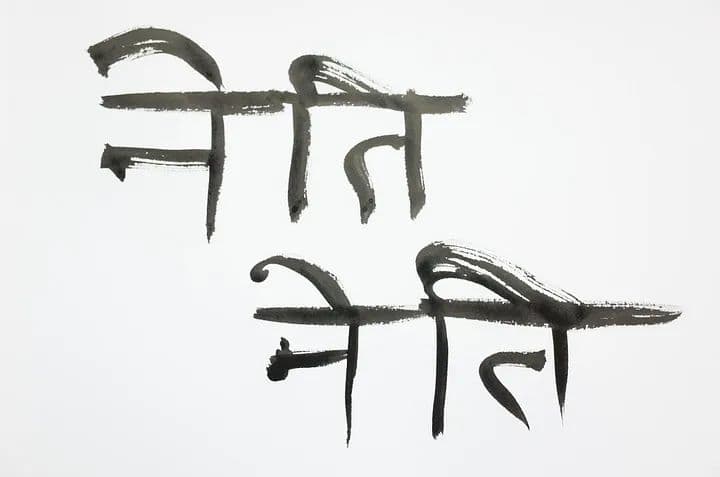
The Role of Negation (Neti Neti) in Absolute Realization
 Archive
The Secret Logic Behind Advaita's Theory of Maya
 Archive
Why Shankaracharya Rejected Buddhist Emptiness
 Archive
Brahma Sutra Bhashya: Decoding the Bhashyakara's Method
 Archive
The Hidden Meaning of Turiya in the Mandukya Upanishad
Key Insights
✦What is the central argument of the Vidhi Viveka, and what does it reject?
The Vidhi Viveka's central argument is that a Vedic injunction (vidhi) is not a mere command or prescription but a verbal utterance that conveys to an agent the means to achieve something the agent desires (istasadhana) [citation:5][citation:8]. Mandana examines and refutes all the major theories of injunction current in his time before defending this position. The text rejects the view that Vedic sentences merely prescribe actions without conveying instrumental knowledge, and it also rejects competing Mimamsa accounts that ground injunction in obligation or duty independent of the agent's desired ends. The work is structured in two parts: an aporetic section where rival views are reviewed and dismantled, and a constructive section where Mandana develops his own theory of how verbal exhortation motivates action [citation:5][citation:15].
✦How does the Vidhi Viveka relate to Mandana's better-known Advaita work, the Brahmasiddhi?
The Vidhi Viveka is a work of Mimamsa, the school of Vedic exegesis, while the Brahmasiddhi is Mandana's Advaita Vedanta treatise. The relationship between the two reflects Mandana's intellectual trajectory: tradition holds that he was initially a Mimamsaka in the lineage of Kumarila Bhatta before becoming an Advaitin, and the Vidhi Viveka belongs to his earlier Mimamsa phase [citation:2]. The Vidhi Viveka's concern with the nature of Vedic injunction and the psychology of action provides the conceptual groundwork for the Brahmasiddhi's later analysis of avidya and liberation. Vachaspati Mishra, who commented on both works, wrote the Nyayakanika on the Vidhi Viveka and the Bhamati on Shankara's Brahma Sutra Bhashya, suggesting that the two texts were studied together in later Advaita circles.
✦What is the textual history of the Vidhi Viveka, and what critical editions exist?
The Vidhi Viveka was first published with Vachaspati Mishra's Nyayakanika commentary in 1978 by Tara Publications [citation:3]. A Bengali translation by Srimohan Bhattacharya appeared in 1982 through Sanskrit College, Calcutta [citation:4][citation:13]. Kanchana Natarajan published an English critical study in 1995 through Sri Satguru Publications [citation:1][citation:7]. The most significant modern edition is Elliot M. Stern's two-volume critical edition, published in 2023 by the Institut Français de Pondichéry and the École française d'Extrême-Orient, which includes the first critical edition of Mandana's text alongside the Nyayakanika and two previously unpublished commentaries by Parameshvara I, a fourteenth-century author from Kerala [citation:5][citation:9]. Stern's edition is now the scholarly standard for the text.
✦What role did Vachaspati Mishra's Nyayakanika play in the text's transmission?
Vachaspati Mishra's Nyayakanika is the only known Sanskrit commentary on the Vidhi Viveka, and it was instrumental in preserving and transmitting Mandana's text [citation:5][citation:8]. Vachaspati, a tenth-century polymath, also wrote the Bhamati commentary on Shankara's Brahma Sutra Bhashya, making him a pivotal figure in both Mimamsa and Advaita. His commentary on the Vidhi Viveka is not merely explanatory but engaged with Mandana's arguments, and later commentators like Parameshvara I wrote sub-commentaries on Vachaspati's work rather than directly on Mandana's text [citation:5]. The Nyayakanika thus became the lens through which the Vidhi Viveka was read for centuries, and its inclusion in Elliot Stern's 2023 critical edition alongside Mandana's text reflects its indispensability for understanding the work.
✦What is the significance of Mandana's dating to roughly 660–720 CE for understanding the text?
The dating of Mandana to approximately 660–720 CE places the Vidhi Viveka in a crucial period of Indian philosophical history, roughly contemporary with or slightly after Kumarila Bhatta and before Shankara [citation:5][citation:8]. This chronology matters because it means Mandana was writing during a period of intense debate between Mimamsa and emerging Advaita Vedanta, and his work on Vedic injunction engages with the intellectual currents that would shape Shankara's own project. The traditional account that Mandana was defeated in debate by Shankara and became his disciple Sureshvara is chronologically difficult if Mandana lived in the eighth century, and modern scholarship has shown that Mandana and Sureshvara were distinct individuals with divergent views [citation:2]. The Vidhi Viveka thus belongs to Mandana's independent Mimamsa career, before any supposed conversion.
✦How does the Vidhi Viveka differ from Kumarila Bhatta's treatment of Vedic injunction?
Mandana was a pupil of Kumarila Bhatta in the Mimamsa tradition, but the Vidhi Viveka develops a distinctive position that departs from his teacher's views. Kumarila's Slokavarttika defends a theory of injunction grounded in the intrinsic validity of Vedic sentences and the notion of duty, while Mandana argues that injunction conveys the means to achieve what the agent desires (istasadhana) [citation:5]. This shift places greater emphasis on the psychology of the agent and the instrumental structure of action rather than on the authority of the Vedic command as such. The Vidhi Viveka is thus not a mere restatement of Kumarila's Mimamsa but a critical intervention within the tradition, examining and refuting all rival theories before staking out its own position.
Wealthy Psyche is an intellectual archive. We do not host, distribute, or sell book copies — physical or digital. We provide structured knowledge to help you think better, faster.