



Vivarana Prameya Sangraha
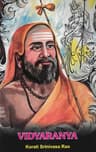
Vidyaranya's Vivarana Prameya Sangraha is a systematic exposition of the Vivarana school of Advaita Vedanta, elaborating the views of Prakasatman's Panchapadika-Vivarana. Its central mechanism is the rigorous defense of the Bimba-Pratibimba-vada (reflection theory): the individual self (jiva) is a reflection of Brahman in beginningless ignorance (avidya), and liberation consists in recognizing the original (bimba) through the removal of this false identification. The text is a logico-linguistic enterprise, arguing that philosophical inquiry into the great sayings requires precise analysis of how 'Tat' and 'Tvam' refer to the same reality.
Book Archives
Detailed research articles, summaries and analyses from this book.
 Archive
The Mechanics of Liberation: Understanding Jivanmukti
 Archive
Consciousness and the Quantum Vacuum: A Vedantic Perspective
 Archive
Refuting The External World: Gaudapada’s Karika Analyzed
 Archive
Vichara-Sagara: A Deep Dive into Non-Dual Enquiry
 Archive
The Silence of the Sages: Understanding Dattatreya's Avadhuta Gita
 Archive
The Role of Negation (Neti Neti) in Absolute Realization
 Archive
The Secret Logic Behind Advaita's Theory of Maya
 Archive
Why Shankaracharya Rejected Buddhist Emptiness
 Archive
Brahma Sutra Bhashya: Decoding the Bhashyakara's Method
 Archive
The Hidden Meaning of Turiya in the Mandukya Upanishad
Key Insights
✦What is the central argument of the Vivarana Prameya Sangraha, and what does it reject?
The text's central argument is the Vivarana school's distinctive position on the relationship between the individual self (jiva) and Brahman. Vidyaranya elaborates Prakasatman's Bimba-Pratibimba-vada: Brahman is the original (bimba), and the jiva is its reflection (pratibimba) in beginningless avidya. Liberation is not the production of a new state but the recognition of the original through the removal of the false identification with the reflection. The text rejects the Bhamati school's alternative account, which locates avidya in the individual self and treats the jiva as a limitation of Brahman rather than a reflection [citation:3][citation:7]. Vidyaranya argues that the reflection theory alone can explain how Brahman remains unchanged while appearing as the suffering jiva.
✦What is the Bimba-Pratibimba-vada, and why is it central to this text?
The Bimba-Pratibimba-vada is the reflection theory of consciousness. According to this doctrine, Brahman as pure consciousness is the original (bimba), and the individual self is its reflection (pratibimba) appearing in avidya. The reflection is not entirely false—it is real in essence but unreal as a reflection. Liberation consists in withdrawing attention from the reflection and recognizing the original. T.M.P. Mahadevan's study of Vidyaranya's philosophy, based on this text along with the Panchadasi and Drig-Drisya-Viveka, treats the reflection theory as the defining doctrine of the Vivarana school [citation:10][citation:12]. Vidyaranya rigorously argues for this view in the Vivarana Prameya Sangraha, making it the philosophical core of his exposition [citation:15].
✦How does the Vivarana Prameya Sangraha differ from the Bhamati school of Advaita?
The text is a foundational statement of the Vivarana school, which differs from the Bhamati school on several crucial issues. The Bhamati, following Vachaspati Mishra, locates avidya in the individual jiva and holds that the jiva is a limitation of Brahman. The Vivarana school, following Prakasatman and elaborated by Vidyaranya, holds that avidya is located in Brahman and that the jiva is a reflection of Brahman in that avidya. A doctoral thesis on the text notes that it systematically presents the differences between the two schools, which are 'fundamental and emanate from the different standpoints adopted to solve the crucial problems of philosophy' [citation:7]. The Vivarana Prameya Sangraha is thus essential for understanding the Bhamati-Vivarana divide, one of the most important doctrinal divisions in later Advaita.
✦What is the textual history of the Vivarana Prameya Sangraha, and what translations exist?
The text was first translated into English by G. Thibaut, published in Allahabad by the journal Indian Thought around 1915. Only the first volume (comprising Varnaka I) appears to have been completed [citation:1]. A later edition of Thibaut's translation was published in Delhi by Indian Books Centre in 1994 [citation:5]. A Hindi commentary edition by Lalita Prasada Dabarala was published in Varanasi in 2005 . The text remains less widely translated than Vidyaranya's Panchadasi, and no complete modern English translation is readily available. The Thibaut translation, though partial, remains the standard access point for English readers, and its publication history reflects the text's status as a specialized work for advanced students rather than a popular manual.
✦How does the Vivarana Prameya Sangraha relate to Vidyaranya's Panchadasi?
Both texts are major works of Advaita Vedanta by Vidyaranya, but they serve different functions. The Vivarana Prameya Sangraha is a systematic exposition of the Vivarana school's philosophical positions, engaging in technical debates about avidya, reflection, and the mahavakyas. The Panchadasi is a pedagogical manual organized around sat-chit-ananda, designed to lead a student progressively from discrimination to the recognition of bliss. The Vivarana Prameya Sangraha provides the philosophical foundations that the Panchadasi assumes. Some sources indicate that both works may be products of collaboration between Vidyaranya and Bharati Tirtha, though the authorship of each is debated [citation:2][citation:10]. Together, they represent the most sophisticated articulation of the Vivarana school's position in post-Shankara Advaita.
✦What is a common misconception about the Vivarana Prameya Sangraha's authorship?
A common misconception is that Vidyaranya is unambiguously the sole author of the text. Scholarship has long debated whether Vidyaranya and Bharati Tirtha, his predecessor at Sringeri, collaborated on their literary works. One source states that their philosophical works, including the Vivarana Prameya Sangraha, are 'the product of joint labour' and that 'we may attribute the whole of it either to Bharati Tirtha or to Vidyaranya' [citation:2]. Another scholarly source notes that the text is traditionally ascribed to Vidyaranya, identified with Madhava, but that this identification is itself debated [citation:4][citation:10]. Readers should treat the traditional attribution as probable but not beyond dispute, recognizing that the text emerged from a collaborative intellectual milieu at Sringeri.
Wealthy Psyche is an intellectual archive. We do not host, distribute, or sell book copies — physical or digital. We provide structured knowledge to help you think better, faster.