



Sphota Siddhi

Mandana Mishra's Sphota Siddhi is a concise treatise in fewer than forty karikas, with prose explanations, defending the grammarians' doctrine of sphota against the attacks of Kumarila Bhatta. Its central mechanism is the argument that sphota—the indivisible, meaning-bearing unit of language—must be accepted to preserve the authority of verbal testimony (shabdapramanya), which the Mimamsa school itself requires. Mandana contends that the perception of sphota involves a form of error (mistaking the manifesting sounds for the sphota itself) that is nonetheless capable of leading to true understanding, a position that connects his philosophy of language to his broader Advaita concerns.
Book Archives
Detailed research articles, summaries and analyses from this book.
 Archive
The Mechanics of Liberation: Understanding Jivanmukti
 Archive
Consciousness and the Quantum Vacuum: A Vedantic Perspective
 Archive
Refuting The External World: Gaudapada’s Karika Analyzed
 Archive
Vichara-Sagara: A Deep Dive into Non-Dual Enquiry
 Archive
The Silence of the Sages: Understanding Dattatreya's Avadhuta Gita
 Archive
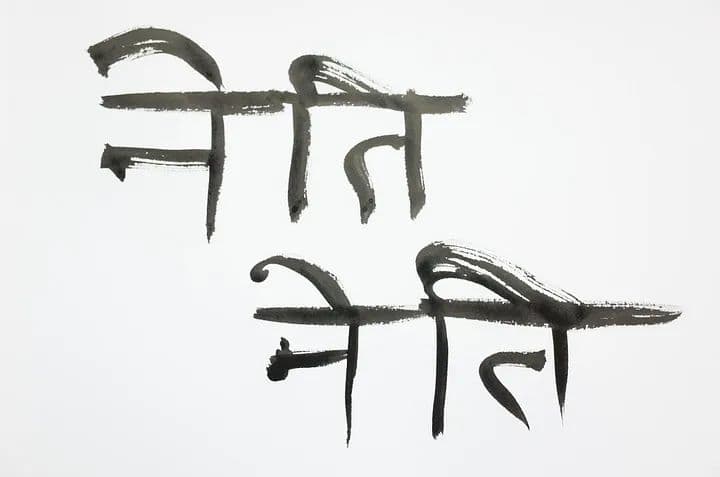
The Role of Negation (Neti Neti) in Absolute Realization
 Archive
The Secret Logic Behind Advaita's Theory of Maya
 Archive
Why Shankaracharya Rejected Buddhist Emptiness
 Archive
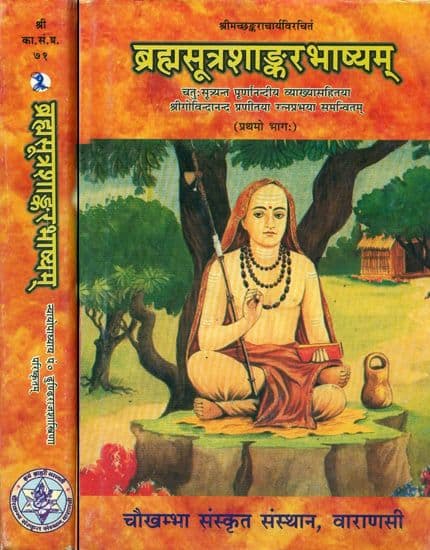
Brahma Sutra Bhashya: Decoding the Bhashyakara's Method
 Archive
The Hidden Meaning of Turiya in the Mandukya Upanishad
Key Insights
✦What is the central argument of the Sphota Siddhi, and what does it reject?
The Sphota Siddhi argues that the doctrine of sphota—the indivisible, meaning-bearing unit of language—must be accepted by Mimamsa philosophers because it is necessary to maintain verbal authority (shabdapramanya), which the Mimamsa school itself is committed to upholding [citation:7]. The text rejects Kumarila Bhatta's critique of sphota, which had argued that the theory was incompatible with Mimamsa's phoneme-based account of language. Mandana contends that without sphota, the sequential perception of individual sounds cannot account for the immediate, unified understanding of a word's meaning. The work is short—fewer than forty karikas with prose explanations—and is structured as a direct refutation of Kumarila's arguments and a positive establishment of the sphota doctrine [citation:1].
✦How does Mandana's theory of error in the Sphota Siddhi relate to his Advaita philosophy?
In the Sphota Siddhi, Mandana argues that the perception of sphota involves a kind of error: the listener mistakes the manifesting sounds (dhvani) for the sphota itself, or superimposes the sequence of phonemes onto the indivisible word. This error, however, is not an obstacle to knowledge but the very mechanism by which true understanding arises. This analysis connects to his Advaita work, the Brahmasiddhi, where he develops a sophisticated theory of avidya (ignorance) as a beginningless misapprehension that is neither entirely real nor entirely unreal. Scholars have noted that the structure of perceptual error in the Sphota Siddhi parallels the structure of metaphysical error in the Brahmasiddhi, suggesting that Mandana's philosophy of language and his Advaita metaphysics are deeply intertwined [citation:14].
✦What is the textual history of the Sphota Siddhi, and what editions and translations exist?
The Sphota Siddhi was first edited and published in 1931 by S. K. Ramanatha Sastri under the auspices of the Sanskrit Department of the University of Madras, with the commentary Gopalika by Rsiputra Paramesvara [citation:1]. An English translation by K. A. Subramania Iyer was published by Deccan College in Poona in 1966 as part of the Deccan College Building Centenary Series (no. 25) [citation:3]. This remains the standard English translation. The text is short, and the 1966 edition runs to 95 pages including the translation and notes. The Gopalika commentary, by a fifteenth-century author from the Payyoor Bhattathirippad family in Kerala, is valuable for understanding the text's reception and interpretation in later Advaita and Mimamsa circles [citation:1][citation:7].
✦How does the Sphota Siddhi relate to Mandana's other works, particularly the Vidhi Viveka?
The Sphota Siddhi and the Vidhi Viveka both belong to Mandana's Mimamsa phase, before or alongside his Advaita work. The Vidhi Viveka examines the nature of Vedic injunction (vidhi) and the psychology of action, while the Sphota Siddhi examines the nature of linguistic meaning and verbal testimony. Both are concerned with the foundations of shabdapramanya—the authority of scripture—which is central to Mimamsa. The Sphota Siddhi's defense of sphota is motivated by the need to explain how a sentence can convey a unified meaning that motivates action, which is precisely the concern of the Vidhi Viveka. Together, these two works show Mandana working through the linguistic and epistemological foundations that would later inform his Advaita treatise, the Brahmasiddhi.
✦What is the relationship between the Sphota Siddhi and Bhartrihari's Vakyapadiya?
The Sphota Siddhi is a defense of the sphota doctrine that Bhartrihari had articulated in the Vakyapadiya, but Mandana's text is not a mere restatement. Bhartrihari had developed the theory of sphota as part of a broader metaphysical vision in which language (shabda) is identified with Brahman. Mandana's Sphota Siddhi, by contrast, focuses on the epistemological and perceptual dimensions of sphota, arguing for its necessity within a Mimamsa framework concerned with verbal authority rather than with the metaphysical identity of language and reality. Scholars have noted that Mandana does not explicitly refer to Bhartrihari's shabdabrahman doctrine in the Sphota Siddhi, and that later interpreters like Parameshvara read such a connection into the text, possibly anachronistically [citation:9]. The relationship is thus one of selective appropriation rather than direct continuation.
✦What is a common misconception about the Sphota Siddhi's philosophical affiliation?
A common misconception is that because Mandana Mishra is primarily known as an Advaita Vedanta philosopher (through the Brahmasiddhi), the Sphota Siddhi must be an Advaita work. In fact, it is a work of Mimamsa philosophy of language, written from within the Mimamsa tradition and addressed to Mimamsa opponents. Its arguments are technical and linguistic, concerned with the mechanics of verbal understanding rather than with the nature of Brahman. The text's defense of sphota is motivated by the requirements of Mimamsa's own commitment to verbal authority, not by Advaita metaphysics. Recognizing this distinction is essential for understanding Mandana's intellectual range and the different philosophical traditions he engaged with across his career.
Wealthy Psyche is an intellectual archive. We do not host, distribute, or sell book copies — physical or digital. We provide structured knowledge to help you think better, faster.