



Kena Upanishad Bhashya
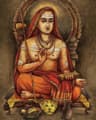
Shankara's commentary on the Kena Upanishad centers on a single paradox: the ultimate reality (Brahman) cannot be known as an object of the mind or senses, yet it is the very consciousness that makes all knowing possible. The bhashya's distinctive mechanism is the rigorous separation of the self from the instruments of cognition—mind, breath, speech, eye, ear—which are themselves inert without the illuminating presence of consciousness. Shankara argues that liberation requires recognizing this ever-present witness as one's own nature, not attaining something new through action or intellectual effort.
Book Archives
Detailed research articles, summaries and analyses from this book.
 Archive
The Mechanics of Liberation: Understanding Jivanmukti
 Archive
Consciousness and the Quantum Vacuum: A Vedantic Perspective
 Archive
Refuting The External World: Gaudapada’s Karika Analyzed
 Archive
Vichara-Sagara: A Deep Dive into Non-Dual Enquiry
 Archive
The Silence of the Sages: Understanding Dattatreya's Avadhuta Gita
 Archive
The Role of Negation (Neti Neti) in Absolute Realization
 Archive
The Secret Logic Behind Advaita's Theory of Maya
 Archive
Why Shankaracharya Rejected Buddhist Emptiness
 Archive
Brahma Sutra Bhashya: Decoding the Bhashyakara's Method
 Archive
The Hidden Meaning of Turiya in the Mandukya Upanishad
Key Insights
✦What is the central argument of Shankara's Kena Upanishad Bhashya, and what does it reject?
Shankara's commentary on the Kena Upanishad argues that Brahman, the ultimate reality, is the consciousness that underlies and enables all mental and sensory activity, yet cannot itself be grasped as an object of knowledge. The bhashya rejects the assumption that Brahman can be attained through ritual action, intellectual study, or any form of objective cognition. The Upanishad's opening questions—by whom is the mind directed, by what power do the senses function—are interpreted by Shankara as pointing to a reality that is prior to and independent of the faculties it illuminates. Liberation comes from recognizing this consciousness as one's own self, not from producing or acquiring it.
✦How does Shankara explain the Upanishad's paradox that Brahman is known by those who think they do not know it?
Shankara interprets the Upanishad's statement that Brahman is unknown to those who think they know it, and known to those who think they do not, as a rejection of objectifying knowledge. Brahman cannot be known in the way a pot or a tree is known, because it is the knower itself, the condition of all acts of knowing. Those who attempt to grasp Brahman as an object of the intellect fail, because the intellect is itself illumined by Brahman. Those who recognize that Brahman transcends all objective knowledge, and who relinquish the attempt to capture it conceptually, are said to know it in the only way possible: as their own being. This is not ignorance but a different order of knowledge, which Shankara identifies with self-realization.
✦What role does the story of the Yaksha and the gods play in Shankara's commentary?
The Kena Upanishad's third section narrates a contest in which the gods—Agni, Vayu, and Indra—each claim victory over a mysterious Yaksha, only to discover that their powers are impotent before it. Shankara reads this episode as a demonstration that all faculties and powers, even those of the gods, derive their efficacy from Brahman and are nothing without it. Agni cannot burn, Vayu cannot blow, and Indra cannot prevail without the consciousness that underlies them. The goddess Uma then reveals the identity of the Yaksha as Brahman. Shankara uses this narrative to reinforce his central philosophical point: the powers of cognition and action are not self-sufficient but depend entirely on the illuminating presence of consciousness, which is Brahman.
✦What is the scholarly status of the attribution of this bhashya to Shankara, and are there doubts about its authenticity?
The Kena Upanishad Bhashya is traditionally attributed to Adi Shankara, and it is one of the commentaries included in standard collections of his Upanishad bhashyas. However, scholarly opinion is not entirely unanimous. One source notes that the Kena Vakya Bhashya, a distinct or related commentary, has a 'doubtful status' . The main Kena Upanishad Bhashya, by contrast, is generally accepted as authentic and is widely studied in the Advaita tradition. It is included in the Anandashrama editions and in translations by the Ramakrishna Mission and other publishers [citation:3]. Unlike the many spurious works ascribed to Shankara, the Kena Bhashya has not been the subject of major attribution controversies in modern scholarship.
✦What English translations of Shankara's Kena Upanishad Bhashya are available?
Several English translations exist. The most accessible is the translation published by the Ramakrishna Mission, often included in volumes of 'Eight Upanishads with Shankara's Commentary' translated by Swami Gambhirananda. The full text is available online through Wisdom Library, which provides the Sanskrit text and English translation . The Internet Archive hosts a scanned edition of the Kena Upanishad with Shankara Bhasya and Anandagiri Tika, published by the Ramakrishna Mission, Delhi [citation:3]. V. Panoli's 'Upanishads in Sankara's Own Words' includes the Kena with Sanskrit, English translation, and explanatory notes [citation:4][citation:8]. Chinmaya International Foundation also offers a course and materials on the Kena Upanishad with Shankara Bhashya [citation:5].
✦How does the Kena Upanishad Bhashya relate to Shankara's other commentaries, particularly the Kathopanishad Bhashya?
Both commentaries belong to Shankara's series on the principal Upanishads and share the same Advaitic framework, but they emphasize different aspects of the teaching. The Kathopanishad Bhashya focuses on the distinction between the good (shreyas) and the pleasant (preyas), the nature of the self as distinct from the body and mind, and the gradual detachment from all that is perishable. The Kena Bhashya focuses more specifically on the paradox of self-knowledge: Brahman cannot be known as an object, yet it is the very consciousness that makes knowledge possible. The Kena Bhashya's analysis of the faculties and their dependence on consciousness complements the Katha's analysis of the self's immortality. Together they form a coherent exposition of Advaita's central claim that the self is Brahman.
Wealthy Psyche is an intellectual archive. We do not host, distribute, or sell book copies — physical or digital. We provide structured knowledge to help you think better, faster.