



Selected Works of Wang Yangming
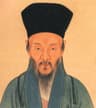
This volume is not a single authored book but a modern English-language anthology of Wang Yangming's writings, published in 2020 by Anhui Science and Technology Press. Its distinctive mechanism is bilingual presentation for Chinese learners of English: the selections, centered on the Instructions for Practical Living (Chuanxilu), are paired with translations by Li Hui and Yu Hui, designed to introduce Wang's philosophy through accessible English renderings. Unlike Wing-tsit Chan's 1963 scholarly edition, this anthology prioritizes language pedagogy and introductory accessibility over critical apparatus, presenting Wang's core texts as a window into Ming Neo-Confucianism for non-specialist readers.
Key Insights
✦What is the actual content and format of this 2020 'Selected Works' volume?
This is a three-volume bilingual anthology published by Anhui Science and Technology Press in 2020, with the uniform title 'Selected Works of Wang Yangming' and the subtitle 'Instructions for Practical Living.' The volumes present selections from Wang Yangming's writings in English translation, with translations credited to different translators across the volumes—Li Hui and Yu Hui for one volume, Li Le and Zhu Yubin for another. Each volume runs roughly 164 to 166 pages. The anthology is designed for Chinese readers studying English, pairing Wang's classical texts with modern English renderings rather than offering a critical scholarly edition with extensive annotation or commentary.
✦How does this anthology differ from Wing-tsit Chan's foundational English translation?
The difference is one of purpose and scholarly apparatus. Wing-tsit Chan's 1963 Instructions for Practical Living and Other Neo-Confucian Writings, published by Columbia University Press, is the standard scholarly English translation of the Chuanxilu and related texts. Chan explicitly stated that his translation is complete and based on the oldest and most authentic 1572 edition, and he dismissed the earlier Henke translation as containing too many mistakes to be useful. The 2020 Chinese anthology, by contrast, is a pedagogical and introductory work: it selects rather than translates complete texts, and its translations are not positioned as critical scholarship but as language-learning aids and accessible introductions.
✦What texts are included in this anthology, and why is the Chuanxilu central?
The anthology's uniform title specifies 'Instructions for Practical Living' (Chuanxilu) as its core. The Chuanxilu is Wang Yangming's most important work—a collection of conversations and letters recorded by his disciples—and it contains the essential formulations of his doctrines of mind is principle, unity of knowledge and action, and extending innate knowledge. No complete English translation of all Wang's works exists in this anthology format; the 2020 volumes select from the Chuanxilu and supplementary texts. For readers seeking the full range of Wang's writings, including his poetry, essays, and the Daxue Wen, Philip Ivanhoe's 2009 Readings from the Lu-Wang School of Neo-Confucianism offers a more comprehensive scholarly selection.
✦What is the most common misreading of a volume titled 'Selected Works of Wang Yangming'?
The most persistent misreading is to assume that a book with this title represents Wang Yangming's complete or definitive corpus. 'Selected Works' explicitly signals selection, and the 2020 Anhui edition is a curated anthology for a specific audience—Chinese learners of English—not a critical complete works. Wang Yangming did not compile his own collected works; his writings were gathered by disciples and later editors, and the standard Chinese editions contain far more material than any single English selection. Readers seeking scholarly access to Wang's thought should consult Wing-tsit Chan's translation for the Chuanxilu and Ivanhoe's volume for a broader range, while recognizing that all English selections are partial.
Wealthy Psyche is an intellectual archive. We do not host, distribute, or sell book copies — physical or digital. We provide structured knowledge to help you think better, faster.