


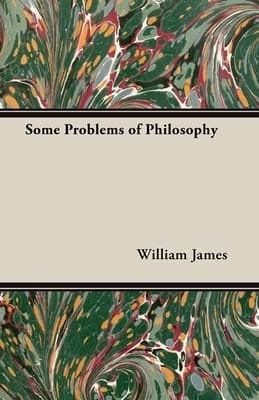
Some Problems of Philosophy: A Beginning of an Introduction to Philosophy
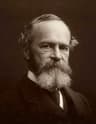
This is William James's last book, left unfinished at his death in 1910 and published posthumously in 1911. Its central framework is a defence of radical empiricism against intellectualism and monism: concepts are useful instruments for navigating experience, but they distort the flowing, novel reality of perceptual life when treated as exhaustive of it. James argues that the one and the many, causation, and the infinite are problems that dissolve when we return to concrete experience, where novelty and continuity are given together. The book is his most systematic attempt to integrate pragmatism with his pluralistic metaphysics.
Key Insights
✦What is the central argument of Some Problems of Philosophy, and what does it reject?
The central argument is that radical empiricism provides a better account of reality than intellectualism or monism. James argues that concepts are useful instruments for navigating experience, but they distort and limit reality when treated as exhaustive of it. The early chapters expose the defects of intellectualism and monism and the advantages of empiricism and pluralism . The novelty that enters into concrete perceptual experience—and that the rationalizing intellect disallows—suggests possibilities that a conceptual system cannot capture. James rejects the view that reality is a static, fully determinate system knowable through concepts alone. Instead, reality is found in the experiential flow, the stream of immediate experience, where continuity and novelty coexist.
✦How does this book relate to James's earlier works, and what does its unfinished state reveal?
This is James's last book, and he intended it to round out his philosophical system, which he described as 'too much like an arch built only on one side.' He began writing it in 1909, but illness stopped his work well before it could be completed . The book attempts to integrate the two primary ideas of his earlier work: pragmatism and radical empiricism. Pragmatism is introduced in the discussion of percept and concept, where James states that the meaning of a concept lies in the particular difference it makes in human experience. Radical empiricism is developed in the chapters on the abuse of concepts and the one and the many. The book was edited for publication by Horace M. Kallen after James's death, and it breaks off abruptly in the middle of a treatment of causation and the mind-body problem.
✦What role does the 'percept and concept' distinction play in the book's argument?
The percept and concept distinction is the hinge on which the book's argument turns. Percepts are the immediate data of experience—the flowing, concrete, novel reality we encounter before we begin to analyze it. Concepts are the abstractions we use to organize and communicate that experience. James argues that concepts are indispensable but dangerous: they are useful for specific purposes, but they distort reality when they are treated as more real than the percepts they were meant to serve. The chapter on 'the abuse of concepts' argues that intellectualism and monism commit precisely this error, substituting a conceptual map for the territory of lived experience. The corollary is that philosophy must return to the percepts, to the stream of consciousness, if it is to be adequate to reality.
✦How does the book relate to James's A Pluralistic Universe, and does it add anything new?
Some Problems of Philosophy extends the project of A Pluralistic Universe (1909), which James had published just a year earlier. Both works argue for a pluralistic, radical empiricist metaphysics against monism and rationalism. But Some Problems is more systematic and pedagogical in intent: James chose the form of an introduction because writing for beginners would force him to be nontechnical and readable . The book also includes more technical treatments of mathematical philosophy, engaging with Bertrand Russell and others, and it develops the problem of novelty and causation at greater length than the earlier work. The appendix, 'Faith and the Right to Believe,' draws on the concluding chapter of A Pluralistic Universe and alludes to James's early essay 'The Will to Believe.' The book is thus both a summary and an extension of his mature position.
✦How was the book received, and what did early reviewers identify as its strengths and weaknesses?
Early reviews were respectful but acknowledged the book's unfinished character. Frank A. Manny, writing in the Journal of Educational Psychology in 1912, noted that James proposes to take philosophy in the narrow sense of metaphysics and to let both religion and the results of the sciences alone . The review identifies James's frank acknowledgments of indebtedness to Renouvier and Bergson, which situate the book in his late philosophical development. Later assessments have been more mixed. A detailed reader's review notes that the book does not succeed in becoming the systematic exposition James hoped for, and that it does not adequately integrate pragmatism and radical empiricism. But the same review argues that it is well worth reading for its hints of the direction in which James's thought was going, and that it will be of most interest to readers who already know his earlier works.
✦What is the most common misunderstanding of this book's status and argument?
The most common misunderstanding is that it is a complete, systematic statement of James's philosophy. It is not: it was left unfinished, breaks off abruptly, and was edited posthumously. James himself described it as an attempt to round out a system that remained like an arch built only on one side . A related misunderstanding is that the book is an introductory textbook for beginners. While James chose the introduction form to force clarity, the book contains highly technical sections on mathematical philosophy and causation that are not suitable for beginners. It is better understood as a late, unfinished work that presupposes familiarity with James's earlier writings. Readers who expect a simple overview will find instead a demanding and incomplete text, valuable for what it reveals about the direction of his thought.
Wealthy Psyche is an intellectual archive. We do not host, distribute, or sell book copies — physical or digital. We provide structured knowledge to help you think better, faster.