



The Religious Situation
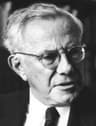
Tillich's central framework is a diagnostic analysis of modern culture as a 'religious situation' defined by the revolt against the spirit of capitalism. He argues that the bourgeois spirit—characterized by self-sufficient finitude, atomistic individualism, and the absolutization of the finite—has exhausted itself, and that its collapse is a kairos, a moment of crisis in which the eternal judges and invades time. The book examines this situation across science, art, politics, ethics, and the churches, finding signs of renewal in expressionist painting, depth psychology, and religious socialism. Religion, for Tillich, is direction toward the Unconditioned, and the most important religious movements occur outside institutional religion.
Key Insights
✦What is the central argument of The Religious Situation, and what does it reject?
The central argument is that the bourgeois spirit—the dominant cultural orientation of modern capitalism—has exhausted itself and is collapsing, and that this collapse is a kairos, a moment of crisis in which the eternal judges and invades time. Tillich rejects the view that this is merely secular decline; he argues that the revolt against capitalism in art, philosophy, and science is itself a religious phenomenon, an opening toward the transcendent. The book analyzes this situation across science, art, politics, ethics, and the churches, finding that the most important religious movements are developing outside structural religion . Religion, for Tillich, is direction toward the Unconditioned, and the bourgeois spirit's sin is the absolutization of the finite.
✦How was the English edition produced, and how does the translation shape the book we read?
The English edition was translated by H. Richard Niebuhr and published by Henry Holt in 1932, six years after the German original . Niebuhr was not a neutral translator: he was a major American theologian in his own right, and his introduction framed Tillich for an English-speaking audience that had not yet discovered him. A 1933 review notes that Karl Barth had expressed astonishment that America had not yet celebrated Tillich as a leader . The translation was later reprinted by Meridian Books in 1956 with a new pagination (219 pages rather than the original 182), and this is the edition most readers encounter today . The book's English reception is thus mediated by Niebuhr's editorial and interpretive choices.
✦What does Tillich mean by 'bourgeois spirit,' and why is it the target of the book's critique?
The bourgeois spirit is Tillich's term for the cultural orientation that accompanied the rise of capitalism: self-sufficient finitude, atomistic individualism, the pursuit of security and control through applied science and economic calculation. It is a spirit that has made itself at home in the finite and has lost the orientation toward the Unconditional. In the book's analysis, this spirit has determined pedagogy, sexual relations, art, and government, producing a 'capitalist society' in which the church itself has not escaped the blighting cultural arrest . The bourgeois spirit is not merely an economic ideology for Tillich; it is a religious stance, a devotion to the finite that has displaced the eternal. Its collapse is therefore a religious crisis, not merely a political or economic one.
✦How does the concept of kairos function in this book, and how does it relate to Tillich's later work?
Kairos is the fulfilled moment, the critical juncture in history when the eternal breaks into the temporal and demands decision. In The Religious Situation, Tillich identifies the present as a moment of kairos: the bourgeois world is passing away, and the transcendent is judging time and pointing the way of life . This concept becomes central to Tillich's later work, especially The Protestant Era and his religious socialist writings. The book's analysis is thus not a neutral sociology of religion but a prophetic diagnosis: it calls for decision in a moment when the old forms are dying and new forms are not yet born. This kairotic consciousness distinguishes Tillich from both conservative cultural criticism and Marxist historical materialism.
✦Who are the 'prophets' of renewal that Tillich identifies, and what do they have in common?
Tillich names Nietzsche, Strindberg, and van Gogh as artists and thinkers who attempted to correct the abuses of bourgeois culture but broke mentally and spiritually in the effort . More positively, he identifies Einstein, Husserl, Freud, Otto, and Barth as prophets of the immanent divine in their several life-interests . What unites them is not a shared doctrine but a common orientation: each in their own domain—physics, philosophy, psychology, theology—has broken through the self-enclosed world of bourgeois finitude toward a larger reality. Tillich's list is deliberately eclectic, spanning science and art, philosophy and psychoanalysis, indicating that the renewal he discerns is not confined to any single sphere but is a general cultural turning.
✦What is the most common misunderstanding of Tillich's claim that the most important religious movements are outside religion?
The most common misunderstanding is that Tillich is celebrating secularization or dismissing the church. He is doing neither. The claim that the most important religious movements develop outside structural religion is a diagnostic observation, not a normative prescription: it means that the direction toward the Unconditioned is appearing in art, philosophy, and politics while the churches remain bound to the bourgeois spirit. Tillich is not saying that institutional religion is unimportant; he is saying that it has failed to recognize the kairos and has aligned itself with the dying order. The book's final sections address the contemporary state of Protestantism, Catholicism, and Judaism, and the critique is internal: the churches are judged by the religious criterion they themselves profess.
Wealthy Psyche is an intellectual archive. We do not host, distribute, or sell book copies — physical or digital. We provide structured knowledge to help you think better, faster.