



Theology of Culture
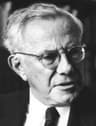
This collection of fifteen essays, edited by Robert C. Kimball, develops Tillich's central claim that religion is the substance of culture and culture is the form of religion. Against the separation of sacred from secular, Tillich argues that every cultural creation—a painting, a legal system, a political movement—expresses an ultimate concern, even when it appears wholly secular. The book's method is a religious analysis of culture: it uncovers the theological dimension latent in art, existentialism, psychoanalysis, science, and education, and it treats the breach between religion and culture as an emergency for both.
Key Insights
✦What is the central thesis of Theology of Culture, and what does it reject?
The central thesis is that religion is the substance of culture and culture is the form of religion. Tillich rejects the separation of sacred from secular that treats religion as one domain among others; instead, he argues that every cultural creation—a painting, a legal system, a political movement—expresses an ultimate concern, even when it appears wholly secular . The task of a theology of culture is to uncover this latent religious dimension. The book's classic essay, 'The Two Types of Philosophy of Religion,' frames the project as closing the gap between religion and culture, reconciling concerns that have been falsely estranged . The breach between them is an emergency for both, not a neutral fact to be accepted.
✦How was this volume assembled, and what does its editorial history reveal?
The book is not a single continuous treatise but a curated collection of fifteen essays, edited by Robert C. Kimball and published by Oxford University Press in 1959 . Most of the essays had been published previously, none earlier than 1940, and more than half were written in the latter half of the 1950s . The title comes from Tillich's first important public speech, delivered forty years earlier, a fact he notes in the foreword . This editorial mediation matters: readers are encountering a selection shaped by Kimball's judgment, not a work Tillich composed as a unified book. The essays were gathered to make scattered material available to a wider readership, and the volume's coherence is thematic rather than architectonic .
✦How did critics respond to the book on its publication, and what was the central objection?
A New York Times review in 1959 captured the book's ambition and its vulnerability. The reviewer praised Tillich's range and the power of his central claim that God is met on the boundary of every human concern, not as a stranger in a foreign country . But the review raised a pointed objection: if religion is the substance of culture, what happens when a civilization appears predominantly nonreligious and noncultural, as reflected in industrial depersonalization and the dominance of linguistic philosophy? The reviewer suggested Tillich may be 'too religious and too cultured a man to be alive today' . The objection is not that Tillich is wrong about religion and culture in principle, but that his framework may not fit the specific condition of modern secularity.
✦What role does the concept of 'ultimate concern' play in the book's argument?
Ultimate concern is the concept that allows Tillich to identify religion with the depth dimension of culture rather than with a separate institutional sphere. Religion, on this account, is not a system of special symbols and rites directed at a highest being; it is the state of being grasped by something unconditional, holy, absolute . This is what gives meaning, seriousness, and depth to all culture. Because every cultural creation expresses some ultimate concern—whether explicitly religious or apparently secular—the theology of culture can analyze art, politics, and science as theological texts. The concept also grounds Tillich's critique of idolatry: any finite reality absolutized as ultimate becomes demonic. The book's method is to discern, in cultural forms, what they ultimately worship.
✦How does Theology of Culture relate to Tillich's Systematic Theology?
Theology of Culture is an applied and occasional work, not a systematic treatise. Its essays respond to specific cultural situations—existentialism, psychoanalysis, the encounter of Protestantism and Judaism, the question of education—and deploy Tillich's concepts in the register of cultural diagnosis. The Systematic Theology develops the same concepts—ultimate concern, heteronomy and autonomy, theonomy—within a rigorous ontological framework. The essays can be read as experiments in application that clarify the stakes of the systematic abstractions. A reader who finds the sermons or essays accessible can use them as a gateway to the more demanding Systematic Theology; a reader who has struggled with the latter may find the essays illuminate why Tillich thought the abstractions mattered.
✦What is the most common misunderstanding of Tillich's claim that religion is the substance of culture?
The most common misunderstanding is that Tillich is reducing religion to culture or dissolving theology into cultural studies. He is doing the opposite: he is arguing that culture has a religious depth that secular accounts miss. The claim that 'religion is the substance of culture' does not mean that culture is all there is to religion; it means that no cultural creation can be adequately understood without asking what ultimate concern it expresses . A related misunderstanding is that Tillich is indifferent to institutional religion. In fact, the final essay addresses Christian ministers and teachers directly, asking how the Christian message can be communicated in a situation where the old heteronomous forms have collapsed. The book is a work of theological critique, not a celebration of secular culture.
Wealthy Psyche is an intellectual archive. We do not host, distribute, or sell book copies — physical or digital. We provide structured knowledge to help you think better, faster.