



The Courage to Be
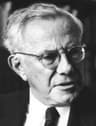
Tillich's central framework is an ontology of courage: courage is the self-affirmation of one's being in spite of the threat of nonbeing. He distinguishes three forms of anxiety—fate and death, emptiness and meaninglessness, and guilt and condemnation—and traces the courage to be as a part, as oneself, and finally as the acceptance of acceptance. The book's culminating move is the concept of the 'God above God,' which transcends the theistic idea of a highest being and grounds absolute faith. Courage is not the absence of anxiety but the power to affirm oneself in the midst of it.
Key Insights
✦What is the central thesis of The Courage to Be, and what does it reject?
The central thesis is that courage is the self-affirmation of one's being in spite of the threat of nonbeing. Tillich defines anxiety as the existential awareness of nonbeing—not merely fear of something specific, but the dread of nothingness that permeates human existence . He rejects the idea that courage is the absence of anxiety or a simple psychological virtue; courage is rather the power to affirm oneself in the midst of anxiety. The book traces this power through three historical forms—courage as a part, courage as oneself, and finally the courage to accept acceptance—culminating in the claim that the ultimate source of courage is the 'God above God,' which transcends the theistic conception of a highest being .
✦What are the three types of anxiety Tillich identifies, and how does each correspond to a form of courage?
Tillich distinguishes three forms of anxiety: the anxiety of fate and death (ontic anxiety), the anxiety of emptiness and meaninglessness (spiritual anxiety), and the anxiety of guilt and condemnation (moral anxiety) . Each corresponds to a way of exercising the courage to be. The anxiety of fate and death is met by the courage to be as a part, the courage of participation in a larger whole. The anxiety of emptiness and meaninglessness is met by the courage to be as oneself, the courage of individual self-affirmation. The anxiety of guilt and condemnation is met by the courage to accept acceptance—the faith that one is accepted despite being unacceptable. These three forms are not stages to be left behind but dimensions of existence that courage must address simultaneously.
✦What does Tillich mean by the 'God above God,' and why is it crucial to the book's argument?
The 'God above God' is Tillich's term for the ultimate ground of being that transcends the theistic idea of a personal God who exists alongside other beings. It is the content of absolute faith, which Tillich defines as accepting that one is accepted without any concrete someone or something doing the accepting . The concept is crucial because the book's argument requires a source of courage that is not itself vulnerable to the threat of nonbeing. If God is a being among beings, God too is subject to nonbeing and cannot ground absolute courage. Only a God beyond theism—the power of being-itself that appears in every act of courage—can sustain the courage to accept acceptance. This move has been both celebrated and criticized as dissolving the personal God of biblical faith.
✦How does this book relate to Tillich's Systematic Theology?
The Courage to Be is an applied and popular work, not a technical treatise. It was originally delivered as the Terry Lectures at Yale and introduced Tillich's theology to a general readership . The concepts it deploys—nonbeing, anxiety, the God above God—are drawn from the Systematic Theology, but presented in existential and accessible form. A Google Books summary notes that the book 'introduced issues of theology and culture to a general readership' and that Tillich's method of correlation, linking existential questions to Christian answers, is at work throughout . Readers who find the Systematic Theology daunting often begin here; readers who have struggled with the sermons may find that the Courage to Be clarifies the stakes of Tillich's ontological concepts.
✦How was the book received on publication, and what is its enduring reputation?
The Courage to Be made Tillich one of the most widely read religious thinkers in postwar America. A German scholarly study notes that it became a bestseller and required reading at American universities . The New York Times Book Review praised 'the brilliance, the wealth of illustration, and the aptness of personal application' . The New York Public Library selected it as one of the Books of the Century . Harvey Cox's later introduction situates it within the theological conversation of its time and argues for its continued relevance . The book's appeal lies in its refusal of easy consolation: it does not promise the elimination of anxiety but the power to affirm oneself in spite of it, a message that has resonated across generations of readers.
✦What is the most common misunderstanding of Tillich's concept of courage?
The most common misunderstanding is that courage for Tillich means optimism, self-confidence, or the overcoming of anxiety. He explicitly rejects this. Courage is not the absence of anxiety but the self-affirmation of being in spite of anxiety. The phrase Tillich uses to capture this is 'in spite of'—courage is the power to affirm oneself despite the threat of nonbeing, not because the threat has been removed . A related misunderstanding is that the 'God above God' is a rejection of God or a form of atheism. Tillich is not denying the reality of the divine; he is denying that the divine can be captured by the theistic concept of a personal being among beings. The 'God above God' is the ground of being that makes courage possible, not a denial of the sacred.
Wealthy Psyche is an intellectual archive. We do not host, distribute, or sell book copies — physical or digital. We provide structured knowledge to help you think better, faster.