



The Protestant Era
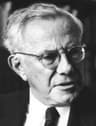
This collection of essays and addresses, written over nearly a quarter century, applies Tillich's philosophical theology to the crisis of modern culture. Its central framework is the Protestant principle: the prophetic protest against every attempt to absolutize a finite reality, including the church and its doctrines. Tillich argues that while the historical era of Protestantism may be ending, the principle itself endures as a critical and creative power. The essays range from analyses of kairos and fate to Christian socialism and the spiritual problems of postwar reconstruction, unified by the conviction that Protestantism must continually reform itself and its world.
Key Insights
✦What is the 'Protestant principle,' and how does it structure the book's argument?
The Protestant principle is Tillich's term for the prophetic protest against every attempt to identify the ultimate with a finite reality—whether a church, a doctrine, a nation, or a historical era. It is the application of justification by faith alone to the realm of culture and religion: no human achievement, including Protestantism itself, can claim to be absolute. The book's title essay asks whether the Protestant era has ended, and Tillich's answer is that while the historical epoch may be closing, the principle remains valid and adaptable . This principle provides the critical thread across essays otherwise diverse in topic, from the philosophy of history to Christian socialism. It is the hermeneutic key to Tillich's entire cultural theology.
✦How did James Luther Adams shape the English edition, and what does his role reveal about the book's textual history?
Adams was not a neutral translator. He selected the essays, translated them from German, and wrote a concluding essay explaining Tillich's concept of the Protestant era . Tillich himself acknowledged Adams's contribution in the preface, noting that the spirit of the English language demanded clarification of ambiguities that had been covered by the 'mystical vagueness of classical philosophical German' . This means the English edition is a mediated construction, not a transparent window onto a fixed German original. The essays were contributed to periodicals over roughly twenty-five years and were assembled for this volume; there was no single German book called The Protestant Era. Readers are encountering a curated English-language compilation as much as a work by Tillich alone.
✦How was the book received on publication, and what did critics identify as its central tension?
The New York Times review in 1948 hailed it as 'the most important work of religious apologetics to appear on American bookstands' since Niebuhr, praising Tillich's synthesis of philosophy and theology . Catholic reviewers were more critical. Vincent Edward Smith, writing in The Thomist, found the book's central concept incoherent: a 'principle that is simply a protest ought not to be called a principle,' he argued, because it has no content to enunciate . This captures the enduring tension: is the Protestant principle a substantive theological claim or a purely formal critical posture? Tillich's defenders reply that the principle's content is precisely its refusal to absolutize any content, a position that is itself substantive. The debate remains unresolved and continues to shape assessments of Tillich's legacy.
✦What role does 'kairos' play in the book, and how does it relate to the concept of the Protestant era?
Kairos, one of the book's central essays, is Tillich's term for the fulfilled moment—a critical juncture in history when the eternal breaks into the temporal and demands decision. It is opposed to chronos, mere chronological time. For Tillich, the rise of Nazism and the crisis of the Weimar Republic were kairotic moments that called for prophetic critique and action. The concept of the Protestant era is itself kairotic: it is a historical epoch defined by the Protestant principle's dominance, but it is not eternal. When the era passes, the principle does not disappear; it finds new forms of expression in response to new kairotic situations . This historical consciousness distinguishes Tillich from Barthian orthodoxy, which he regarded as insufficiently attentive to the demands of the moment.
✦How does The Protestant Era relate to Tillich's later Systematic Theology?
The Protestant Era is a collection of occasional essays and addresses, not a systematic treatise. Its concepts—the Protestant principle, kairos, theonomy, the demonic—are deployed in response to specific cultural and political situations, especially the crisis of the 1930s and 1940s. The Systematic Theology, by contrast, develops these concepts within a rigorous ontological framework, treating them as moments in the doctrine of God, Christ, and the Spirit. The essays can be read as applications or experiments that anticipate the systematic work. A reader who finds the sermons or essays accessible can use them as a gateway to the more demanding Systematic Theology; a reader who has struggled with the latter may find the essays clarify the existential stakes of Tillich's abstractions.
✦What is the most common misunderstanding of Tillich's claim that the Protestant era is ending?
The most common misunderstanding is that Tillich is predicting the death of Christianity or celebrating secularization. He is doing neither. The 'end of the Protestant era' refers to the close of a specific historical period in which Protestantism shaped Western culture, not to the end of the Protestant principle or of Christian faith. Tillich argues that the principle will survive the era, adapting to new historical conditions . A related misunderstanding is that Tillich is a secular theologian who reduces religion to culture. In fact, his critique of secularism is as sharp as his critique of religious absolutism: both absolutize the finite. The book's call for a 'new spiritual and social reformation' presupposes that the prophetic power of Protestantism remains available, not that it has been exhausted.
Wealthy Psyche is an intellectual archive. We do not host, distribute, or sell book copies — physical or digital. We provide structured knowledge to help you think better, faster.