


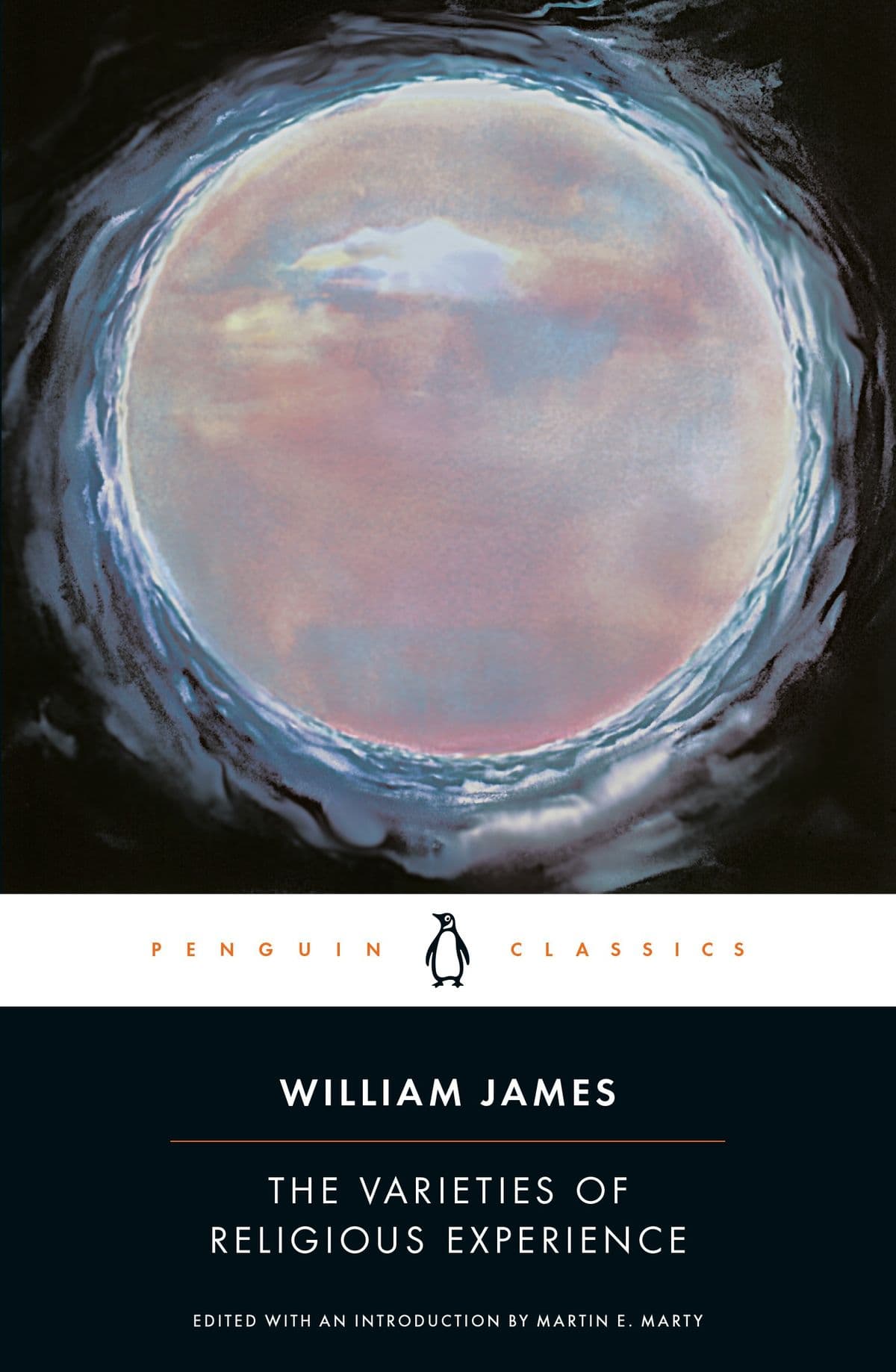
The Varieties of Religious Experience: A Study in Human Nature
This book collects James's 1901–1902 Gifford Lectures and is the foundational work of the empirical study of religious experience. Its central framework is a pragmatic and psychological approach: religion is judged by its fruits, not its roots, and the test of a religious experience is whether it produces good consequences in a person's life. James distinguishes the healthy-minded from the sick soul, analyzes conversion and saintliness, and concludes that religious experience is real in its effects, even if its metaphysical object cannot be verified. The book is a landmark in the psychology of religion and a defence of the legitimacy of individual religious experience against institutional authority.
Key Insights
✦What is the central argument of The Varieties of Religious Experience, and what does it reject?
The central argument is that religion should be judged by its fruits, not its roots: the test of a religious experience is whether it produces good consequences in a person's life, not whether it can be traced to a particular psychological or physiological cause. James rejects the reductionist view that explaining the origin of a religious experience explains it away. He also rejects the institutional and doctrinal approach to religion, arguing that individual religious experience is the primary phenomenon and that theology is secondary . The book is a study in human nature, not a defence of any particular religion. James examines a wide range of case studies—conversion narratives, saintly lives, mystical experiences—and concludes that religious experience is real in its effects, even if its metaphysical object cannot be verified.
✦What is the distinction between the 'healthy-minded' and the 'sick soul,' and why does it matter?
James distinguishes two religious temperaments. The healthy-minded are those who see the world as essentially good and who experience religion as a source of joy and optimism. The sick soul are those who are acutely aware of evil, suffering, and their own insufficiency, and who experience religion as a deliverance from despair. James argues that the sick soul is the more profound temperament, because it takes evil seriously and therefore requires a deeper redemption . The distinction matters because it shows that religious experience is not one thing but many, and that different temperaments produce different kinds of religion. The healthy-minded tend toward a religion of once-born optimism; the sick soul tend toward a religion of conversion and rebirth. James's sympathy is with the sick soul, whose experience is richer and more honest.
✦How does James analyze conversion, and what does he conclude about its causes?
James analyzes conversion as a psychological process in which a person's habitual center of personal energy shifts, and new interests and powers are awakened. He argues that conversion is not a supernatural event but a natural psychological process, though it may be triggered by religious ideas and practices . He examines both sudden conversions, such as those of St. Paul and Tolstoy, and gradual conversions, and he notes that both follow a similar pattern: a period of crisis, a moment of surrender, and a sense of release and peace. James concludes that the causes of conversion are multiple—physiological, psychological, and social—but that this does not diminish its significance. The test of conversion is its fruits: whether it produces a lasting change in character and conduct.
✦How does the book relate to James's pragmatism, and what role does the pragmatic method play?
The Varieties of Religious Experience is a pragmatic study: it tests religious experiences by their practical consequences, not by their metaphysical truth-claims. James argues that the value of a religious experience is to be judged by its fruits—whether it makes the person better, more loving, more courageous, more serene . This is the pragmatic method applied to religion. The book does not attempt to prove or disprove the existence of God; it asks what difference religious experience makes in human life. James's conclusion is that religious experience is real in its effects, and that this is enough to justify taking it seriously. The book thus anticipates the pragmatist theory of truth developed in Pragmatism (1907), where James argues that true ideas are those that work.
✦How was the book received, and what was its impact on psychology and religion?
The book was an immediate success and established James as a major figure in the study of religion. It was praised for its literary style, its psychological insight, and its sympathetic treatment of religious experience. It became a standard text in the psychology of religion and influenced a generation of scholars, including Rudolf Otto, Carl Jung, and William James's own students . The book also had a significant impact on religious thought: it legitimized the study of individual religious experience as a serious academic subject and challenged the dominance of institutional and doctrinal approaches. Some critics, particularly within the Catholic tradition, objected to James's subjectivism and his neglect of the institutional and sacramental dimensions of religion. But the book remains a landmark in the field.
✦What is the most common misunderstanding of the book's method and conclusions?
The most common misunderstanding is that James is arguing that religious experience proves the existence of God. He is not: he explicitly says that the metaphysical object of religious experience cannot be verified by psychological analysis, and that his study is descriptive and pragmatic, not apologetic . A related misunderstanding is that James is a subjectivist who reduces religion to feeling. He is not: he insists that religious experience must be tested by its fruits, and that this is an objective test of its value. The book is a study in human nature, not a defence of any particular religion, and its conclusions are tentative and pluralistic. James is a sympathetic observer, not a believer or a debunker, and the book's power lies in its willingness to take religious experience seriously without either defending or dismissing it.
Wealthy Psyche is an intellectual archive. We do not host, distribute, or sell book copies — physical or digital. We provide structured knowledge to help you think better, faster.