



Michel Foucault
Michel Foucault was a French philosopher and social theorist whose work profoundly reshaped political philosophy, critical theory, and the humanities. He analyzed the intricate relationships between power, knowledge, and discourse, arguing that power is not merely repressive but productive of subjects and truths. His major works—Madness and Civilization, The Order of Things, Discipline and Punish, and The History of Sexuality—examined the historical construction of madness, punishment, sexuality, and the self. He introduced concepts like biopower, governmentality, and the panopticon, which have become foundational in political sociology, cultural studies, and poststructuralist thought. Foucault's relentless critique of modern institutions and his insistence on the contingency of social arrangements made him one of the most influential thinkers of the 20th century.

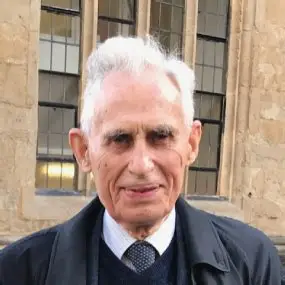


What is Michel Foucault best known for?
Michel Foucault is best known for his critical analyses of power, knowledge, and discourse, arguing that these are intertwined in ways that shape subjectivity and social institutions. He introduced concepts such as biopower, which describes how power operates over populations through regulation and control of life, and governmentality, which examines the rationalities of governance. His works Discipline and Punish and The History of Sexuality are foundational. He also pioneered new methods of historical inquiry—archaeology and genealogy—that scrutinize how truths and practices emerge historically. His influence spans philosophy, sociology, criminology, feminism, and postcolonial studies.
What is the relationship between power and knowledge in Foucault's work?
Foucault rejected the idea that knowledge is simply a neutral tool used by power, arguing instead that power and knowledge are inseparable—they produce each other. He coined the term 'power/knowledge' to denote that any exercise of power creates corresponding knowledge, and any knowledge presupposes and reinforces power relations. For example, the human sciences (psychiatry, criminology) emerged alongside new techniques of social control. Truth itself is not objective but is produced within discursive regimes that define what can be said and known. Thus, for Foucault, knowledge is never innocent; it always carries political effects.
What is biopower in Foucault's philosophy?
Biopower, or biopolitics, refers to a new mode of power that emerged in the 18th century, focused on managing populations through controls over life processes—birth, health, reproduction, and mortality. Unlike sovereign power, which is centered on the right to take life or let live, biopower seeks to optimize life by regulating populations. It operates through institutions like medicine, public health, and statistics. Foucault argues that modern state power is essentially biopolitical, governing through the administration of bodies and populations. This concept has been hugely influential in studies of health, migration, and security.
What is the panopticon and why is it important?
Foucault used Jeremy Bentham's architectural design of the panopticon—a circular prison with a central watchtower—as a metaphor for modern disciplinary power. The panopticon induces in the inmate a state of permanent visibility, leading to self-regulation, as they never know when they are being observed. Foucault argued that this model extends beyond prisons to schools, hospitals, factories, and barracks, creating a 'carceral society.' The panopticon illustrates how modern power is efficient, anonymous, and operates through surveillance and normalization, making individuals docile and productive without the need for brute force.
What is governmentality according to Foucault?
Governmentality is a concept Foucault developed to analyze the rationality and techniques of governing populations. He argued that since the 16th century, the state's concern shifted from territorial control to managing populations—their health, wealth, and welfare. Governmentality encompasses institutions, procedures, and tactics that calculate and optimize the conduct of individuals and groups. It operates through a blend of biopower, discipline, and liberal economic reasoning. This approach helps us understand how power is exercised not just through laws but through everyday practices and self-governance, making it a key tool for analyzing modern governance.
What is the difference between archaeology and genealogy in Foucault's method?
Archaeology, developed in works like The Order of Things, is a method that examines the conditions of possibility for knowledge in a given historical period—the 'epistemes' that define what can be said and thought. It analyzes discourses and their rules of formation without assuming progress or continuity. Genealogy, introduced later in Discipline and Punish and The History of Sexuality, adds a historical dimension, tracing the descent and emergence of concepts through contingent struggles, accidents, and power relations. While archaeology studies the formal structure of discourses, genealogy investigates how knowledge is enmeshed with social practices, institutions, and power, making it more politically engaged.
What are Foucault's major works?
Foucault's major works include Madness and Civilization (1961), on the history of insanity; The Order of Things (1966), on the epistemic structures of the human sciences; The Archaeology of Knowledge (1969), on discursive formations; Discipline and Punish (1975), on the history of punishment and disciplinary institutions; and the three volumes of The History of Sexuality (1976, 1984), on the discourse of sexuality and the self. He also published numerous lectures and essays, collected in series like Power/Knowledge and Society Must Be Defended. These works span history, philosophy, and sociology, making him an exceptionally versatile and influential scholar.
How did Foucault influence political philosophy and activism?
Foucault's influence on political philosophy is immense, particularly in rethinking power beyond state institutions and legal sovereignty. His work inspired the study of power in everyday life, resistance, and the politics of identity and difference. He participated in social movements, including prison reform and gay rights, and his ideas have been taken up by feminist, queer, and postcolonial theorists. His critique of power-knowledge and his insistence on the possibility of resistance have made his work a resource for activists questioning authority. His concept of 'care of the self' also informed ethical self-formation, connecting personal agency to political transformation.