



Agama Shastra
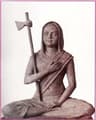
The Agama Shastra—better known as the Mandukya Karika—is Gaudapada's four-chapter verse treatise that establishes the philosophical foundations of Advaita Vedanta through a radical doctrine of non-origination (ajativada). Its central mechanism is the analysis of the four states of consciousness—waking, dream, deep sleep, and the fourth (Turiya)—to show that the witnessed world is an appearance, like the perception of a snake in a rope, and that nothing is ever truly born. Gaudapada argues that the self (Atman) is unborn, unchanging, and non-dual, and he uses Buddhist dialectical methods to dismantle rival views of creation and causality.
Book Archives
Detailed research articles, summaries and analyses from this book.
 Archive
The Mechanics of Liberation: Understanding Jivanmukti
 Archive
Consciousness and the Quantum Vacuum: A Vedantic Perspective
 Archive
Refuting The External World: Gaudapada’s Karika Analyzed
 Archive
Vichara-Sagara: A Deep Dive into Non-Dual Enquiry
 Archive
The Silence of the Sages: Understanding Dattatreya's Avadhuta Gita
 Archive
The Role of Negation (Neti Neti) in Absolute Realization
 Archive
The Secret Logic Behind Advaita's Theory of Maya
 Archive
Why Shankaracharya Rejected Buddhist Emptiness
 Archive
Brahma Sutra Bhashya: Decoding the Bhashyakara's Method
 Archive
The Hidden Meaning of Turiya in the Mandukya Upanishad
Key Insights
✦What is the central argument of the Agama Shastra, and what does it reject?
The text's central argument is ajativada—the doctrine of non-origination. Gaudapada contends that nothing is ever truly born, and that the apparent world of multiplicity is an illusion superimposed on the unchanging reality of the self (Atman). The text rejects all theories of creation, including those found in the Upanishads, treating them as provisional teachings for those who cannot grasp the highest truth. It also rejects the dualistic and pluralistic philosophies of rival schools, using a dialectical method that shows how any attempt to explain the origin of the world leads to contradiction. Gaudapada's analysis of the four states of consciousness—waking, dream, deep sleep, and Turiya—is deployed to demonstrate that the witnessing awareness underlying all experience is itself unborn and non-dual.
✦What is the relationship between the Agama Shastra and the Mandukya Upanishad?
The Agama Shastra, or Mandukya Karika, is a commentary in verse on the Mandukya Upanishad, which consists of only twelve prose verses. Gaudapada's text expands those twelve verses into four chapters of 215 verses in total. The first chapter (Agama Prakarana) comments directly on the Upanishad's analysis of the four states of consciousness and the syllable AUM. The remaining three chapters—Vaitathya, Advaita, and Alatashanti—are independent philosophical investigations that develop the doctrine of non-origination and refute rival views. Because the Karika and the Upanishad are so closely intertwined, they are traditionally studied together, and Shankara's commentary on the Mandukya Upanishad is inseparable from the Karika text.
✦Why has Gaudapada been accused of being a crypto-Buddhist, and how did he respond?
Gaudapada has been accused of being a crypto-Buddhist because his dialectical method, his doctrine of non-origination, and his analysis of consciousness bear striking resemblances to Madhyamika and Vijnanavada Buddhist thought. The fourth chapter of the Karika, Alatashanti, explicitly uses Buddhist terminology and arguments, and some scholars have argued that Gaudapada was directly influenced by Buddhist texts. Gaudapada anticipates this charge: at the end of chapter four, he insists that his doctrine is not Buddhist because he affirms the existence of the self (Atman), whereas Buddhism denies it. For Gaudapada, the world is an appearance (mithya), not a void (shunyata), and the self is real, not empty. This distinction, he argues, differentiates his Advaita from Buddhist nihilism.
✦What is the textual history of the Agama Shastra and its English translations?
The Sanskrit text of the Karika was first edited and published in the late nineteenth century. Manilal N. Dvivedi's English translation, published in 1894, was the first widely available rendering and included the Karika, the Upanishad, and Shankara's Bhashya in a single volume. Swami Gambhirananda's translation, published by Advaita Ashrama, later became the standard edition in the Ramakrishna Mission tradition. More recent translations include those by Swami Nikhilananda and Charles Johnston. The text's translation history is intertwined with Shankara's Bhashya, which is almost always included alongside the Karika. This editorial mediation is significant: readers rarely encounter the Karika alone, and Shankara's commentary shapes how the text is interpreted, often in ways that emphasize Advaita's orthodoxy over Gaudapada's more radical formulations.
✦How does Gaudapada's doctrine of ajativada relate to Shankara's commentary?
Gaudapada's ajativada is more radical than Shankara's own formulation. Gaudapada argues that nothing is ever born and that the world is an illusion, while Shankara, in his Brahma Sutra Bhashya, accepts a provisional reality to the world for the purposes of practical life and scriptural interpretation. Shankara's commentary on the Mandukya Upanishad and Karika does not reject ajativada, but it presents it as the highest truth, reserved for those who have already understood the provisional nature of the world. This relationship is a source of interpretive tension: some scholars see Shankara as softening Gaudapada's radicalism, while others see him as faithfully transmitting it while making it accessible to a broader audience. The distinction between the two thinkers is one of the most debated questions in the study of Advaita Vedanta.
✦What is a common misconception about the Agama Shastra's authorship and relationship to Shankara?
A common misconception is that Shankara himself wrote the Karika or that the Karika and Shankara's Bhashya are the same text. In fact, they are separate works by different authors. Gaudapada was Shankara's teacher's teacher, and the Karika is Gaudapada's independent philosophical treatise. Shankara wrote a commentary on both the Upanishad and the Karika, and it is this combined text—Upanishad, Karika, and Bhashya—that is traditionally studied. The misconception arises because the three texts are often published together in a single volume, with the boundaries between them blurred. Recognizing the distinct authorship of the Karika and the Bhashya is essential for understanding the development of Advaita thought, since Gaudapada's more radical positions are not always identical to Shankara's own.
Wealthy Psyche is an intellectual archive. We do not host, distribute, or sell book copies — physical or digital. We provide structured knowledge to help you think better, faster.