



Expression and Meaning: Studies in the Theory of Speech Acts
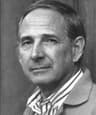
Searle's central project here is to extend the speech-act framework of his 1969 book into discourse modes it had not yet touched: metaphor, fiction, indirect speech, and reference. The unifying claim is that these phenomena are not deviations from literal meaning but extensions of the same rule-governed intentionality that governs ordinary illocutionary acts. Metaphor works by exploiting the gap between sentence meaning and speaker meaning; fiction works by suspending the normal commitment to truth; indirect speech acts work by mobilizing background knowledge and convention. The book points toward the thesis that language is grounded in the intentionality of mind.
Key Insights
✦What is the central claim of Expression and Meaning, and what does it reject?
The central claim is that metaphor, fiction, indirect speech acts, and reference are not linguistic anomalies or deviations from a literal norm but extensions of the same rule-governed intentionality that structures ordinary speech acts. Searle rejects the view that metaphor requires a special theory of semantic transformation or that fictional discourse is a parasitic or nonsensical use of language. Instead, he argues that in metaphor the speaker means something different from what the sentence means, and the hearer recovers the speaker's meaning through shared strategies and background assumptions. Fiction involves a suspension of the normal illocutionary commitment to truth, not a special linguistic code. The book's essays collectively point toward the larger thesis that the philosophy of language is grounded in the philosophy of mind .
✦How does the essay on metaphor differ from traditional semantic accounts?
Searle's account of metaphor rejects the idea that metaphorical meaning is a property of sentences or that it requires special semantic rules beyond those governing literal speech. His central distinction is between sentence meaning and speaker meaning: in metaphor, the speaker utters a sentence whose literal meaning is defective or obviously false in context, and the hearer uses shared background knowledge and principles of cooperative communication to infer what the speaker actually meant. The 'defect' in the literal utterance is the cue that triggers a metaphorical interpretation. Searle identifies a set of principles that hearers use to compute metaphorical speaker meaning, though he acknowledges they are not algorithmic. The essay was widely praised; Monroe Beardsley called it a substantial contribution to act theory, and Brian Loar noted Searle's penchant for bold distinctions and systematic explanations .
✦What is the 'logical status of fictional discourse,' and why is it philosophically puzzling?
The puzzle is that fictional discourse consists of utterances that look like assertions but do not carry the normal commitment to truth. Searle's solution is to deny that fiction requires a special linguistic meaning or a separate set of semantic rules. Instead, he argues that the author of fiction pretends to make assertions, or more precisely, engages in a non-deceptive suspension of the illocutionary commitments that ordinarily attach to assertion. The sentences themselves have their ordinary meanings; what changes is the mode of commitment. This account treats fiction as continuous with ordinary speech acts rather than as a logically distinct domain. It has been influential but also contested by theorists who argue that fictional discourse involves more than a simple suspension of commitment, and that the institutional context of fiction-making requires further analysis.
✦What are indirect speech acts, and how does Searle explain them?
Indirect speech acts occur when a speaker performs one illocutionary act by way of performing another: 'Can you pass the salt?' is literally a question about ability but is standardly used to make a request. Searle's explanation relies on the hearer's ability to recognize the primary illocutionary point through background knowledge, conventions of politeness, and general principles of rational cooperation. The literal question is not irrelevant or nonsensical; it provides a reason for the hearer to comply with the request. Searle argues that indirect speech acts are not a separate category of meaning but a pervasive feature of ordinary communication, and that their possibility depends on the same intentional capacities that underlie direct speech acts. The essay has been central to the development of pragmatics and politeness theory.
✦How does Expression and Meaning relate to Searle's earlier Speech Acts and later Intentionality?
The book is a direct successor to Speech Acts (1969), developing and refining the account of illocutionary acts and extending it to modes of discourse the earlier book had not addressed . It also points forward to Intentionality (1983). Searle notes in the introduction that the essays gesture toward a larger theme: the basis of certain features of speech in the intentionality of mind, and the relation of the philosophy of language to the philosophy of mind . The essay on metaphor, in particular, relies on a distinction between sentence meaning and speaker meaning that Intentionality later grounds in a general theory of mental representation. Expression and Meaning thus occupies a transitional position, applying the speech-act framework to new phenomena while anticipating the more foundational work that would follow.
✦How was the book received by contemporary reviewers?
Contemporary reviews were largely positive. John McDowell, writing in the London Review of Books, called the essays 'characteristically forthright and provocative' . Brian Loar in The Philosophical Review praised Searle's systematic ambition, observing that the book 'considerably enlarges the earlier theory' . Monroe Beardsley in International Studies in Philosophy highlighted the treatment of metaphor as giving the book an important place in the developing foundations of act theory . Language in Society issued an enthusiastic directive to read it. The collection was also reviewed in The Philosophical Quarterly in 1982 . While the individual essays have had uneven influence—the metaphor essay being the most widely cited—the volume as a whole is recognized as a significant extension of Searle's speech-act programme.
Wealthy Psyche is an intellectual archive. We do not host, distribute, or sell book copies — physical or digital. We provide structured knowledge to help you think better, faster.