



Ishavasya Upanishad Bhashya

Shankara's commentary on the Ishavasya Upanishad is the earliest surviving Advaita bhashya on this text and the first Upanishad traditionally taught to a seeker [citation:9]. Its central mechanism is a rigorous separation of the path of knowledge from the path of action: Shankara interprets the Upanishad's opening verses as teaching the advaita nature of the Self, and he treats the subsequent verses on karma and upasana as concessions to those incapable of grasping this highest truth [citation:7]. The bhashya argues that liberation comes solely through knowledge of the Self, and that action and knowledge are fundamentally antagonistic [citation:1].
Book Archives
Detailed research articles, summaries and analyses from this book.
 Archive
The Mechanics of Liberation: Understanding Jivanmukti
 Archive
Consciousness and the Quantum Vacuum: A Vedantic Perspective
 Archive
Refuting The External World: Gaudapada’s Karika Analyzed
 Archive
Vichara-Sagara: A Deep Dive into Non-Dual Enquiry
 Archive
The Silence of the Sages: Understanding Dattatreya's Avadhuta Gita
 Archive
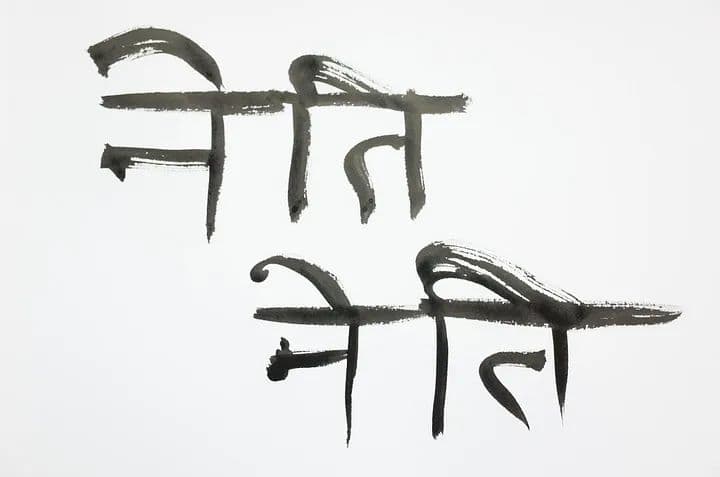
The Role of Negation (Neti Neti) in Absolute Realization
 Archive
The Secret Logic Behind Advaita's Theory of Maya
 Archive
Why Shankaracharya Rejected Buddhist Emptiness
 Archive
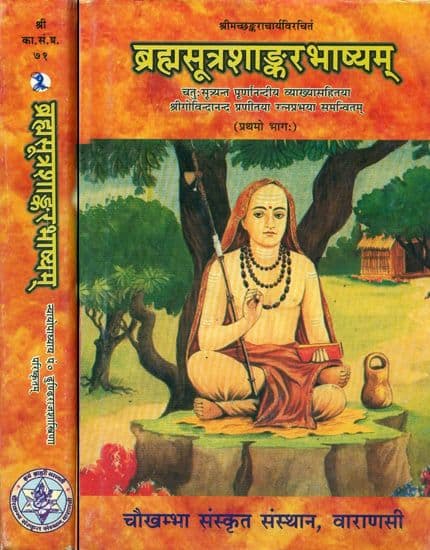
Brahma Sutra Bhashya: Decoding the Bhashyakara's Method
 Archive
The Hidden Meaning of Turiya in the Mandukya Upanishad
Key Insights
✦What is the central argument of Shankara's Ishavasya Bhashya, and what does it reject?
Shankara argues that the Ishavasya Upanishad's primary teaching is the advaita nature of the Self: all else is illusion, and the Self alone is real [citation:7]. The bhashya rejects the view that the Upanishad's verses on karma (action) and upasana (contemplation) constitute an independent path to liberation. Shankara treats these verses as concessions to those incapable of grasping the highest truth, a pedagogical accommodation rather than a competing soteriology [citation:7]. He insists that action and knowledge are fundamentally antagonistic: action is performed under the illusion of agency and bondage, while knowledge reveals that the Self is already free and never an agent. Liberation therefore comes solely through knowledge, not through ritual or ethical action [citation:1].
✦How does Shankara interpret the Upanishad's first verse and its implications for ownership?
Shankara's interpretation of the first verse is distinctive and grammatically contentious. He takes 'vasyam' to mean 'fit to be hidden' or 'covered,' rather than 'to be inhabited,' and he reads 'tyakta' (abandoned) as 'tyaga' (renunciation) [citation:7]. On this reading, the verse teaches that one should protect oneself through renunciation rather than enjoyment. This interpretation forces Shankara to treat 'bhunjithah' (enjoy) as meaning 'protect,' a reading that departs from the word's ordinary grammatical sense. The interpretive choice reflects his commitment to reading the Upanishad as a text about renunciation and knowledge rather than about the proper enjoyment of the world's goods. Critics have noted that this reading is strained, but it is consistent with Shankara's broader soteriological framework.
✦Why does Shankara treat verses 9–14 of the Upanishad as not pertaining to the main teaching?
Shankara draws a sharp distinction between the Upanishad's core teaching and its subsidiary material. He identifies verses 1 and 3–8 as the mantras that directly instruct the Highest Brahman, while verses 9 onwards are treated as not referring to the Self at all [citation:7]. The avidya-vidya triad (verses 9–11) and the sambhuti-asambhuti triad (12–14) are interpreted as teachings about meditation on Hiranyagarbha and unmanifest matter, with results distinct from liberation. Shankara's hermeneutic strategy is to subordinate these verses to the central teaching, treating them as preparatory or supplementary rather than as conveying the Upanishad's essential purport. This approach allows him to maintain that the Upanishad teaches a single, coherent doctrine of non-duality despite its apparent diversity.
✦What is the manuscript evidence for this bhashya, and how was it transmitted?
Manuscripts of the Ishavasya Bhashya survive in several collections. The University of Pennsylvania holds a complete Sanskrit manuscript on paper, dated circa 1700–1850, consisting of 15 leaves with 12–15 lines per leaf [citation:5][citation:15]. The colophon identifies the author as Shankara, the disciple of Govinda Bhagavatpada, confirming the traditional attribution [citation:15]. Another manuscript in the same collection dates to the same period [citation:8]. These manuscripts show corrections, marginal additions, and the use of red highlighting for significant words, indicating active study and transmission. The text was first printed in Sanskrit in the early nineteenth century, and M. Hiriyanna's English translation, first issued in 1911 and revised in 1972, remains a standard scholarly edition .
✦How does the Ishavasya Bhashya relate to Shankara's other commentaries and his method?
The Ishavasya Bhashya is the first of Shankara's commentaries on the ten principal Upanishads and is traditionally the first Upanishad taught to a seeker [citation:1][citation:9]. Its method is consistent with the Brahma Sutra Bhashya and the Gita Bhashya: it distinguishes provisional from final teachings, subordinates injunctive passages to those that reveal knowledge, and resolves apparent contradictions through a hierarchy of soteriological efficacy. The bhashya's treatment of karma and upasana is more compressed than in the Gita Bhashya, where the relationship between action and knowledge receives sustained analysis. The Ishavasya Bhashya thus serves as an early statement of the hermeneutic principles that Shankara would develop more fully in his later commentaries, establishing the template for Advaita's reading of scripture.
✦What is a common misconception about Shankara's reading of the Ishavasya Upanishad?
A common misconception is that Shankara dismisses the Upanishad's verses on karma and upasana as entirely worthless. In fact, his position is more nuanced: these verses are not errors but accommodations to those at a lower stage of spiritual development. Shankara assigns them a provisional validity, treating them as means of purifying the mind and preparing the seeker for knowledge, even as he insists they cannot directly produce liberation. The misconception arises from conflating his ultimate soteriological hierarchy—jnana alone liberates—with a blanket rejection of action. Shankara's framework is pedagogical: the lower teachings are true at their own level, but they are sublated when the higher truth is realized. This hierarchical inclusivism is characteristic of his commentarial method across all his bhashyas.
Wealthy Psyche is an intellectual archive. We do not host, distribute, or sell book copies — physical or digital. We provide structured knowledge to help you think better, faster.