



Political Treatise (Tractatus Politicus)
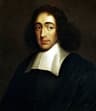
Spinoza's final, unfinished work abandons the social-contract framework of the Theologico-Political Treatise for a naturalistic analysis of political power as such. Rather than asking how a state ought to be founded, the Political Treatise examines how actually existing monarchies, aristocracies, and democracies can be institutionally ordered so that rulers, whether guided by reason or passion, cannot easily betray the common good. Its central mechanism is the identification of right with power: the commonwealth's stability depends not on moral obligation but on the structural alignment of incentives and affects.
Key Insights
✦What is the central argument of the Political Treatise, and how does it differ from the Theologico-Political Treatise?
The Political Treatise argues that the stability of a commonwealth depends not on a founding contract or the moral virtue of rulers but on institutional arrangements that make it difficult for those in power to act against the common good, regardless of whether they are guided by reason or passion. This marks a documented shift from the earlier Theologico-Political Treatise, which employed contractarian language to explain the genesis of the state. Alexandre Matheron has argued that the disappearance of contract language in the Political Treatise reflects a genuine doctrinal evolution, linked to the theory of affective imitation developed in the Ethics, rather than a mere change in presentation.
✦Why is the work unfinished, and where does it break off?
Spinoza began the Political Treatise in 1675 or 1676 at the urging of correspondents, completing six chapters and beginning the seventh before declining health forced him to stop around January 1677. He died on 21 February 1677. The text as published in the Opera Posthuma breaks off in the middle of a chapter on democracy. The completed chapters treat the law of nature, the right of the supreme magistrate, the best end of the state, and the institution of monarchy. The unfinished sections on aristocracy and democracy were partially drafted, but the work remains a fragment, valuable for its method rather than its completeness.
✦How does Spinoza's political philosophy diverge from Hobbes's, despite their shared premises?
Spinoza and Hobbes share a naturalistic starting point: both ground politics in the drive for self-preservation and treat right as coextensive with power. But their conclusions diverge sharply. Hobbes reduces citizenship to submission and concentrates sovereignty to prevent division. Spinoza argues that a state remains stable only insofar as it accommodates the freedom and powers of its subjects; a commonwealth that relies on fear and obedience alone is fragile. Where Hobbes sees undivided sovereignty as the solution to instability, Spinoza designs institutions—councils, checks, and procedures—to constrain rulers and channel affects toward the common good.
✦What is the significance of Spinoza's claim that right is identical with power?
The identity of right and power (jus sive potentia) is the conceptual hinge of the Political Treatise. It means that a sovereign's right extends only as far as its actual capacity to command obedience and shape conduct. This is not a normative claim that might makes right but an analytical one: it dissolves the fiction of a transfer of right that leaves the sovereign with authority even when it lacks power. The practical consequence is that political analysis must study the actual mechanics of power—affects, institutions, and the relations of forces—rather than deduce obligations from a hypothetical contract.
✦How did the Amsterdam editors handle the posthumous publication of this unfinished text?
After Spinoza's death, a group of friends including Jarig Jelles and Lodewijk Meyer prepared the Opera Posthuma for publication within roughly four months, working under considerable pressure. The preface acknowledges that the writings are largely unfinished and less polished by the author. The editors included the Political Treatise alongside the Ethics, the unfinished Treatise on the Emendation of the Intellect, the Hebrew Grammar, and selected correspondence. Their editorial work, though hasty by their own admission, preserved the text in the form in which it has been read ever since. No autograph manuscript of the Political Treatise survives.
✦What common misreading of the Political Treatise should readers avoid?
A common misconception treats the Political Treatise as a mere continuation or supplement to the Theologico-Political Treatise, differing only in scope or completeness. In fact, the later work represents a substantive methodological departure. The earlier treatise was written as a polemical intervention against theological interference in politics, employing contract language for rhetorical and argumentative purposes. The Political Treatise, written for a different audience and after the full development of the Ethics, proceeds without that framework, analyzing political institutions on their own terms. Reading the later work through the lens of the earlier one obscures what is genuinely new in Spinoza's final political thought.
Wealthy Psyche is an intellectual archive. We do not host, distribute, or sell book copies — physical or digital. We provide structured knowledge to help you think better, faster.