



Short Treatise on God, Man, and His Well-Being (Korte Verhandeling van God, de Mensch en deszelvs Welstand)
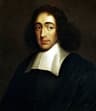
Spinoza's earliest surviving philosophical work, abandoned around 1662 in favor of the Ethics, advances a substance metaphysics in which God is the sole being and finite things are merely modes dependent on him. Its distinctive thesis is that human well-being consists in the intellectual love of God, but it reaches this conclusion through a conception of human power markedly different from the mature Ethics: here the humble recognition of one's imperfection is a virtue, because modes are thought to lack power and being in themselves. The treatise survives only through Dutch manuscripts discovered in the nineteenth century.
Key Insights
✦What central philosophical position does the Short Treatise defend, and how does it differ from the Ethics?
The Short Treatise defends a substance monism in which God alone has being and all other things are modes that depend on him. But it articulates this position through a conception of finite modes as lacking power, perfection, and being in themselves. This metaphysical framework supports an ethics in which humility—the accurate recognition of one's imperfection—is a genuine virtue, part of the 'true stairway' to salvation . The Ethics reverses this: there, the essence of a mode simply consists in power, and humility becomes a product of confusion rather than a virtue . The Short Treatise thus preserves a stage of Spinoza's thought in which substance monism had not yet yielded a robust conception of finite agency.
✦What is the textual history of the Short Treatise, and why was it unknown for nearly two centuries?
Spinoza probably wrote the text in Latin around 1660 and circulated it among friends, who produced a Dutch translation with notes; by early 1662 he had set it aside for the Ethics . It was not included in the 1677 Opera Posthuma and effectively disappeared. In 1851, Professor Boehmer of Halle discovered a sketch of it appended to a biography of Spinoza, and published a synopsis the following year. Full Dutch manuscripts were found shortly thereafter, and Johannes van Vloten issued the first edition in 1862 . The authoritative manuscript, Codex A, dates from the late seventeenth century; Codex B is a mid-eighteenth-century copy of it . The first English translation, by A. Wolf, appeared in 1910.
✦Why did Spinoza abandon the Short Treatise, and what does its abandonment reveal?
Spinoza abandoned the work by early 1662, but the reasons are not documented in his own correspondence from that period. The text itself reveals a system in transition: it depends heavily on Descartes' framework, particularly in its treatment of the affects, while straining toward conclusions Descartes would not accept . Filippo Mignini's reconstruction, now generally accepted, shows Spinoza revising the text in response to friends' feedback before setting it aside . The abandonment likely reflects his recognition that the conceptual apparatus he had inherited was inadequate to the monism he was developing—a recognition that would require the more rigorous geometric method and revised theory of power of the Ethics.
✦How does the Short Treatise treat humility, and why does this matter for understanding Spinoza's development?
In the Short Treatise, Spinoza distinguishes virtuous humility—knowing one's imperfection—from culpable humility, which attributes to oneself an imperfection one does not have. Virtuous humility, together with legitimate self-esteem, forms the path to salvation . Josefine Klingspor has argued that this position is not merely terminological but substantial: Spinoza later rejects humility as a virtue because he comes to believe that our essence simply consists in causal power . The shift is grounded in a re-conception of what a finite mode is. In the Short Treatise, modes lack power and being; in the Ethics, they are constituted by power. Humility's virtue depends on the first view and collapses with the second.
✦How does the Short Treatise relate to Descartes' philosophy?
The Short Treatise engages Descartes extensively, particularly in its treatment of the passions, which shows the conspicuous influence of Descartes' Passions of the Soul . But Spinoza does not simply reproduce Cartesian doctrine. Where Descartes posits a substantial union of mind and body and a free will independent of the understanding, the Short Treatise moves toward denying any real distinction between understanding and willing . The work thus represents Spinoza thinking through Cartesian problems with Cartesian tools while being driven toward non-Cartesian conclusions. Its eventual abandonment reflects the inadequacy of those tools for the system Spinoza was attempting to construct.
✦What common misreading of the Short Treatise should readers avoid?
The most persistent misreading treats the Short Treatise as a mere preliminary sketch of the Ethics, valuable only insofar as it anticipates later doctrines. This obscures what is genuinely distinctive in the earlier work. The Short Treatise contains investigations—particularly into the relation between inner knowledge and outer reality—that do not appear with the same clarity in the Ethics . Its treatment of the exemplar of human nature, a concept Spinoza uses only once in the Ethics to interpreters' embarrassment, is more fully at home in the earlier text. Reading the Short Treatise as a failed Ethics misses the possibility that it articulates problems the mature system resolves by abandoning rather than developing them.
Wealthy Psyche is an intellectual archive. We do not host, distribute, or sell book copies — physical or digital. We provide structured knowledge to help you think better, faster.