



John Dewey
John Dewey was an American philosopher, psychologist, and educational reformer who is widely regarded as one of the most important figures in pragmatism and American philosophy. His philosophy, often called instrumentalism or experimentalism, emphasized the role of experience, inquiry, and democracy in human life. He argued that ideas are instruments for solving problems and that knowledge is not a passive reflection of reality but an active tool for adapting to the environment. His works, including 'Democracy and Education' and 'Experience and Nature,' transformed educational theory and practice. Dewey's advocacy for progressive education, democratic citizenship, and social reform made him a leading public intellectual and a lasting influence on American thought.

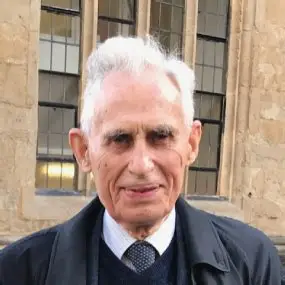


What is John Dewey best known for?
John Dewey is best known for his pragmatist philosophy, particularly his development of instrumentalism, and for his groundbreaking work in educational theory. He argued that ideas are tools for solving problems and that education should be experiential and democratic. His book 'Democracy and Education' is a classic in the field. He was also a prominent public intellectual who advocated for social reform, women's rights, and progressive politics. His influence extends across philosophy, psychology, education, and political theory.
What is instrumentalism in Dewey's philosophy?
Instrumentalism is Dewey's term for his version of pragmatism. He argued that ideas and concepts are instruments for solving problems and adapting to the environment. Rather than being passive reflections of a fixed reality, knowledge is a tool that enables us to navigate and transform our experience. He believed that the value of a theory lies in its practical consequences and its ability to guide action. This view challenged traditional epistemology and emphasized the active, experimental nature of human inquiry.
What is Dewey's theory of education?
Dewey's theory of education is centered on the idea that learning should be active, experiential, and connected to real life. He criticized traditional education for being too passive, authoritarian, and disconnected from experience. He advocated for 'learning by doing' and for education that fosters democratic citizenship and social reform. His work 'Democracy and Education' argues that education is not just preparation for life but is life itself, and that schools should be communities where students engage in meaningful inquiry and collaboration.
What is the relationship between pragmatism and democracy in Dewey's thought?
For Dewey, pragmatism and democracy are deeply interconnected. He believed that democracy is not just a political system but a way of life characterized by free inquiry, open communication, and collaboration. He argued that the experimental method of pragmatism—testing ideas through experience—is the same method that should guide democratic deliberation. In his view, democracy is the most effective framework for solving social problems because it allows for the free exchange of ideas and the collective intelligence of the community. He saw education as essential to cultivating the habits and skills needed for democratic citizenship.
What are Dewey's major works?
Dewey's major works include 'Democracy and Education' (1916), a foundational text in educational philosophy; 'Experience and Nature' (1925), which presents his metaphysical and epistemological views; 'Logic: The Theory of Inquiry' (1938), which develops his theory of knowledge; and 'Art as Experience' (1934), which explores the nature of aesthetic experience. He also wrote 'Reconstruction in Philosophy' (1920) and 'The Quest for Certainty' (1929). His collected works run to dozens of volumes, covering philosophy, psychology, education, and social commentary.
What is Dewey's view on experience?
Experience is a central concept in Dewey's philosophy. He rejected the traditional dualism between subject and object, arguing that experience is a continuous, transactional process in which organisms interact with their environment. Experience is not a passive reception of sensations but an active engagement with the world. He emphasized that experience is both the starting point and the goal of inquiry, and that it is through experience that we learn and grow. This view is foundational to his instrumentalism and his educational theory, which see learning as a process of experiential growth.
What is the difference between Dewey and James on pragmatism?
While both are pragmatists, Dewey's pragmatism is more systematic, social, and naturalistic than James's. James's pragmatism emphasizes individual experience, psychological processes, and religious belief, while Dewey's version focuses on the social and experimental aspects of inquiry. Dewey is more interested in how ideas function in collective problem-solving and democratic life, whereas James is more concerned with the individual's search for meaning. Dewey's instrumentalism is also more explicitly grounded in evolutionary biology and the logic of inquiry, giving it a more rigorous, scientific character.
How did Dewey influence American education?
Dewey's ideas have had a profound impact on American education, particularly through his advocacy for progressive education. His belief in learning by doing, the importance of student interest, and the need to connect education to real-life experiences has influenced curricula, teaching methods, and school design. His work at the University of Chicago's Laboratory School and his numerous writings on education have shaped the development of educational theory and practice. While his influence has waxed and waned, his ideas remain a touchstone for debates about the purpose and methods of education.