



Experience and Nature
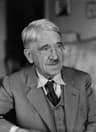
Dewey's 1925 Carus Lectures argue that experience is not a private, subjective veil but a continuous, transactional participation in nature itself. The book rejects the Cartesian and empiricist assumption that experience is a thin foreground of immediate sensations cut off from the world, insisting instead that experience penetrates nature, reveals its precarious and stable structures, and is the only medium through which nature can be known. Dewey develops this naturalistic metaphysics through analyses of existence, communication, meaning, and the emergence of mind from natural events, presenting experience as the method and the subject matter of philosophy.
Key Insights
✦What is Dewey's central argument in Experience and Nature, and what does it reject?
Dewey argues that experience and nature are continuous: experience is not a subjective interior set apart from an external world but a transactional participation in natural events. He rejects the "mentalistic" view inherited from British empiricism and Cartesianism, which treats experience as a thin foreground of private sensations that must somehow be bridged to an independent reality. In the first chapter, Dewey directly counters this: experience "is no infinitesimally thin layer or foreground of nature, but... penetrates into it, reaching down into its depths" . The book's project is to show that nature, as disclosed through experience, is both precarious and stable, and that mind, meaning, and value emerge from natural interactions rather than being imposed on nature from outside.
✦What was George Santayana's critique of Experience and Nature, and how did Dewey respond?
Santayana's 1925 review accused Dewey of a "dominance of the foreground": Dewey's philosophy, he charged, remained trapped in the immediate, practical, and moral sphere, never reaching the deeper cosmological realities that a genuine naturalism requires. Santayana saw Dewey's concepts of "events," "affairs," and "situations" as hedges that revealed an essentially ethical, not metaphysical, nerve . Dewey replied that Santayana's reading rested on a mistaken "mentalistic" psychology that severed experience from its conditions, and he insisted that immediacy is a feature of all natural existences, not a private mental realm . The exchange became a defining moment in American naturalism, with Santayana arguing for an ontological cosmology and Dewey defending a naturalism grounded in the full breadth of experience.
✦How does Experience and Nature relate to Dewey's earlier educational and instrumentalist works?
The book marks Dewey's most systematic attempt to state the metaphysical implications of the pragmatism and instrumentalism that had animated his earlier writings. Reviewers at the time noted that Dewey had previously concerned himself mainly with the adequacy of ideas for controlling the goods of experience, and that his explicit treatment of metaphysical doctrines had been largely critical . Experience and Nature was awaited as the work that would finally declare the metaphysical framework underlying his instrumentalism. It is a more technical and abstract book than Democracy and Education or The School and Society, and it presupposes familiarity with the history of philosophy. But it supplies the ontological grounding for the continuity of experience and nature that his educational and ethical writings had presupposed.
✦What role does the concept of communication play in the argument?
Communication is central to Dewey's account of how mind and meaning emerge within nature. One contemporary reviewer identified the fifth lecture, on communication, as among the most suggestive in the book, noting its account of the profound effect of communication in making the human mind capable of developing logical meanings . For Dewey, communication is not a mere transfer of information between pre-formed minds but a natural process in which participants come to share in a common understanding, and through which meanings are generated and sustained. Language and its consequences are, in his phrase, "characters taken on by natural interaction" under specific conditions of organization . This naturalistic account of meaning is one of the book's most distinctive contributions.
✦What is a common misreading of Dewey's "experience" that this book is meant to correct?
A persistent misreading treats Deweyan experience as a subjective, private, or merely personal possession—something that belongs to an individual mind and cuts it off from the world. Dewey explicitly rejects this. In Experience and Nature he argues that it is "absurd" to assume, as the tradition since Descartes has done, that experience by its very nature is owned by someone in a way that stamps everything about it with a private and exclusive quality . He goes so far as to suggest that it would often be more accurate to say "it experiences" than "I experience," since experience is a transaction of natural events before it is a possession of a self . The book's naturalism consists precisely in denying that experience is a psychological interior opposed to nature.
✦How has Experience and Nature been received and criticized since its publication?
The initial reception was mixed but serious. The New York Times review called Dewey's reasoning "reasonable" and noted that his philosophy grows out of common experience and can be tested by it, while also acknowledging the notorious difficulty of his style . The International Journal of Ethics review expressed uncertainty about whether the book actually delivered the metaphysics of nature it seemed to promise, wondering whether it scrutinized experience to ascertain the environment or simply assumed a naturalistic answer . A more pointed criticism came from those who found "experience" a "weasel word," always implying an experiencer and therefore unfit as a cosmological term . These criticisms have persisted, but the book remains a foundational text for Deweyan naturalism.
✦What is the textual history of the book's introductions and later editions?
Dewey delivered the lectures as the first series on the Paul Carus Foundation, and Open Court published them in 1925 . In 1949, near the end of his life, Dewey drafted a substantial "Re-Introduction" to the work, attempting to clarify and revise its argument in light of twenty-five years of criticism and subsequent philosophy. These drafts, preserved in the John Dewey Papers at Southern Illinois University, were left unfinished and were not included in the original or standard later editions . This unfinished introduction is significant for scholars because it shows Dewey himself reconsidering the book's central claims. Readers encountering Experience and Nature in its standard form should be aware that Dewey regarded it as a text in need of revision and clarification.
Wealthy Psyche is an intellectual archive. We do not host, distribute, or sell book copies — physical or digital. We provide structured knowledge to help you think better, faster.