



Logic: The Theory of Inquiry
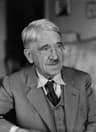
Dewey's central thesis is that logical forms are not a priori structures of thought but operational patterns generated within inquiry itself, and thus are continuous with biological and cultural activity. Logic is reconstructed as the general theory of how organisms transform indeterminate situations into determinate ones through the controlled use of symbols and experimental method. The book's distinctive mechanism is the 'pattern of inquiry': the five-phase movement from a felt difficulty through observation, suggestion, reasoning, and testing, which Dewey treats not as a psychological description but as the normative structure that makes logicality possible at all.
Key Insights
✦What does Dewey mean by saying logical forms 'arise within' inquiry?
Dewey's claim is that logical principles—identity, contradiction, inference, classification—are not pre-existing structures that inquiry must conform to but are themselves products of the effort to resolve problematic situations. When inquiry succeeds in transforming a confused, indeterminate situation into a coherent one, it does so by instituting controlled relations among propositions and observations. Those relations, stabilized and generalized, are what we call logical forms. This is an instrumentalist thesis: logic is the theory of the instruments by which inquiry achieves warranted assertibility. The claim is naturalistic, not psychologistic—Dewey is not describing how people happen to think but what makes thinking normative at all.
✦What is the 'pattern of inquiry,' and why does Dewey insist it is not merely descriptive?
The pattern comprises five distinguishable phases: an indeterminate situation, its institution as a problem, suggestions for resolution, reasoning about their consequences, and experimental testing that transforms the situation. Dewey emphasizes that these phases are not a chronological sequence through which every inquiry must pass. They are functional distinctions, analytically separable but mutually determining within any actual investigation. His insistence on this point is directed against the charge that he is offering a psychological natural history of thinking. The pattern is normative: it specifies what must be done for a conclusion to count as warranted, not what happens to occur in the mind of a thinker.
✦How did Bertrand Russell's critique shape the book's reception?
Russell reviewed Logic: The Theory of Inquiry in 1939 and attacked it on two fronts: that Dewey's account of inquiry reduced logic to psychology, and that his treatment of relations and propositions was confused and technically inadequate. Russell's authority gave the critique wide currency, and for decades Dewey's logic was treated as a marginal or confused contribution. Tom Burke's Dewey's New Logic (1994) argues that Russell misunderstood key aspects of Dewey's position—particularly the distinction between the genesis of logical forms and their justification—and that Dewey's approach anticipated developments in situation theory and cognitive science. The Russell-Dewey exchange remains the most cited controversy surrounding the book.
✦How does this book differ from Dewey's earlier Essays in Experimental Logic?
Essays in Experimental Logic (1916) is a collection of occasional papers that stake out an instrumentalist position against the 'correspondence' theory of truth and the 'spectator' theory of knowledge, but without a systematic account of how inquiry actually proceeds. Logic: The Theory of Inquiry supplies that systematic account. James Scott Johnston's study of Dewey's logical development argues that the intervening years were spent remedying specific deficiencies: an adequate account of experience, a refined theory of judgment and propositions, and above all a developed theory of continuity . The 1938 book is therefore not a restatement but a construction, and its technical vocabulary reflects problems Dewey had been working on for over two decades.
✦Does Dewey's logic have any relation to formal or mathematical logic?
Dewey's relation to formal logic is strained. He does not reject formalization but treats it as a subsidiary tool: formal systems are instruments for controlling inference, useful when the subject-matter of inquiry has been sufficiently stabilized to permit symbolic manipulation. What he rejects is the philosophical interpretation of formal logic as the revelation of a realm of pure logical entities independent of inquiry. Ernest Nagel, reviewing the book in 1939, praised it for stressing the roles logical principles play in achieving the objectives of scientific inquiry . Nagel's praise is telling: he admired the functional account without endorsing Dewey's more sweeping anti-formalist rhetoric.
✦Is the book a work of pragmatist epistemology, philosophy of logic, or something else?
Dewey presents it as a treatise on logic, but its subject-matter is closer to what would now be called the philosophy of inquiry: an investigation into the conditions under which claims become warranted through the controlled transformation of problematic situations. It is not epistemology in the analytic sense, because Dewey does not begin with questions about knowledge, belief, or justification as mental states. Nor is it formal logic. Its closest disciplinary neighbor is perhaps methodology in the broad sense—the normative study of how disciplines, from physics to ethics, conduct themselves when they conduct themselves well. The book is best read as Dewey's attempt to provide the general theory of method that his earlier works on ethics, education, and democracy had presupposed.
Wealthy Psyche is an intellectual archive. We do not host, distribute, or sell book copies — physical or digital. We provide structured knowledge to help you think better, faster.