



Art as Experience
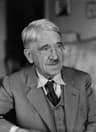
Dewey's central thesis is that aesthetic experience is not a separate, elevated realm but the heightened, consummatory form of the same interaction between organism and environment that characterizes all living. Art's distinctive mechanism is the transformation of ordinary doing and undergoing into 'an experience'—a unified whole with its own pervasive quality—and the book argues that philosophy must turn to aesthetic experience to understand what experience itself is. The museum conception of art, which isolates works from the conditions of their production and reception, is the primary obstacle Dewey seeks to dismantle.
Key Insights
✦What does Dewey mean by 'an experience,' and why is it his most misunderstood concept?
An experience is a unified whole that stands out from the general stream of experience by virtue of a single pervasive quality that organizes its parts—a meal, a storm, a ruptured friendship. Dewey italicizes the article to mark that such experiences have a consummatory completeness ordinary moments lack. George Dickie offered the representative misreading: that Dewey, 'caught up in his idealist vocabulary,' gives the expression a metaphysical twist, treating aesthetic experience as an ontologically distinct entity . But Dewey's repeated insistence on continuity between the aesthetic and the everyday makes this implausible. The unity of an experience is an emergent evaluative identity, not a metaphysical substance, and once consummated it can serve as a standard for appreciating future experiences .
✦What was Dewey's relationship to Albert C. Barnes, and how did it shape the book?
Albert C. Barnes, the industrialist and art collector, was Dewey's strongest influence in aesthetics. The two were close friends; Barnes had taken a seminar under Dewey in 1917, and Dewey served on the staff of the Barnes Foundation, being named its Director in 1925 . Dewey dedicates Art as Experience to Barnes, quotes extensively from his writings, and drew many of the book's illustrations from the Barnes collection . Barnes's formalist theories of appreciation and his advocacy of Dewey's pragmatism shaped the book's argument against the museum conception of art. The relationship also connected Dewey to African-American culture and the Harlem Renaissance through Barnes's associations with Alain Locke and Lincoln University .
✦Why does the book lack proper citations, and what does that reveal about its composition?
Art as Experience originally lacked adequate footnotes despite being full of quotations—an unusual feature that the Stanford Encyclopedia of Philosophy notes as an interesting aspect of Dewey's writing . The recent Boydston edition of Dewey's collected works tracked down all the quotations and even noted which books were in Dewey's personal library . This editorial recovery reveals the breadth of Dewey's reading: poets like Coleridge, Keats, and Shakespeare figure as strongly as philosophers, and visual artists from Cézanne to Matisse are frequently quoted . The absence of footnotes also reflects Dewey's lack of strong interest in the history of aesthetics; he seldom explicated or critiqued the aesthetic works of others, and in the book he never mentions Hume's aesthetics, gives Hegel only one citation, and cites Nietzsche not at all .
✦How does Art as Experience relate to Dewey's earlier Experience and Nature?
The 1925 metaphysics of Experience and Nature had already articulated a naturalistic account of experience as the transaction between organism and environment, but it treated aesthetic themes only in passing. Art as Experience, nine years later, undertakes the systematic aesthetic inquiry that the earlier book had implied but not developed. A French scholarly study argues that the aim of the 1925 work was already aesthetic, and that Art as Experience represents one of its prolongations—while the 1934 book's aim is, in turn, still political . The relationship is therefore not one of simple extension but of reciprocal implication: the metaphysics of experience grounds the aesthetics, and the aesthetics reveals what the metaphysics was ultimately about.
✦How was the book received by Dewey's contemporaries, and what criticisms were raised?
Contemporary reception was mixed. A 1934 review in Blackfriars observed that the book would likely appeal more to those seeking something philosophically interesting than to artists themselves, and noted that Dewey's ideas on art fall neatly into his instrumentalist framework—knowledge as instrumental to enriching immediate experience . Stephen C. Pepper, writing in the 1939 Schilpp volume on Dewey's philosophy, expressed disappointment that Dewey would mix aesthetic and social themes, admitting that the book's social message—its plea to break down the separation between art and life—might be its chief intention, but holding no interest for him . This criticism anticipated later debates about whether Dewey's aesthetic naturalism compromises the autonomy of art.
✦What is the 'museum conception of art' that Dewey attacks, and why does it matter?
Dewey argues that when artistic objects are separated from the conditions of their origin and operation in experience, a wall is built around them that renders their general significance almost opaque, exiling art to a separate realm cut off from the materials and aims of other forms of human effort . This is the museum conception: art as a private playground for the cultured, the 'beauty parlor of civilization' to which we retire before returning to dull reality . Dewey's alternative is that art presents instances of the highest moments possible in human life and indicates that, with effort, life can be made better. The attack matters because it grounds his larger claim that aesthetics should play a central role across philosophical inquiry: 'To esthetic experience, then, the philosopher must go to understand what experience is' .
Wealthy Psyche is an intellectual archive. We do not host, distribute, or sell book copies — physical or digital. We provide structured knowledge to help you think better, faster.