



Against Method: Outline of an Anarchistic Theory of Knowledge
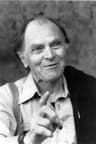
Feyerabend's central argument is that there is no universal scientific method: the history of science shows that progress has depended on violating every methodological rule, from the Copernican revolution to the development of quantum mechanics. The book's distinctive mechanism is the historical case study, using Galileo's use of rhetoric, ad hoc hypotheses, and propaganda to show that science advances through opportunism, not rational procedure. Its claim is epistemological anarchism—not that anything goes as a doctrine, but that no single standard should be allowed to constrain inquiry, and that pluralism is the only rule that does not stifle progress.
Key Insights
✦What is the central argument of Against Method, and what does Feyerabend mean by epistemological anarchism?
The central argument is that there is no universal scientific method. Feyerabend shows through historical case studies—most famously Galileo's defense of Copernicanism—that scientific progress has depended on violating every methodological rule: using ad hoc hypotheses, propaganda, rhetoric, and even deception. Epistemological anarchism is his name for the conclusion that follows: no single standard should be allowed to constrain inquiry, because any such standard would have blocked developments that we now regard as progressive. The phrase 'anything goes' is often taken as his slogan, but Feyerabend insists it is not a doctrine—it is a description of what remains when we abandon the illusion that there is a single rational method. The book's target is not science itself but the philosophical attempt to legislate a universal method for it.
✦How does Feyerabend use Galileo as a case study, and what does it reveal?
Feyerabend's Galileo is not the serene rationalist of legend but a cunning propagandist. He shows that Galileo relied on rhetoric, ad hoc hypotheses, and appeals to readers' prejudices to win acceptance for Copernicanism. Galileo could not refute the Aristotelians on their own terms, so he changed the terms—introducing new standards of observation and argument that favored his position. Feyerabend argues that this was not a defect but a condition of progress: if Galileo had followed the methodological rules of his time, he would have been refuted. The case study is central because it shows that the triumph of a scientific theory is not a matter of rational demonstration but of rhetorical and social contest. The Galileo chapter is the empirical heart of the book's argument against method.
✦What is the relationship between Against Method and Criticism and the Growth of Knowledge?
Against Method was originally conceived as a dialogue with Imre Lakatos, whose essay 'Falsification and the Methodology of Scientific Research Programmes' appeared in Criticism and the Growth of Knowledge (1970). Feyerabend had intended the book as a contribution to a joint volume with Lakatos, but Lakatos died in 1974 before the project could be completed, and Feyerabend published Against Method as a standalone work in 1975. The book is thus a sustained response to Lakatos's attempt to provide a rational reconstruction of scientific growth. Feyerabend argues that Lakatos's methodology of research programmes, like Popper's falsificationism, is too restrictive: it cannot account for the actual opportunism of scientific practice. The relationship is one of critique and rejection, not extension.
✦How has the book been received, and what are the main criticisms?
Reception was sharply divided. The book became a bestseller and made Feyerabend famous, but it also provoked hostility from philosophers of science. The most common criticisms are that epistemological anarchism is self-refuting (if there is no method, what method does the book itself use?), that the historical case studies are selective and sometimes inaccurate, and that the book's rhetoric is irresponsible, undermining respect for science without offering a constructive alternative. Defenders argue that the criticisms miss the point: Feyerabend is not offering a new method but challenging the pretensions of method-talk. The book's influence has been enduring, and it remains a standard reference in debates about scientific rationality and pluralism. The 2010 fourth edition includes a new foreword by Ian Hacking and an interview with Feyerabend.
✦What are the differences between the editions of Against Method, and which should readers use?
The first edition appeared in 1975 from New Left Books. A revised edition in 1988 added a new introduction and made substantial changes. A third edition in 1993 added further material, including a new preface and an appendix. The fourth edition, published by Verso in 2010, includes a foreword by Ian Hacking, an interview with Feyerabend, and a new index. The later editions incorporate Feyerabend's responses to critics and clarify his position, but the core argument remains the same. Readers should be aware that pagination differs across editions, and citations to the book should specify which edition is being used. The fourth edition is the most complete and is the standard text for contemporary readers.
✦What is the most common misunderstanding of Against Method?
The most common misunderstanding is that Feyerabend is advocating irrationalism or claiming that all beliefs are equally valid. In fact, he is arguing that the authority of science rests on power and rhetoric, not on a superior method, and that this authority should not be used to suppress other traditions. He does not deny that science has achievements; he denies that these achievements justify giving science a privileged position over other forms of inquiry. A related misunderstanding is that the book is a rejection of science. Feyerabend was not anti-science; he was against the dogmatic elevation of science into a religion. The book's target is the philosophical ideology of scientism, not the practice of scientific inquiry. Reading it as a defense of chaos misses its serious historical and political argument.
Wealthy Psyche is an intellectual archive. We do not host, distribute, or sell book copies — physical or digital. We provide structured knowledge to help you think better, faster.