



Black-Body Theory and the Quantum Discontinuity, 1894–1912
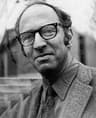
Kuhn's study argues that the quantum discontinuity was not born with Planck's 1900 derivation of the black-body law, but emerged around 1906 through Einstein's work and the subsequent reinterpretation of Planck's radiation theory. The book's distinctive mechanism is a meticulous technical history that shows Planck remained committed to classical continuity long after his famous formula, and that the 'quantum revolution' was a later reconstruction. Notably, Kuhn writes this history without deploying the paradigm and revolution vocabulary of Structure, raising questions about whether his famous framework applies to this very case.
Key Insights
✦What is the central argument of Black-Body Theory, and how does it revise the standard account of the quantum revolution?
The central argument is that the quantum discontinuity was not born in December 1900, when Planck derived his black-body distribution law, but emerged around 1906 through Einstein's work and the subsequent reinterpretation of Planck's theory . Kuhn shows that Planck remained committed to classical continuity long after his famous formula, treating the 'energy elements' as a calculational device rather than a physical discontinuity. The discontinuity became part of physics only when Einstein and others forced a reinterpretation. This revisionist thesis challenged the standard narrative that treated Planck as the revolutionary who introduced quanta, and it made Kuhn's book a landmark in the historiography of modern physics .
✦Why does Kuhn write this history without the paradigm and revolution vocabulary of Structure, and what does that reveal?
Kuhn deliberately avoids the conceptual apparatus of The Structure of Scientific Revolutions in Black-Body Theory. One scholarly assessment notes that this is one of the book's two main points of importance: Kuhn narrates the birth of quanta 'without resorting to the concepts of paradigm and revolution' that had made him famous . The omission is striking because the quantum revolution would seem a natural candidate for paradigm-shift analysis. Richard Staley observes that many early reviewers were 'puzzled why a book that made such a major revisionist argument about the origins of quantum theory had so little to say about whether and how the conceptual apparatus that Kuhn had offered in Structure applied' . The book thus raises questions about the relationship between Kuhn's theoretical framework and his actual historical practice.
✦How was the book received by historians of physics, and what were the main criticisms?
Reception was respectful but critical. Martin Klein, a leading historian of quantum theory, reviewed the book for Isis and engaged Kuhn in a dispute over the details of Planck's work. A scholarly account notes that Klein 'appealed to the authority of the sources' rather than engaging in a discussion of Kuhn's larger historiographic perspective, and that he and Kuhn 'literally decided to agree to disagree' . Peter Galison argued that Kuhn was 'trying too hard to make the thought of Planck coherent,' imposing a unity on Planck's work that the historical situation did not support . Trevor Pinch expressed skepticism about Kuhn's assumption of the incompatibility between classical and quantum theory, noting that Kuhn had assumed it 'without due historical analysis' . These criticisms did not overturn Kuhn's revisionist chronology, but they complicated his account of Planck's development.
✦What is the publication history of the book, and how does the second edition differ?
The first edition was published in 1978 by Clarendon Press in Oxford and Oxford University Press in New York, running 356 pages . A second edition was published by the University of Chicago Press in 1987, running 378 pages, with a new afterword titled 'Revisiting Planck' . The afterword is significant because it contains Kuhn's response to his critics, particularly Klein, and his reflections on the historiographical issues raised by the book. The Chicago edition remains the standard version available today. Readers should be aware that the first edition is out of print and that citations to the book should specify which edition is being used, as the pagination differs.
✦How does Black-Body Theory relate to The Essential Tension and Kuhn's other later work?
Black-Body Theory belongs to the same period as The Essential Tension (1977), a collection of Kuhn's essays on scientific tradition and change. Both works reflect Kuhn's turn toward detailed historical case studies as a way of testing and refining the theoretical framework of Structure. The Essential Tension includes essays on the history of science and on the nature of scientific communities, while Black-Body Theory is a sustained monograph on a single episode. Together they represent Kuhn's later career, in which he moved from the broad theoretical claims of Structure to the meticulous archival work of the historian. The University of Chicago Press lists both books among Kuhn's major works .
✦What is the most common misunderstanding of the book's argument?
The most common misunderstanding is that Kuhn is simply denying Planck's importance or arguing that Planck was not a revolutionary at all. In fact, Kuhn is making a more precise historical claim: Planck did not introduce the quantum discontinuity in 1900, but he did produce the formula that made the discontinuity possible, and his later work contributed to its emergence. The book is not a debunking of Planck but a reconstruction of the complex process by which a new physical concept was born. A related misunderstanding is that the book is a work of philosophy of science in the same vein as Structure. It is primarily a work of technical history, and its philosophical implications are implicit rather than argued. Reading it as a straightforward application of Kuhn's theory misses its deliberate methodological restraint.
Wealthy Psyche is an intellectual archive. We do not host, distribute, or sell book copies — physical or digital. We provide structured knowledge to help you think better, faster.