



Science in a Free Society
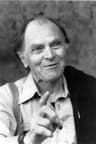
Feyerabend's book extends his critique of scientific method into a political argument: the authority of scientific expertise is incompatible with genuine democracy. The central mechanism is the demand that science be treated as one tradition among many, separated from the state just as religion has been, and subjected to the arbitration of the lay population whose lives it affects. Its claim is that a free society is one in which all traditions have equal rights and equal access to power, not one in which a single intellectual tradition—Western science—sets the standards for everyone.
Key Insights
✦What is the central argument of Science in a Free Society, and how does it move beyond Against Method?
The central argument is that the prestige and authority of scientific expertise are incompatible with genuine democracy. Feyerabend extends his critique from Against Method—which argued that there is no universal scientific method—to the social function of science. The book's distinctive move is political: it demands that science be separated from the state, just as religion has been, and that lay people whose lives are affected by scientific decisions have the right to scrutinise and arbitrate those decisions . Feyerabend argues that the 'lofty authority of the expert' often conceals entrenched prejudices and divided opinions within the scientific community itself . The book is thus not merely a critique of methodology but a call for a new politics of knowledge.
✦What does Feyerabend mean by a 'free society,' and how does his definition differ from the customary one?
Feyerabend defines a free society as one in which all traditions have equal rights and equal access to the centres of power. This differs from the customary definition, in which individuals have equal rights of access to positions defined by a special tradition—the tradition of Western science and rationalism . A tradition receives these rights not because of its importance to outsiders but because it gives meaning to the lives of those who participate in it . This definition grounds his argument that science should not enjoy a privileged position in the state or in education. If science is one tradition among many, then it has no more right to dictate public policy than any other tradition does. The implication is radical: scientific expertise must be demoted from a source of authority to a voice in a pluralistic conversation.
✦What is the significance of the book's structure, and what does each part contribute?
The book is divided into three parts. Part One, 'Reason and Practice,' revisits and defends the arguments of Against Method, including essays on incommensurability and the 'Copernican Revolution' . Part Two, 'Science in a Free Society,' is the political core: it argues that the prevalence of science is a threat to democracy, that expert opinions are often prejudiced and untrustworthy, and that science is one ideology among many that should be separated from the state . Part Three, 'Conversations with Illiterates,' contains polemical replies to critics, including Agassi and Gellner . The structure reflects Feyerabend's method: he first clears away the methodological objections, then builds the political case, and finally defends it against his interlocutors.
✦How was the book received, and what were the main criticisms?
Reception was sharply divided. A Nature review called it 'formally a mess,' a patchwork of polemic and autobiographical fragments that 'will make almost no sense to anyone who has not read Against Method' . The reviewer acknowledged that Feyerabend 'scores shrewd hits' and that his plea for pluralism is 'often poignant and persuasive,' but criticised the 'truculent, self-serving' tone and the 'bullying lack of punctuation' . Other critics objected to the vagueness of his concept of 'attitudes,' arguing that it opens the way to an 'orgy of subjectivity' in which 'anything can be justified' . Defenders saw the book as a necessary political extension of his epistemological anarchism, insisting that the issues it raises about expertise and democracy are of the first importance.
✦What is the book's publication history, and does the edition matter?
Science in a Free Society was first published in 1978 by New Left Books (NLB) in London, with a US edition from Schocken Books . Verso Books reprinted it several times—in 1982, 1983, 1985, and 1987—but Feyerabend never prepared a second edition . The 1982 Verso edition is widely held in libraries and runs 221 pages . The text is thus stable across editions, though the pagination may vary slightly. Readers should be aware that the book was written as a direct response to the controversy surrounding Against Method, and it presupposes familiarity with that earlier work. It is not a standalone introduction to Feyerabend's thought.
✦Is Feyerabend arguing that science is worthless or that all claims are equally valid?
No. The most persistent misreading of the book is that Feyerabend is dismissing science as worthless or claiming that astrology is as good as astronomy. His argument is more precise: science is one tradition among many, and its superiority has not been established by a fair contest but by the social authority it acquired through the subjugation of other systems of thought . He does not deny that science has achievements; he denies that these achievements justify giving science a privileged position over other traditions in a free society. The demand for separation of science and state is not a demand to abolish science but to subject it to democratic scrutiny, just as religion is subject to scrutiny in a secular state. The book is a call for pluralism, not for the abandonment of inquiry.
Wealthy Psyche is an intellectual archive. We do not host, distribute, or sell book copies — physical or digital. We provide structured knowledge to help you think better, faster.